Feeds:
Posts
Comments

Introduction

This is my third post about the Johnnie Walker Art of Blending webcast event with Johnnie Walker Master Blender Andrew Ford. Why am I still blogging about it? I realize I’m probably providing more coverage than a lot of people are interested in, but I thought I’d try to give a full account of the webcast, as different bits of information might be of interest to different people. This post will cover the final two-thirds of the webcast, where Mr. Ford walked through the 7 samples that were provided in the blending kit. I’ll share Mr. Ford’s insights, as well as his answers to questions that were posed along the way. Finally, I’ll provide some of my own notes about the samples.

Regions and Flavor Map

After discussing the history of Johnnie Walker, Mr. Ford briefly went over the regions of Scotland, and the types of whiskies you’re likely to get from those different regions. From the Lowlands, you tend to get a light style whisky, while the Highland whiskies are more robust. The west coast and islands is where the smoky whiskies usually turn up. Speyside is the region with the most distilleries, and the location of the first distillery purchased by Johnnie Walker, Cardhu. He didn’t discuss Campbelltown or Orkney, but that’s not particularly surprising given that Diageo doesn’t own any distilleries in those areas. 🙂
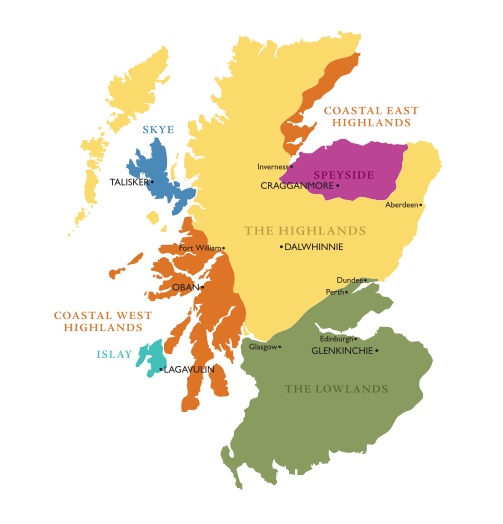
Scotland Whisky Regions

Scotland Whisky Regions

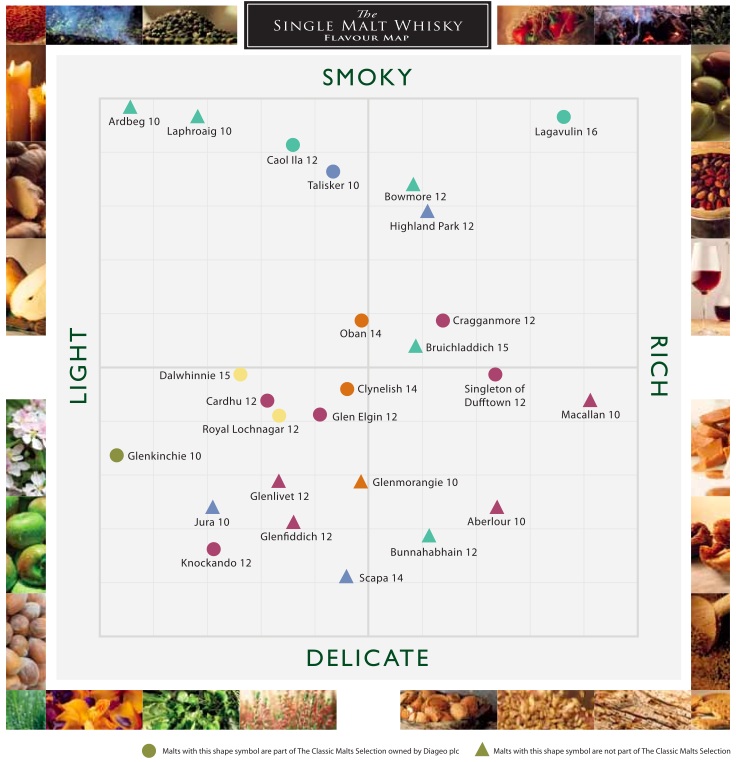
Mr. Ford referred to the Single Malt Whisky Flavor Map throughout the webcast. This flavor map is provided by Diageo, but it does contain distilleries not owned by Diageo. It attempts to place distillery profiles on two scales, from Delicate to Smoky and from Light to Rich. Click on the image to view a larger version.
Single Malt Whisky Flavor Map

Single Malt Whisky Flavor Map

The Whiskies

Tasting/Nosing

Mr. Ford stressed the importance of using a nosing glass when assessing whiskies, and not something like a tumbler. He also said that blenders typically assess whiskies at half strength (around 20%).

Question from audience: Why half strength?

Answer by A.F.: The flavors come out from the liquid, into the empty space in the nosing glass, presenting themselves more clearly. It also allows you to focus on the flavors and not be influenced as much by the alcohol itself.

Grain

Grain whisky, which uses grains other than barley, came to the whisky blending industry in 1832 when the Coffey still was invented. The Coffey still produces a very light spirit, and even after 12 years in a cask, the flavor is still quite light. Mr. Ford stated that it probably wouldn’t even show up on the Flavor Map. He likened Grain whisky in a blend to pasta or rice in a food dish, serving up the flavors of the single malt, and providing drinkability and sweetness.

My Take: I thought the grain sample tasted ok, but it’s definitely not exciting, and there is an aftertaste that I’ve noticed in blends that I’m not thrilled about. Actually, though, I wonder about potentially selling inexpensive grain whisky to compete with vodka for making mixed drinks. Why not?

Single Malt Scotch

He did also mention that the pot stills used in the production of single malts are very inefficient, and not a good way to make alcohol for mass consumption. The pot stills are about making flavor, not alchohol. Another thing Mr. Ford brought up when talking about scotch is smoke. According to him, smoke is the signature of scotch whisky. That’s what tells you that a whisky is from Scotland. He also said this is a key component of Johnnie Walker blends. The smokiness comes from drying barley with peat smoke, sticking with the spirit through the distillation process, through the aging, and arriving in the final product. Today, there are many ways to heat barley, so the use of peat smoke is more of a calculated flavoring process today than it was before more modern methods of heating were available.

Lowland

The lowland malt is still light, but more flavorful than the grain whisky. You’ll find grassy flavors in a lowland malt, along with sweetness and some vanilla. Lowland whiskies will show up on the lighter, more delicate part of the flavor map. While tasting the lowland sample, Mr. Ford talked a little bit about the casks used in aging. Scotch is always aged in previously used casks…typically ex-bourbon, port or sherry. The reason for doing this is that they don’t want scotch whisky to be quite as sweet and woody as a bourbon. By using an ex-bourbon cask, like this lowland sample comes from, you still get the toffee sweetness and vanilla flavors that the American oak imparts, but it’s not quite as intense as you’ll find with bourbon.

Question from the audience: Is this sample Glenkinchie?

Answer by A.F.: That’s a good guess, but I’m not telling.

My take: I’ve never tried Glenkinchie, so I can’t say, but I have a 200ml bottle on the way and will post an update after I compare them. [Update: I got my bottle of Glenkinchie, and it seems to be a match. Pleasant vanilla and a very easy drinker, with some nice oak on the finish to keep it reasonably interesting.]

Speyside

According to Mr. Ford, Speyside malts are traditionally fruity (fresh fruits like apples, pears and maybe bannanas), along with some grassy notes. You might pick up a tiny hint of smoke in some Speysides, but you’d need a very sensitive palate to pick it up.

Question from audience: Is Cardhu a large part of Johnnie Walker blends?

Answer by A.F.: There are a number of Speysides in the blend, but Cardhu will always be there as well.

My take: I’ve never tried Cardhu, but does it taste a lot like Cragganmore? Because that’s what this sample reminds me of…at least on the nose. The palate seemed a bit more mellow.

Sherry

Mr. Ford stated that he went to great lengths to get the sherry cask sample (from Speyside) included in our blending kits. The flavor is pretty robust, and very different on the palate from the previous samples. Very mouth coating, full bodied and rich. It also has a longer finish. It belongs close to the right-hand side of the flavor map. Not a lot of smoke, but lots of rich fruit flavors like dried raisins and figs. Another note about casks during this segment, was that the “sherry” flavors are not coming directly from sherry left over in the casks, but rather from the European oak used to make the casks. This is where sherry gets some of the same flavors.

Question from audience: How does the size and type of the cask influence the flavor?

Answer by A.F.: Bourbon casks tend to be about 200 liters and are charred and toasted. The charring removes pungent flavors from new make spirit, and the toasting adds flavors like vanilla and coconut, and also adds color. The smaller the cask, the more wood influence, and the shorter maturation time needed to get that influence into the spirit. The sherry casks tend to be bigger, around 500 liters. Sherry casks tend to only be lightly toasted, and not charred.

Question from the audience: Does it matter if your mouth is opened or closed during nosing?

Anser by A.F.: Whatever suits you. The J.W. blenders seem to close their mouths.

My take: I enjoyed the sherry cask sample. It reminds me of Glenfarclas 10 on the nose, and Glendronach 12 on the palate. It’s not as rich and fruity as the Glendronach on the nose, but it does have some of the spiciness of the Glendronach on the palate that I don’t get with the Glenfarclas.

Highland

Our sample is a west coast Highland malt, and offers a more robust flavor than the Lowland and Speyside malts. This is where you start to get more of a smoke influence. People also talk of maritime flavors in coastal highland malts. How maritime flavors get into the whisky they don’t know. In fact, malts distilled in coastal distilleries are not always matured there by the ocean. They’re sometimes shipped to inland warehouses for aging.

Question from the audience: How long does it take to produce peat, and are we in danger of running out?

Answer by A.F.: It takes hundreds to thousands of years to product peat, and there is plenty of it. The scotch whisky industry doesn’t use a high proportion of peat. People actually use it more for gardening. There is no danger of running out any time soon.

My take: Hmm…a west coast Highland malt from a Diageo distillery. It must be Oban, right? Well, I’ve only tried Oban once, so I don’t have a very good frame of reference. However, like with the Lowland sample, I’ve ordered a 200ml bottle of Oban 14 and will compare that to this Highland sample soon and post an update. [Update: Yes, I’d say this is Oban. The sample seems a little weaker than the 14 year, but perhaps that’s because it’s at 40% vs. 43% for the retail bottle. Some nice hints of peat and smoke, but seems weak on the palate…like a heavily diluted Bowmore 12.]

Island

Island malts are malts distilled on the islands off of the west coast of Scotland. Smoke now becomes much more evident. You will also find spicy and maritime flavors, and pepperiness. On the flavor map, it’s in the smoky region. Perhaps somewhere in the middle on the richness scale. Mr. Ford really seemed to enjoy this sample.

My take: This sample is Talisker, I’m sure of it. Mr. Fords comment about it being peppery helps to give it away, too. Interestingly, the sample tastes closer to Talisker 18 than Talisker 10, in my opinion. He said they try to stick pretty close to 12 years for the JW Black whiskies, but I wonder if this sample of Talisker is a bit older.

Islay

This is the final sample from our blending kits. Islay is an Island off of the west coast of Scotland, but it’s treated as a completely separate taste profile region because of the strong peat influence associated with Islay malts. You get lots of smoke, sometimes an antiseptic note. Whiskies from this region tend to be polarizing. Mr. Walker noted that a little Islay goes a long way, and they’re very cautious with it as a component of the JW blends.

Question from audience: What can you say about the color of whisky?

Answer from A.F.: The color comes from the casks used to mature the whisky. First-fill bourbon casks impart significant color, but as they continue to re-use the casks a second or third time, you’ll see less color. European oak sherry casks also tend to impart a dark color. He also noted, interestingly, that a pretty good portion of the Islay malts used in Johnnie Walker are going to come from refill casks, which allows the distillery profile to shine through.

My take: On first nosing out of the sample bottle, I thought there was some Lagavulin-like iodine. However, upon pouring it into a nosing glass and trying it, I’m almost positive this is Caol Ila 12. Consulting the Malt Whisky Yearbook 2009, I see that Caol Ila IS a standard component of Johnnie Walker blends.

Wrapping up

Mr. Ford concluded by taking a taste of Johnnie Walker Black, noting that you’re going to find all of the flavors we’ve been discussing to some level. The whisky samples that we got comprise the big building blocks of Johnnie Walker Black. He then encouraged us to play around with the samples and create our own blends.

Some guidance for blending by Mr. Ford: Keep in mind that a little Islay goes a long way…10% Islay whisky in a blend will make it “very” smoky. He recommended using half grain, and a decent portion of sherry cask whisky. However, you have to be careful with sherry cask in much the same way as the Islay malt because of the sherry richness.

Question from audience: Do you have a favorite single malt?

Answer from A.F.: Talisker tends to be a favorite. A full-on whisky with lots of flavors and just the right amount of smoke [for him].

Question from audience: Are there casks that will be used exclusively in JW Black Label and are not available as single malts.

Answer from A.F.: Yes, that will happen. However, almost all of the distilleries offer single malts now, but some of them are hard to come by, perhaps having to go to the distillery for some of them.

Question from audience: How did you come to be a Master Blender at Johnnie Walker?

Answer from A.F.: Interestingly, he came from the scientific side, and did research on the influence of casks. Over time, they came to realize that they couldn’t turn whisky making into a science, and his time analyzing cask influence eventually led him to blending.

Conclusion

That pretty much covers the webcast. I haven’t come up with my own blend yet, but I’ve already typed over 2000 freaking words in this post, so perhaps I’ll do that as a separate exercise. If you want to hear Andrew Ford for yourself, check out the Episode 220 (October 3rd) of WhiskyCast for an interview from the same day as this event.

Previous post: The Art of Blending webcast – Part 1
Introduction

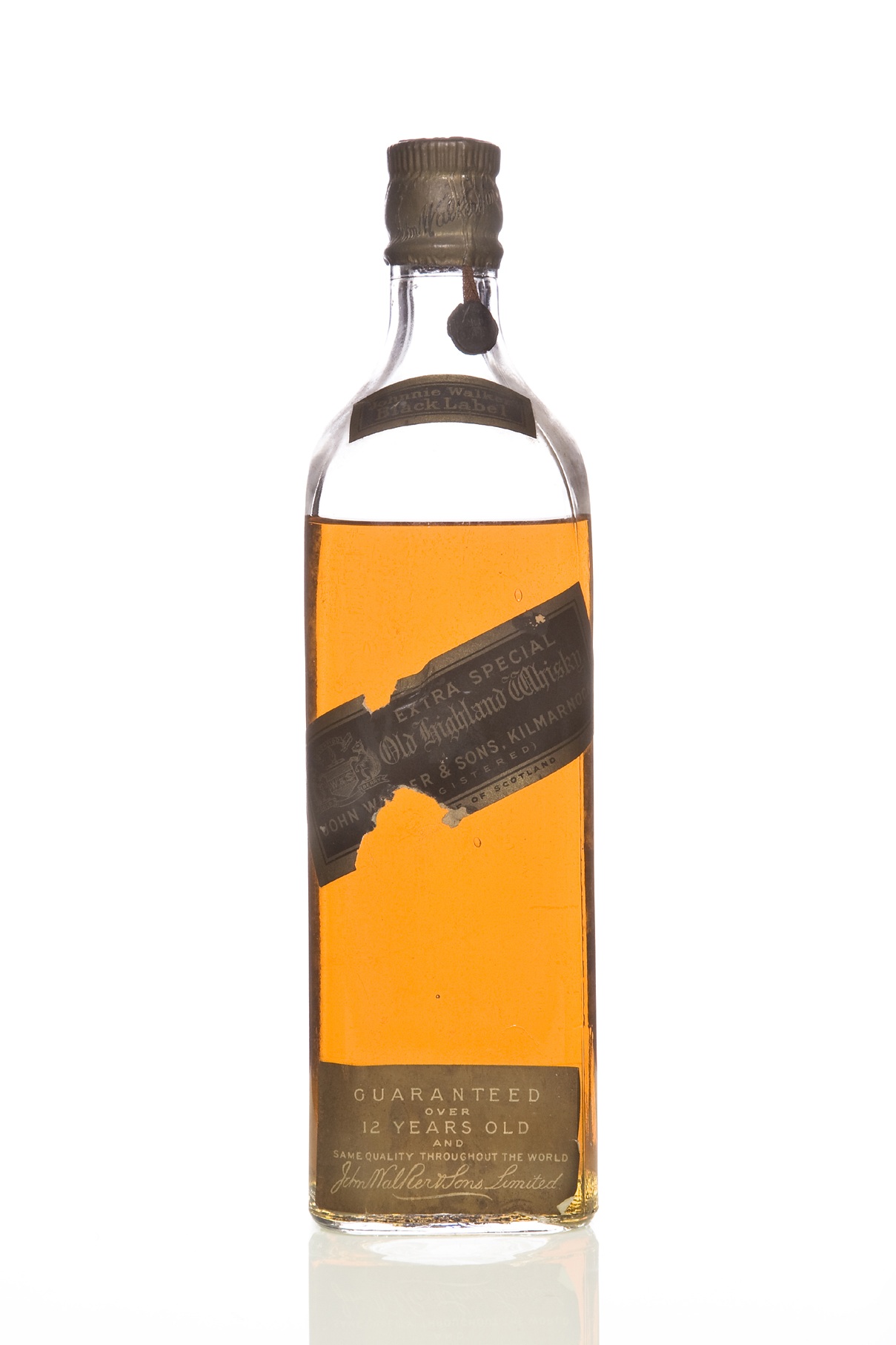
Black Label from 1920

Black Label from 1920

This is my second post about the Johnnie Walker webcast event titled “Johnnie Walker Black Label Centenary Journeyman Blending Webcast with Johnnie Walker Master Blender Andrew Ford.” Whew! My first, introductory post is here. Andrew Ford was the host of the webcast, airing from the Brandy Library in New York City. The webcast was divided into two parts. The first part being a history of Johnnie Walker, and the second being an overview and tasting of 7 whisky samples that represent the big building blocks of Johnnie Walker Black. These samples were sent out in a blending kit to the webcast attendees.

In this post, I’ll go ahead and share my notes from Mr. Ford’s history discussion, along with some pictures of the Walkers and some historic bottles for the history buffs out there. Then I’ll do another post with notes from the tasting, along with the Q&A from the interactive webcast.

John Walker and son Alexander

John Walker

John Walker

John Walker was thrust into the grocery business in Kilmarnark at the age of 15 when his father passed away. He somehow got into blending whiskies in an attempt to provide a consistent whisky product to his customers. [Note: The initial blends would have been solely comprised of single malt whiskies, as grain whisky didn’t come about until 1832] That’s really about all that’s known of John Walker, and it was his son Alexander that took the family grocery business and turned it into a big whisky company.

Alexander built up a wholesale business and started exporting whisky worldwide. He’s the one that came up with the square bottle (possibly for better packing in shipping containers), as well as the slanted label.

Alexander II and George

Alexander II

Alexander II

Alexander Walker left the family business to his sons George, Jack and Alexander II. George took over the business operations and became CEO. Jack fell ill and died while looking after the Australian part of the business. Alexander II was the blender. They still have original blending notes from Alexander II in the Johnnie Walker archives. Mr. Ford showed a picture of Alexander II in a blending room sometime around 1910, and commented that the room looked similar to the blending rooms used today.

To ensure the supply of whisky for their blends, the Walker brothers started buying distilleries. Cardhu was the first distillery purchased, and is still a cornerstone of the Johnnie Walker blends.

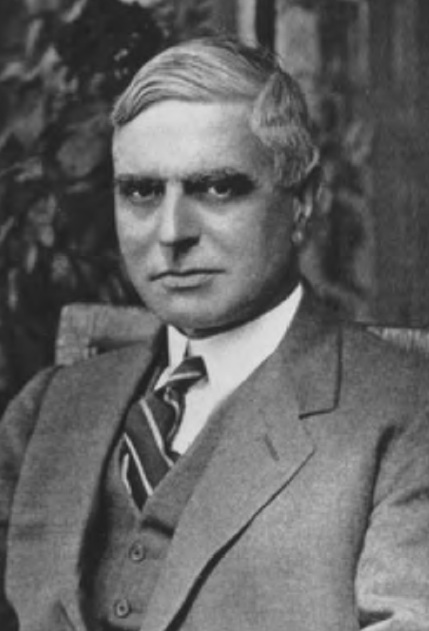
Note: Mr. Ford noted during the webcast that this was one of the “happier” pictures he’s seen of Alexander II. Quite the serious fellow, it seems.

Johnnie Walker Blending Room from 1910

Johnnie Walker Blending Room from 1910

How did “Black Label” come to be?

JW Black 1950

JW Black 1950

Alexander II came up with the Johnnie Walker Black Label recipe around 1906 and named it “John Walker Extra Special Old Highland Whisky.” Quite a mouthful! The label was black, to distinguish it from the standard blend which used a red label. Given the long name of the Extra Special blend, people just started referring to it as “Black Label.”

In 1909, they added an extra label to the bottle with the text “Johhnie Walker Black Label”, and here we are 100 years later celebrating the anniversary of the official “Black Label” release.

Andrew Ford mentioned during the webcast that he had a chance to try a 1950’s Black Label from the archives. It wasn’t exactly the same as current Black Label, but he noted that some of that could be due to bottle aging.

Coming in Part 2…

Rather than create one huge post covering the whole webcast, I’m going to stop here and resume in another post, where I’ll cover the process of actually walking through the seven whisky samples provided to the attendees.

There were also a number of questions fielded by Andrew Ford during the webcast. I’ll provide the details from the Q&A in the next post as well.

Previous Post: Introduction and a look at the blending kit

Next Post: The Art of Blending webcast – Part 2

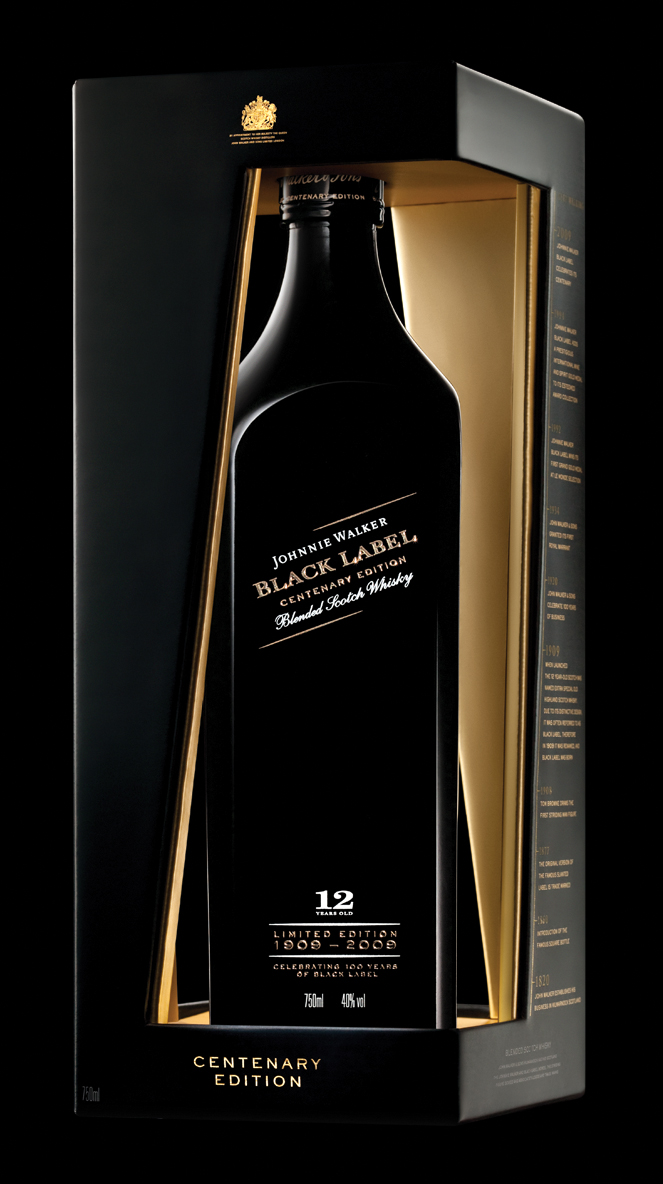
JW Black Centenary 2009

JW Black Centenary 2009

Introduction

JW Black Centenary Pack

JW Black Centenary Pack

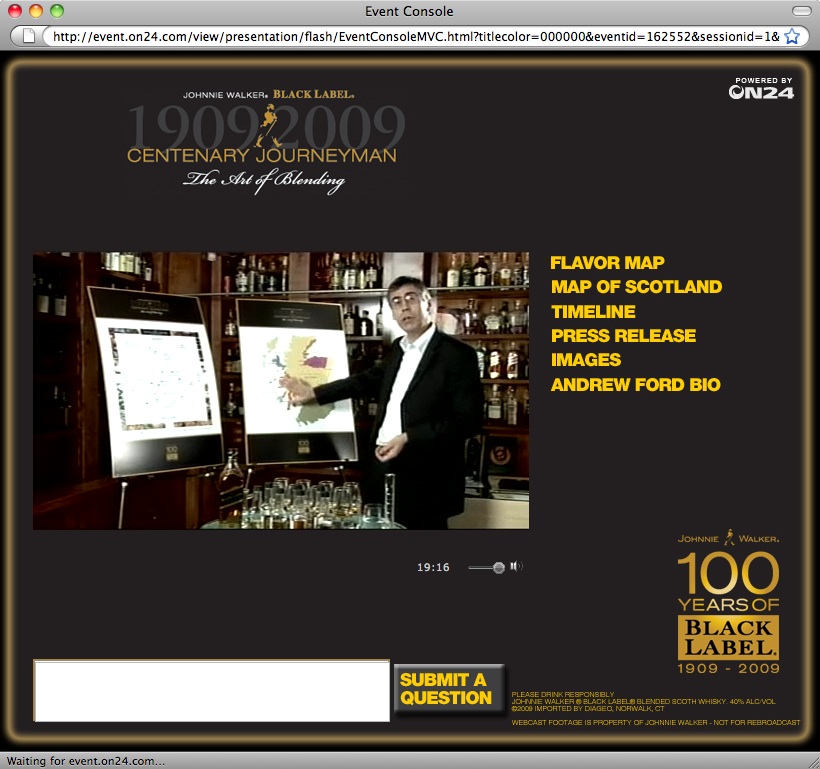
Is that a long title or what? That was the title of an event put on by Diageo’s Johnnie Walker brand on 9/29/09 as part of a celebration of 100 years of Johnnie Walker Black Label. The host of the webcast was Andrew Ford, Master Blender for Johnnie Walker, and they aired the event from the Brandy Library in New York City. It was an interactive webcast, with participants able to ask questions via web form during the presentation. Attendance was by invitation only, owing to the “Art of Blending” kit sent to each participant (details below).

So, how did I get an invite? I don’t know how to put this, but I’m kind of a big deal. People know me. I’m very important.

Ok, so maybe that Anchorman quote doesn’t apply…I’m nobody, and definitely not a big deal. However, the guys over at WhiskyParty.net apparently ARE a big deal, and they got an invite. I was fortunate enough to have them give my name to their PR contact at Johnnie Walker. I exchanged emails with the JW rep on Sunday before the Tuesday event, and my “Art of Blending” kit arrived via FedEx an hour before the webcast. Thanks Mike and Dan!!!

The Art of Blending kit

"The Art of Blending" kit

"The Art of Blending" kit

The blending kit sent to each webcast participant included the following:

  • 1 200ml bottle of Johnnie Walker Black
  • 7 sample bottles containing 100+ ml of whiskies representing each region (plus an extra first-fill sherry speyside sample and a grain whisky sample)
  • 1 Spiegelau whisky snifter (nosing glass)
  • 1 measuring device
  • 1 funnel
  • 1 empty sample bottle for storing your own blend
  • A tasting map
  • A map of the whisky regions of Scotland
  • A USB thumb drive with Johnnie Walker Black Label 100th Anniversary press materials and bio of Andrew Ford
Kit contents

Kit contents

The Whiskies

JW Black 200ml plus blending samples

JW Black 200ml plus blending samples

The sample bottles provided with the blending kit only contain high-level descriptions of region or type. They did not divulge the distilleries during the webcast, although there were a couple of hints, and possibly some facial expression give-aways by Andrew Ford during Q&A. Also, all of the samples are representative of whiskies that would go into JW Black (which contains 40+ malts and grains), so they’re at least 12 years old.

Unfortunately, I’m recovering from a cold, so I’m saving full tasting and blending experimentation until my nose and throat are back to normal. My sinuses did clear up enough to be able to somewhat enjoy nosing them, and I did taste a couple.

About the sample bottles:

  • Grain whisky – A very sweet, mild whisky with a definite “grain” aftertaste. Mr. Ford talks about grain whisky being important for blends, providing sweetness and drinkability. He likens it to rice or pasta in a food dish. I don’t know that I’m buying it. If it cost the same to produce a grain whisky and a single malt, would they really still choose to put the grain in the blend? I know it’s possible to create sweet, light, consistent tasting single malts these days.
  • Lowland – This is almost certainly Glenkinche, given that there are very few lowland distilleries (even taking into account closed ones) associated with Diageo. Mr. Ford also gave something of an acknowledging smile when somebody guessed that it was Glenkinche.
  • Speyside – Again, Mr. Ford seemed to almost give away the speyside distillery. He talked about Cardhu being a cornerstone malt for the Johnnie Walker blends. This is one that I tasted side-by-side with JW Black, and you could tell that it’s a big part of the blend.
  • Sherry Cask – A very strong sherry smell that reminds me of Aberlour a’bunadh. He mentioned that it was a speyside malt. Possibly a Mortlach?
  • Highland – A big clue was given for this one, when it was announced that our Highland sample was from a West Coast distillery. Oban jumps right to mind with that geographical reference. I tasted this one as well, but I’ve only had Oban once before. I need to get  a bottle to have on hand for reference. It kind of reminded me of Clynelish (from memory), but that’s on the East Coast.
  • Island – This one sure smells like Talisker, and wouldn’t you know that is a Diageo distillery and one that is known to play a big part in JW blends.
  • Islay – I figured this would be Caol Ila, but nosing it as best as I could with my cold, it sure seemed to have the Lagavulin iodine in it. Score! I can’t wait to taste this one. [Update: I poured a little into a nosing glass and tried it, and I’m pretty sure it’s Caol Ila 12]

The webcast

Webcast with Master Blender Andrew Ford

Webcast with Master Blender Andrew Ford

Tomorrow, I’ll post a full review of the webcast presentation by Andrew Ford. I’ll also share some of the questions and answers from the event. Then I’ll probably do a third post about the whiskies once I’m healthy, and share the recipe and tasting notes for my own custom blend.

In the mean time, you can read an excellent overview of the webcast on the WhiskyParty.net web site, or check out the live blogging post by Liquor Snob.

Next Post: Part 1 of the webcast

Introduction

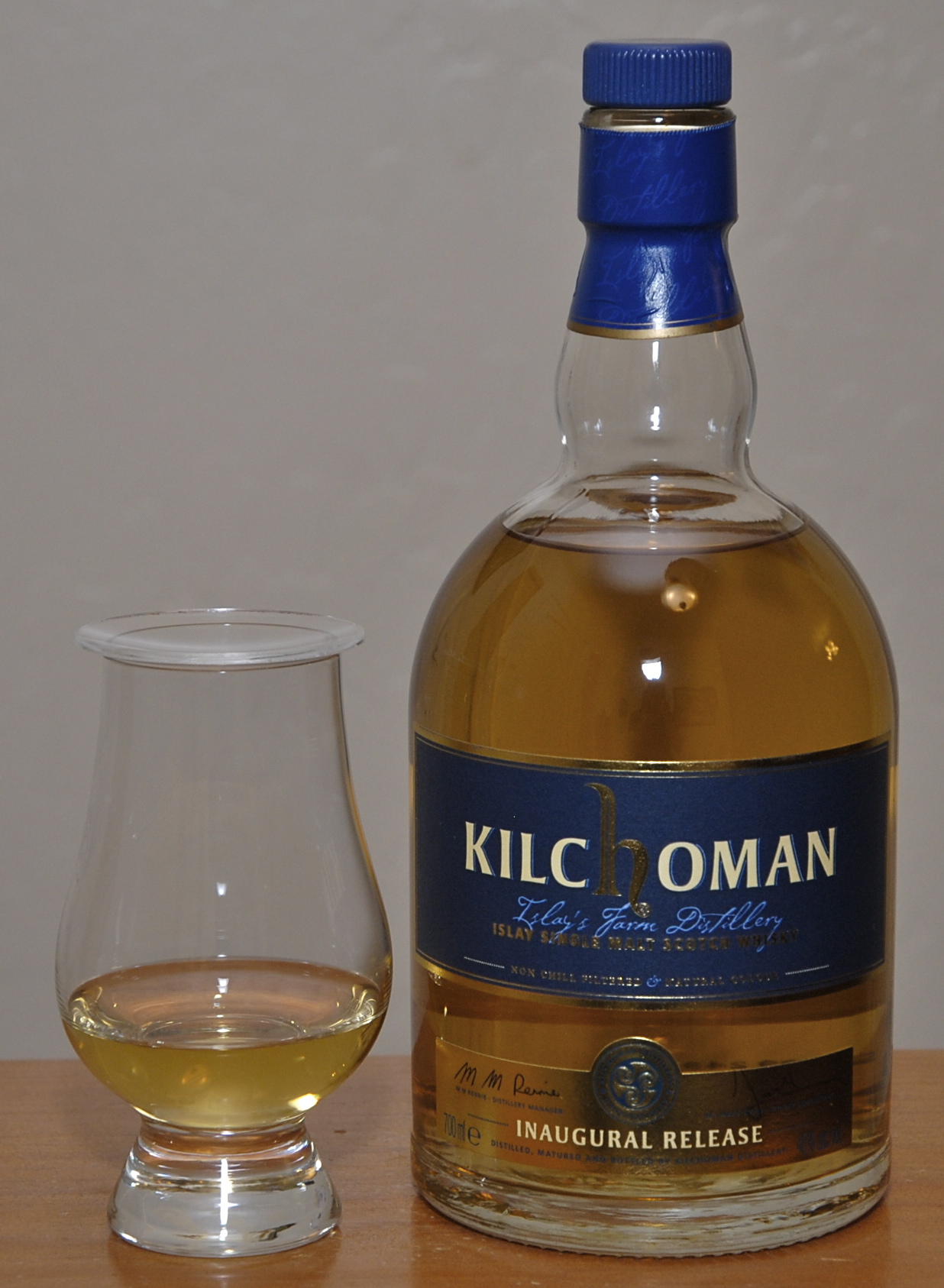
Kilchoman Inaugural Release

Kilchoman Inaugural Release

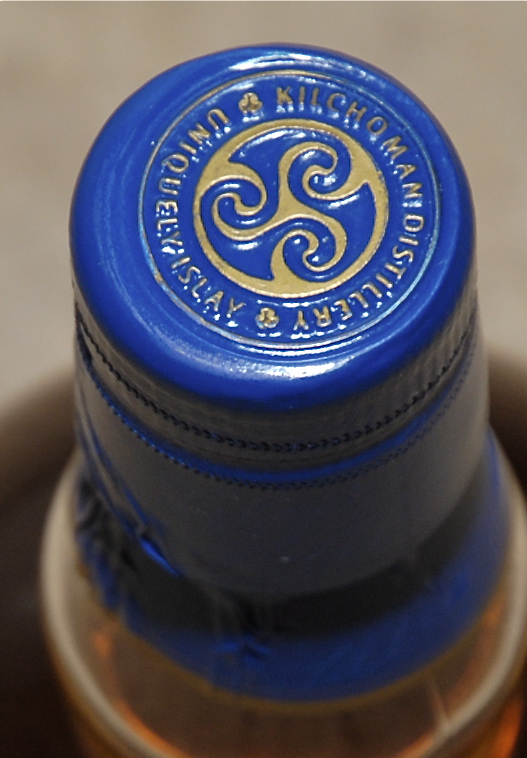
Well, it’s official. Kilchoman is the 8th distillery currently producing whisky on Islay, and the first new distillery to do so since the 19th century. On September 9th, they had a release party for the Kilchoman Inaugural Release 3 year expression, and it hit the stores on the 10th. The UK online retail portion of the approximately 8500 bottles released was sold out within a day. Fortunately, I managed to get an order placed first thing. The 3 year is bottled at 46% after spending 2.5 to 3 years in bourbon barrels from Buffalo Trace, followed by 5 months in oloroso sherry butts. The barley is peated to 50 ppm using the same spec as Ardbeg.

Tasting notes

A pour of Kilchoman 3 yr

A pour of Kilchoman 3 yr

Upon first opening the bottle, I held the cork up to my nose and got a wonderful pure peat blast that quickly faded as the spirit evaporated away. Mmm…peat.

On the nose, there’s no doubt about the use of heavily peated barley. There is a combination of peat and smoke that stands out above anything else. It’s a pure, earthy peat and ashy smoke. No tar or iodine to speak of like Ardbeg or Lagavulin respectively. There is a fair amount of vanilla on the nose as well. When I opened the bottle two days ago, I thought there was an eggy or rubber component. That has calmed down, with maybe some cereal notes remaining.

With a few drops of water, fresh pine and a little citrus come out, reminding me a little of Bruichladdich.

The palate seems pretty simple, with sweet peat and a little pepper after I chew on it for a few seconds. It’s a little hot, but I wouldn’t call it rough.

On the finish, the pepper remains and builds on the tongue. The ashy smoke and peat come back in full force, with the smoke hanging in the back of the nostrils for a long time. Again, no tar or iodine, just peat smoked barley in liquid form. BIG peat finish for the peat lovers.

Comparisons

The notes on the back of the bottle talk about rich dark fruits and citrus. After comparing this to Longrow CV, Caol Ila, and Benriach Arumaticus Fumosus, I just can’t call the Kilchoman “fruity.” It also took water and time to bring out a little citrus, whereas I felt there was much more noticeable lemon on the Kilchoman 2 year New Spirit. I wonder if the 5 months in sherry butts actually killed off a little of that fresh citrus scent.

As for the peat and smoke, I would liken that part of the profile more to Bruichladdich 3d3 or Bunnahabhain ‘Moine’ than Lagavulin, Ardbeg or Laphroaig.

Conclusion

It’s officially “whisky” now, but the 3 yr. is not a huge leap from the Kilchoman New Spirit that I had previously tried. It’s clear right from the start of the nose that this is a “big peat” whisky, and it doesn’t really offer anything surprising from that point on. However, the peat smoke is very “clean”, with no real sour notes to detract from the experience. The big, peaty, smoky finish is very enjoyable and lasts for a long while.

Heading into the finish, this seems like a “nice” 81 point whisky, but then the pepper hits, the peat builds, and the smoke lasts and lasts. By the time it’s all over, and the bonus points are tallied, I’ve got a big smile and an 84/100 point rating to hand out. This finish really speaks to me, but I can’t rate the whisky up with the likes if Caol Ila 12 or Ardbeg 10. With more maturity and complexity, I can imagine some pretty high scoring Kilchoman releases in the future.

Other opinions

  • [Update] I see Whisky Intelligence just did a post on this release as well. 86 points there, and I like the notes because they don’t appear to be at odds with mine. 🙂
  • Ralfy has already posted a video review of this expression. He really liked it and gave an 89/100 point rating.

Hmm…two ratings a bit higher than mine. I wonder if I’m being a little stingy just based on the theory of this being a 3 year. Oh well…doesn’t matter. I think we’re all sending similar messages. Plus, Ralfy is right that this is a one-trick pony. If that trick doesn’t float your boat, you’re going to really wonder what all of the fuss is about.

  • [Update 2] Finally, a dissenting vote. Ruben just posted his notes on WhiskyNotes.be, and awarded a mere 79/100 points. Actually, I don’t find his notes all that different. I just happen to personally get a lot of pleasure out of the one-note finish and awarded points for that. I suspect there will be a lot of people out there who agree with Ruben (if they can get their hands on a bottle).

Quick Take

Kilch 3 Quick Take

More pictures

Back of Kilchoman box

Back of Kilchoman box

Kilchoman Label

Kilchoman Label

_DSC6402

Introduction

Gift pack box

Gift pack box

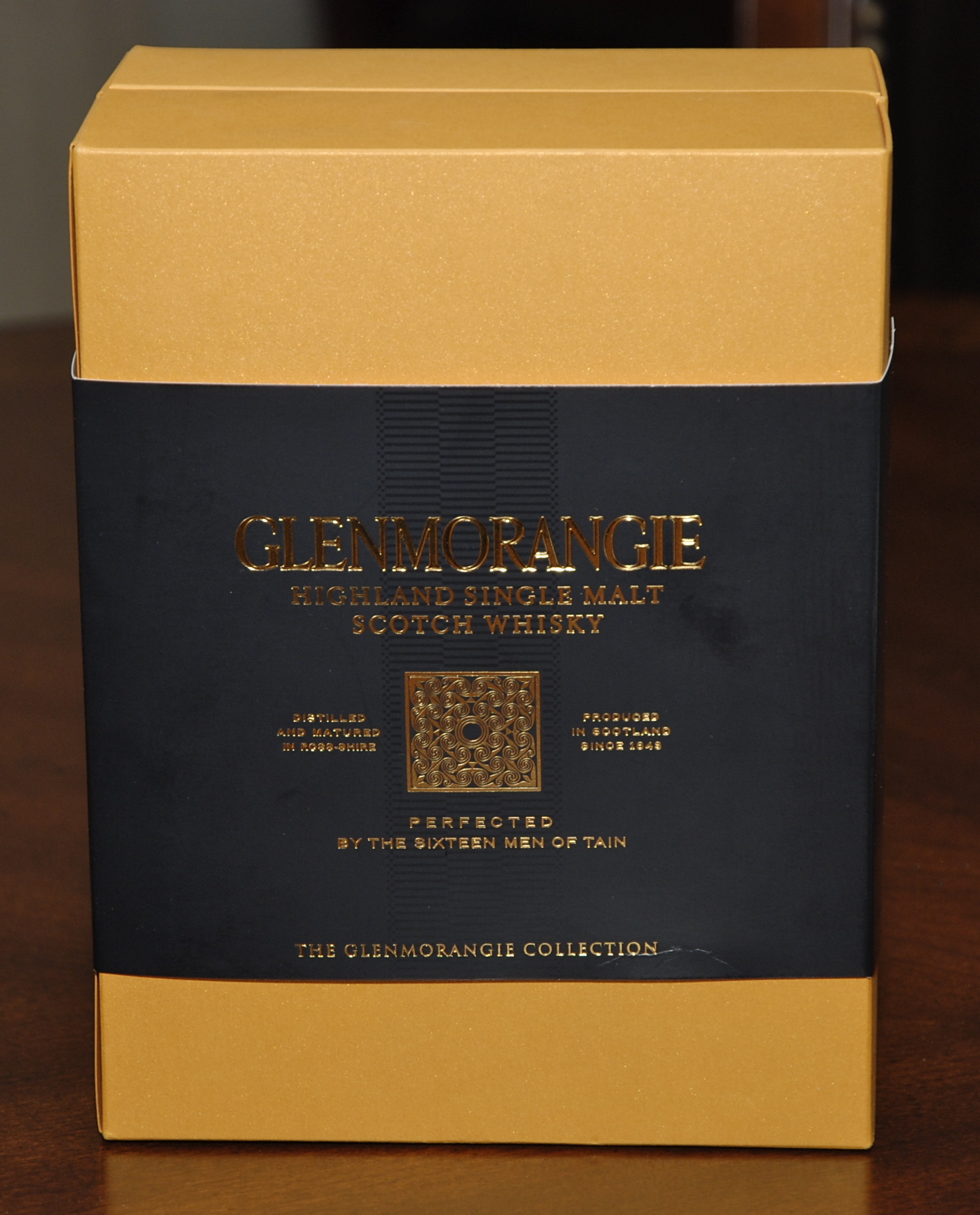
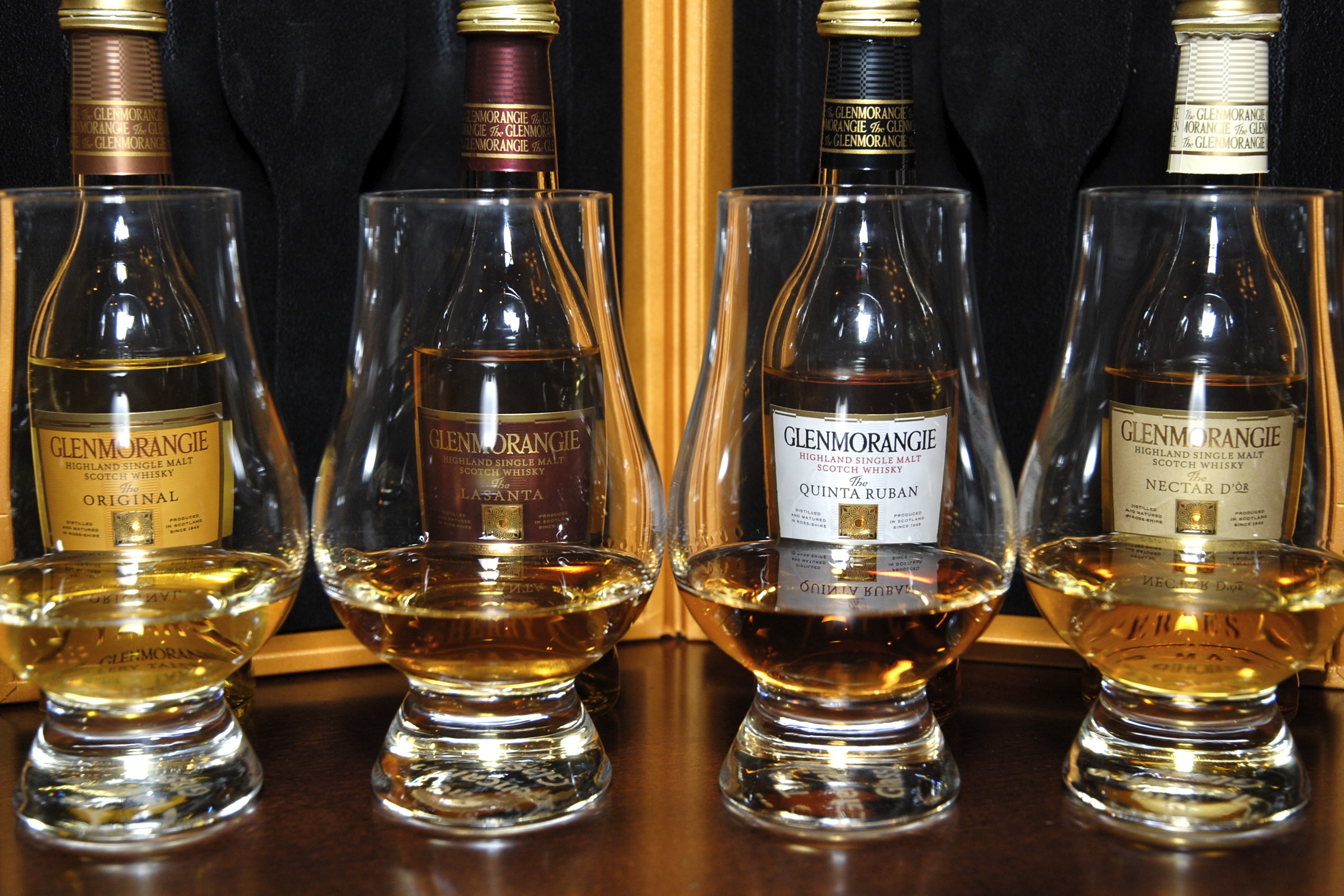
I love sample-sized whisky bottles. As a whisky enthusiast, there are a LOT of distilleries to become familiar with, and only so much money in the ‘ol bank account (and room in the cupboard). Glenmorangie offers “The Glenmorangie Collection” gift pack, which contains four 100 ml bottles:

  • The Original – Glenmorangie’s signature expression, aged 10 years and bottled at 43% for the U.S. market (and apparently 40% in the UK). It’s aged in ex-bourbon casks.
  • The Lasanta – After 10 years in ex-bourbon casks, The Lasanta is aged an additional 2 years in Oloroso Sherry casks.
  • The Quinta Ruban – Like The Lasanta, this 12 year old spends the first 10 years in ex-bourbon casks, but it’s then transferred to Ruby Port pipes for the final two years.
  • The Nectar D’or – The final “extra matured” expression. This one is finished in Sauternes wine barriques.

The 100 ml bottle size is nice, as it allows several tasting sessions in order to get a really good feel for what each expression is all about. This gift pack sells locally for $47. Obviously, this is a higher per-ml price for the whisky, but I was happy to pay the equivalent of a medium-priced whisky bottle in order to try all four of these expressions.

Packaging

The Glenmorangie Collection

The Glenmorangie Collection

The presentation for this gift pack is very impressive. They’ve recently repackaged this set with design cues taken from the ultra premium Signet packaging. In addition to the beautiful box and nice looking bottles, a fancy booklet is included that explains the maturation process for each expression, and provides tasting notes. Well done!

Tasting Notes

Four poured Glenmorangies

Four poured Glenmorangies

The Original 10 years (43%)

Light, fresh nose with citrus and floral notes standing out (like orange blossoms). Also a fair amount of vanilla, and maybe a hint of wood. The mouth stays light and fruity, and adds maltiness. The malt remains on the medium finish, along with a reminder of the orange blossoms.

The Lasanta (46%)

A definite sherry influence in the form of dried fruits. The sherry seems to do battle on the nose with the light citrus/floral notes from the original. It brought to mind musty carpet for some reason. The mouth is pretty nice, actually, with a little more body than the The Original. Then the sherry and bourbon are back to doing battle on the finish. I find it a bit disconcerting.

The Quinta Ruban (46%)

This is different. The citrus and floral notes are toned way down, and out comes a strong chocolate scent. Actually, the orange is still there, but balanced nicely with the chocolate. The mouth is pleasant and malty like The Original. On the finish…chocolate malt. What a great dessert drink.

The Nectar D’or (46%)

The least finished feeling of the three extra matured expressions. D’or is a natural extension of The Original, with the orange blossoms toned down (maturity?), and the vanilla coming through stronger and richer, with added cinnamon and nutmeg. Very seductive! The palate seems spicier than any of the others, with the finish remaining spicy and bringing out a hint of the chocolate from The Quinta Ruban. An even better dessert malt?

Conclusion

If you’re not already familiar with all four of these Glenmorangie expressions, I can highly recommend this gift pack. It looks good, has a nice booklet on the malts, and gives you a chance to try the whole line without committing big money and cupboard space.

As for my impression of the whiskies themselves, I really like the The Original. I would put it on fairly equal footing with Bunnahabhain 12 year in terms of overall enjoyment. The Glenmo Original is probably a bit more complex than the Bunna. When in the mood for a light, malty whisky, I would turn to the Bunna for cinnamon apples, and the Glenmo when in the mood for orange blossoms. Getting into the finished expressions (sorry, “extra matured“), I would put Nectar D’or at the top, Quinta Ruban right below that, and Lasanta several notches down.

I don’t like to do full ratings until I’ve had a chance to try a whisky a number of times. However, I’ll throw out some preliminary ratings of 80-ish/100 for Lasanta, 84 for The Original, 85/86 for Quinta Ruban, and 87/88 for Nectar D’or.

Other opinions

  • WHISKYFUN by Serge – Separate reviews of The Original and the Extra Matured expressions. Nectar D’or comes out on top here with a similar rating of 86. However, the other expressions are rated much lower than I felt they deserved. Serge especially differs from me when it comes to The Quinta Ruban.
  • Malt Advocate (review archives) – Wow, John Hansell really likes The Original, giving it 93 points! Nectar D’or gets a respectable 89. Lasanta doesn’t do as well, with 79 points.
  • whisky-pages – Gavin and Tom seem to like all four expressions, with The Original and The Quinta Ruban rated a little better than the other two.
  • caskstrength.net – [Added 10/6/09] I missed this review the first time around. Thanks for the heads up, Joel. A great overview of these Glenmorangies, plus the 25 year. They enjoy the original and seem equally puzzled by the Lasanta, but are a little less enthusiastic about the D’or than I am.

Introduction

There is a liquor store between home and work that sells a lot more beer kegs than whisky, but they do have a pretty good selection of the good stuff, including some bottles that have been sitting around for several years. I stopped in to look for something I can’t find at my usual haunts, and saw a few bottles of White Horse Extra Fine blended scotch sitting on the bottom shelf. I haven’t seen this anyplace else, and I thought I had heard good things about White Horse on the whisky forums. It’s aged 12 years, bottled at 40% ABV, and priced at $33.

White Horse Extra Fine 12 years blend

White Horse Extra Fine 12 years blend

I picked up the box, and read that “the powerful, smoky flavors of the aged Lagavulin combine in perfect harmony with the mellow, rounded character of Glen Elgin and the sweet aromatic flavors of Craigellachie to produce an outstanding quality Scotch Whisky for the truly discerning drinker.” A blend based on Lagavulin? Sold! I had to try a bottle.

Tasting notes

On the nose, I immediately pick up signs of sherry cask aging. There are dark fruits (prunes) and figs. It’s not a sherry bomb, reminding me more of single malts that are 40-50% aged in first-fill sherry casks, like some Highland Parks and Dalmores. Also hinting at some sherry aging is a light sulfur presence. Not enough to turn me off, though. Finally, there is a pretty strong toffee sweetness. Sometimes I thought I picked up hints of smoke, but then it would disappear. I also thought there was some orange, until I tried it next to Dalmore 12, then I wasn’t so sure. Orange came out in the Dalmore and disappeared from the White Horse in the comparison.

On the palate, it’s very sweet, and quite mild. It does, however, have just a bit of pepper that builds after a couple of seconds, and some hints of spices like ginger and cinnamon. That’s a nice touch, but it doesn’t compare to higher proofed, stronger tasting single malts.

The finish is short to medium on the tongue, but there’s still a little pepper and some pleasant drying, along with a slight malty presence. There’s also just a little bit of “grain aftertaste” on the back sides of the tongue that I seem to get with most blends (and vodka). Meanwhile, some smoke finally makes an appearance, enveloping the fruits from the nose and hanging in the back of the nostrils for a medium period of time.

Conclusion

You’ll note that I didn’t say anything about Lagavulin similarities in the tasting notes. That’s because there is nothing even remotely resembling the iodine and smoke that makes Lagavulin so recognizable. So, I must have been terribly disappointed by this blend, right? Quite the opposite. White Horse 12 year just shot to the top tier of my blended whisky list.

I  really enjoyed the sweet, fruity nose. It was perhaps the closest to a pure malt that I can recall in a blend. I’m also a big fan of mixed sherry/bourbon cask whiskies, so my impression of this being similar to HP or Dalmore in this regard fit right into my preferences. Finally, the palate and finish were just interesting enough to keep me coming back for more, and there wasn’t much in the way of detractions. One thing lacking was much of a wood influence, which I look for (not too much, though) in a fully balanced whisky.

Overall, this is a very good whisky, and not just for a blend. I highly recommend trying this if you can find a bottle. I’d rate this 85/100 points for having lots of good points and very few bad ones. To rate it higher, the palate/finish would need to be a little more interesting, and I would want at least some level of noticeable wood influence.

Availability and other opinions

I can’t find White Horse Extra Fine in any of the larger liquor stores locally, or the online stores that I frequent. I’m not sure if this isn’t made anymore, or if it’s just primarily sold in other markets. I also can’t find any reviews in the whisky publication online sites, or the better known blogs. If you’re familiar with this particular blend, I’d love to hear your thoughts in the comments. I’d also be interested in hearing about any “official” reviews out there. This seems too good to go completely unnoticed. Or maybe I’m just too easy to please.

I did manage to find a couple of online references to White Horse 12:

  • LA Whisky Society: Type “White Horse” into the search box at the top of their main page. A couple of the LA Whisky Society members rated Extra Fine 12 year. Their minimal notes are a bit different from mine, but they do give it a B+ rating.
  • Whisky.com: A page dedicated to the White Horse blends. The text from the box of 12 year Extra Fine is included, and check out the links to the distilleries that are used in the White Horse blends. While I didn’t find much to remind me of Lagavulin, I can certainly believe that Glen Elgin and Craigellachie play a significant role in the flavor of this blend, based on the distillery profiles.

Quick Take

You can read about my attempt at a rating system here.

White Horse 12 Extra Fine

Following on the previous Friends of Laphroaig email, John Campbell has sent out another letter with official details of the Distillery Live event on September 25, 2009 at Maker’s Mark Distillery. News since the last letter includes the creation of a web site dedicated to the event at http://www.distillerylive.us.com.

Update 9/26/09: For those who missed it, here is a link to a video of the event: Laphroaig Distillery Live

Here’s the official letter:

Dear Friend of Laphroaig,

I promised in my last e-mail that I would write to you again with all the final details for the live Webcast we will be doing at Maker’s Mark Distillery in Kentucky, so here they are.

The online event will be happening on Friday, September 25 at 8 p.m. Kentucky time, which I’m told is Eastern Daylight Time (EDT). I believe that works out to 1 a.m. on Saturday the 26th for the UK. I know this isn’t an ideal time for our FOLs in Europe, but the video will be available a week or so later on the Laphroaig Web site for you to watch at your leisure if you can’t tune in live.

I hope as many of you as possible tune in live to submit questions to the panel (Kevin Smith from Maker’s Mark, John Hansell who is the Editor of Malt Advocate and, of course, myself) during the show. Anyone whose question is read out during the live broadcast will be sent a special prize as well, so remember to include your e-mail address when you submit the question.

We also have a special Web page set up which has a countdown on it, as well as some further information on the event. Go to http://www.distillerylive.us.com and make sure you bookmark the page so that you don’t forget the address on the 25th.

As I mentioned in my last e-mail, we will be tasting a range of Laphroaig expressions, including the 10 Year Old, the new 18 Year Old and the 25 Year Old. There are also some special items I am really excited about. The guys over at Maker’s Mark have found a famous chef who is going to cook some lovely food for us – designed to complement Laphroaig and Maker’s Mark whiskies. Hopefully I can get hold of the recipes in advance so all you culinary experts can try out the recipes, too.

As I mentioned in the last e-mail, we will also have a cocktail section. Thanks go to everyone who has already e-mailed me their suggestions for cocktails. We’ve had a lot of fun trying out your recipes. Remember, anyone whose cocktail is made during the show will win a special prize. If you haven’t e-mailed your suggestion, you still can. Just drop me a line at info@laphroaig.com with the subject line: Distillery Live recipes.

In other news, I have created a Twitter account – I am still a bit of a novice but am really enjoying connecting with some more FOLs from around the world in real-time. If you would like to follow my “tweets” (as I have been told they are called) then go to http://www.twitter.com/laphroaigwhisky. I will be updating with news in the build-up to Distillery Live, and I will, of course, also be updating the FOL homepage.

Slàinte,
John Campbell
Distillery Manager

I love scotch.

Mm, I love scotch. I love scotch. Scotchy scotch scotch. Here it goes down. Down into my belly. Mm-mm-mm.

– Ron Burgundy, “Anchorman”

That’s the ringtone I have on my phone right now. I downloaded it from moviewaves.com. Or did I? If it’s illegal, then I didn’t. Anyway, I thought some of my fellow scotch lovers might find it amusing.

We were at my parents’ house, and my phone rang. “…I love scotch. I love scotch…” My mom scrunched up her face and queried “who is Scott?” 🙂

As long as I’m sharing random, mildly amusing anecdotes…we were having dinner this weekend with some friends. We took dessert and a 20 cl bottle of Caol Ila 18 with us. They had a bottle of Laphroaig QC that had been given to them as a gift. They don’t like it (too smoky), and jokingly said that they keep it around to give to people they don’t like.

Anyway…I left the remaining 5 or so cl of Caol Ila with them and came home with two-thirds of a bottle of QC. Pretty good deal, I’d say!

Introduction

bunnah_moineI’ve been sitting on a 30 ml sample of Bunnahabhain ‘Moine’ (from Feis Ile 2009) for a while now, and decided to finally give it a try. It’s bottled at 58.4% ABV, and only 642 bottles were produced and made available at the distillery during the Feis Ile festival in May 2009. The price is approximately $130. I ordered my sample from whiskysamples.eu, along with samples of the Laphroaig Feis Ile bottling and Laphroaig 10 CS Batch 001.

Tasting notes

On the nose, this definitely comes across as a young whisky, with noticeable alcohol edge in the form of nail polish. I’m getting an eggy/rubbery component that reminds me of Ledaig 10. There is definite peat here as well, and a little bit of citrus and honey.

On the palate, it’s hot. This one begs to have some water added. Much more so than even my 71.8% George T Stagg. In addition to the prickly heat, there’s a sweet peat flavor that’s reasonably enjoyable.

The finish is where the smoke finally comes through. It reminds me of Kilchoman new make spirit, but it’s not quite as “clean” of  a peat smoke. A little bit of egg comes back through the nostrils as well. There’s also some sweetness on the finish.

Conclusion

This is a very average whisky. Its youth comes through, but not in an exciting way. I found the nose to be slightly off-putting, but the mouth and finish were reasonably enjoyable once I added a little water. If you’re a big Ledaig 10 fan, I think you would like this, but there’s no way to justify the price of the ‘Moine’, even if it is an “exclusive” release. With only a 30 ml sample on hand, I won’t do a full score card, but I would tentatively rate this at 79/100. With a little water, it’s enjoyable enough, but the nose subtracts from the experience.

Making your own ‘Moine’

I mentioned that the nose reminds me of Ledaig 10, and the finish of Kilchoman 2 Year New Spirit. Well, I have both of those and decided to do a little experimental vatting with 70% Ledaig and 30% Kilchoman. The result? It’s not an exact match, but the overall experience was pretty darn close to the Bunnahabhain. I like the way the Kilchoman tones down the eggy/rubbery component on the Ledaig nose, and adds a cleaner peat smoke finish. This combo can also be had for a lower price than the ‘Moine’, even taking into account the fact that you’re buying two bottles.

Other opinions

  • WHISKYFUN.COM by Serge – The Lindores Boys did a guest report from Feis Ile and ripped apart the ‘Moine’ release.
  • WhiskyNotes.be – Ruben didn’t love it, but he had a greater appreciation than the Lindores Boys, giving it a reasonably good rating.

Introduction

App Icon

App Icon

Following on my first post about my Easy ABVs application for the iPhone, I’ve now completed the application and thought I’d post a few pictures and describe how it works. Easy ABVs is a calculator application specifically designed to calculate alcohol content of a spirit, and show how adding water affects the final ABV (Alcohol by Volume). In addition to cleaning up the appearance, I’ve made pretty much all of the settings user-configurable, and added an information screen. I got around my lack of artistic abilities by going with a completely text-based application icon. It’s supposed to be a take on a grade school “ABCs” notebook ledger.

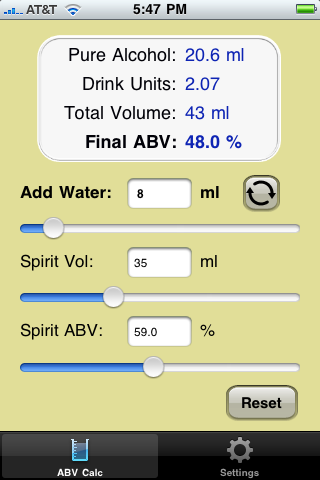
The calculator (Final ABV mode)

ABV Calc (Final ABV Mode)

ABV Calc (Final ABV Mode)

The calculator allows you to enter the original ABV of a spirit, the size of the drink you’re pouring, and by default, the amount of water you want to add. Note the combination of text boxes and sliders. I find the sliders to offer a level of convenience that you don’t get with similar web-based calculators. For one, I can enter the data a lot faster with the slider. Another benefit is the ability to progress through a bunch of numbers and see real-time updates in the results pane.

The results pane (panel at the top) displays a number of relevant calculations:

  • Pure Alcohol = Spirit Volume * (Spirit ABV / 100)
  • Drink Units takes the amount of pure alcohol and divides it by the number of ml considered to make up a single “drink unit.” There are standard drink unit sizes for the UK and US. More on that further down.
  • Total Volume = Spirit Volume + Water Added
  • Final ABV is the Alcohol by Volume for the combined water and spirit.

The calculator (Add Water mode)

ABV Calc (Add Water Mode)

ABV Calc (Add Water Mode)

The above image shows the calculator after I clicked the “swap” button right below the results pane. Now, instead of entering an amount of water to add and seeing the calculated Final ABV, you enter a Final ABV and see the calculated Add Water amount in order to dilute the spirit to the desired strength. This can be handy if you’re comparing a number of whiskies and want to try them all at the same strength. Simply set the Final ABV where you want it, and adjust the Spirit ABV for each whisky. The calculator will show you how much water to add.

The settings tab

App Settings

App Settings

Pretty much everything in the calculator is user-configurable. You can set the min/max values for the sliders. I recommend setting them so that the range is as small as possible, based on your normal use. This way you can be more accurate with the sliders. The more numbers, the more difficult to land on a particular one. The default values are also configurable. These are the values for when the application starts up, and when you hit the reset button. I’ll discuss the Drink Unit size in the next section.

The information screen

Info Screen

Info Screen

Clicking the “i” button in the lower right corner of the settings screen causes the screen to flip over and reveal some information about the whole Drink Units concept. The UK and US have similar guidelines for what they consider “moderate” drinking. They use different base drink sizes, but recommend similar total limits on a daily/weekly basis. The 10 ml drink unit in the UK is based off of a 25 ml serving of a 40% ABV spirit. The ~17.6 ml drink unit in the US is based on the amount of alcohol in a 1.5 oz shot of a 40% ABV spirit. I’ve set the default drink unit size to the UK 10 ml, but of course, it’s fully configurable. You could even come up with your own drink unit size based on your own habits/preferences.

What’s next?

I’m going to try posting this to the iTunes App Store and see what the process is like. I’m not charging anything for this application. I figure the potential audience is fairly small. You need to  not only be into drinking spirits, but you probably need to be something of a geek. 🙂

So…any whisky geeks out there want to give this a try before I post to the App Store and give me feedback, or see if you can break it?