Feeds:
Posts
Comments

Happy Independence Day, America!

Ok, so I’m a bit late with this one. I actually wrote up my notes on the 4th, but didn’t get around to finishing the post until today…

Four outstanding American whiskies

After a recent purchase of Pappy Van Winkle’s Family Reserve 15 year bourbon, I realized that I now have four premium, wheated bourbons to compare (I’ve found that I tend to prefer wheated bourbons to rye). Four great American whiskies for July 4th? Perfect! I compared the PVW to William Larue Weller 2009 release, Jefferson’s Presidential Select 17 year, and Parker’s Heritage Golden Anniversary. Ok, I guess I haven’t read anything about the use of rye and/or wheated bourbon barrels in the Parker’s release, but it sure tastes like a wheated bourbon. [Update: They’re making a big deal about the fact that the 4th edition of Parker’s Heritage is going to be a wheated bourbon, so maybe the Golden Anniversary is all/primarily rye. Fooled me.]

Pappy Van Winkle’s Family Reserve 15 year ($55 – $75) is a regular bottling, but it seems to come out in relatively small batches and sells out quickly (at least here in AZ). According to the bottle, it’s based on the same recipe as the PVW 20 year, just aged for a shorter period. It’s bottled at 107 proof (53.5% abv). This bourbon has a great mixture of fruit and spice, with some definite wood influence (but not too much) in the form of vanilla and oak. Extremely balanced, it hits the palate just right, with a good zip on the tongue, but not so much as to need water. Rye bourbons are known as the spicy ones, with wheaters being sweet. In this case, there’s a nice nutmeg spice on the tongue along with the maple syrup sweetness. Again, just wonderful balance. The finish medium-long and it’s all good. No bad after-taste at all. I haven’t tried the 20 year, but I can’t help but wonder if this bottling is the sweet spot in the range. There’s plenty of wood influence, and I wonder if the 20 year would come across as a little less balanced. Plus, it’s an extra $50 or so for that one.

William Larue Weller (2009) ($65 – $85) is part of the annual Buffalo Trace Antique Collection (BTAC). Bottled at 134.8 proof (67.4% abv) in 2009, this whiskey is bottled at barrel proof and only minimally filtered to remove the bigger pieces of char. This release and George T. Stagg, a rye bourbon (also of the BTAC collection), are about as close as you can get to buying a Buffalo Trace whiskey straight out of the barrel. I enjoy drinking WLW neat now and then, just for a bit of a thrill on my tongue, but for this comparison, I watered it down to around 100 proof. At this proof, it’s really not that different from the PVW 15. I want to say the WLW is a little more fruity, while the Van Winkle provides a touch more spice. What the Weller provides that the PVW can’t is the occasional thrill of drinking it neat. It’s a pretty amazing experience, as it’s incredibly drinkable, even if it does kill off the taste buds after about 5 minutes. 🙂

Jefferson’s Presidential Select 17 year ($75 – $100) is a special release of Stitzel-Weller juice from right before Stitzel-Weller stopped operating. Bottled at 94 proof, my bottle is #505 from Batch No. 2 (out of 7 or 8 batches, I believe). The Jefferson’s has a similar backbone to the WLW 2009, but brings out even more red fruits on the nose. Even though it’s bottled at 17 years, there’s less raw oak on the nose than either of the previous two. How did they manage that? It’s sweet on the palate, with a little less spice than the other two expressions, but still well balanced. A medium, sweet finish leaves the tongue watering and wanting more. There’s not a very strong drying sensation. This bourbon has plenty of complexity, yet goes down sooooo easy. A great bottle to share with aficionados and occasional drinkers for a special occasion.

Parker’s Heritage Collection (Third Edition) “Golden Anniversary” ($135 – $150) is a tribute to master distiller Parker Beam, and contains whiskey from 5 decades, with the majority of the whiskey aged between 10 and 20 years. You can see the full press release here. The nose on this whiskey is flat-out amazing. Easily the most complex of the bunch. All of the fruit and spices of the others, plus a stand-out vanilla and orange combination that John Hansell described well as Orange Creamsicle. There surely isn’t much of the older whiskies in here, as the oak, while present, is completely tamed. What’s amazing here is that there is so much vanilla and cocoa, but so little raw oak/cedar. It’s like they figured out a secret to keeping the best of the barrel influence and weeding out the questionable stuff. The palate and finish lie somewhere in between the somewhat mellow Jefferson’s and the other two expressions, with nice spices, medium drying, and a medium-long finish. Just outstanding.

Comparative thoughts: These are all really amazing bourbons, and well worth their higher prices as far as I’m concerned. The only warning I would offer is that the Jefferson’s Presidential Select reminds me a bit of Ardbeg Airigh Nam Beist. It’s complex, balanced, and highly drinkable, yet when doing head-to-head comparisons, it can come off as being a little flat. I still strongly recommend it, but drink it on its own and appreciate it for what it is. Moving on, Pappy Van Winkle 15 and William Larue Weller kind of scratch the same itch for me. However, I was really impressed with how perfect the bottling proof is for the PVW. The WLW 2009 is totally worth purchasing, and offers a unique strength for a wheated bourbon, but if you missed out on it, don’t fret too much. Just go buy a bottle of PVW 15 and enjoy the spicy/fruity/oaky balance. The Parker’s Heritage is really expensive, but totally unique in flavor and creation process. Only you can decide if it’s worth paying that much for a bourbon. If you do buy it, and you usually drink bourbon from a tumbler, try pouring some of this in a brandy or scotch nosing glass. Sit back, and take in that incredible aroma.

Update: For my own tastes, I would put these bourbons primarily in the B+ range relative to the scotch whiskies I’ve rated, with the Parker’s Heritage sneaking up into full A- territory with the likes of HP 18 and Dalmore Mackenzie. A year ago, I thought of bourbons as more of a second-class citizen. Pleasant enough, but even the good ones were “B” whiskies. I’ve really warmed up to the bourbon profile (especially wheated ones) in recent months.

Cheers,
Jeff

I got a press release from Diageo about a special Father’s Day deal. I’m attaching the full release below, but here’s the short version: Buy a bottle of Singleton 12, Talisker 10 or Dalwhinnie 15 and get two tickets to a “whisky master class,” which sounds like a really fun and educational whisky tasting. Note that the classes are only available in the following UK locations: Glasgow, Edinburgh, Newcastle, York, Sheffield, Manchester, Birmingham, Shrewsbury, Cambridge, Norwich, Oxford, Cardiff, Bristol, South London, North London, Chichester, Exeter

If anybody goes to one of these, I’d love to hear what you think of Diageo’s master class. Here’s the press release:

With Father’s Day rapidly approaching, the hunt begins for the ideal gift for the deserving Dad. The Ultimate Single Malt Whisky Experience could just be what you’re looking for.

This year help is at hand, for the first time, The Classic Malts Selection is offering the perfect solution. Buy a bottle of either THE SINGLETON® OF DUFFTOWN 12 year old single malt scotch whisky, TALISKER® 10 year old single malt scotch whisky or DALWHINNIE® 15 year old single malt scotch whisky, and receive two complimentary V.I.P invitations to a whisky master class. The Classic Malts team of whisky ambassadors will be hosting masterclasses in 17 major cities nationwide.
Research shows that over a third of alcohol gifts bought for Father’s Day[1] are single malt whiskies. So why not take it a step further this year, at no extra cost, present your dad with two tickets to a malt masterclass where he will try four different Scotch malt whiskies in the company of an experienced ambassador, who knows, he might just invite you to go with him!

The complimentary whisky master class, hosted by a single malt whisky ambassador, will guide you through the world of single malt whisky using THE SINGLE MALT WHISKY FLAVOUR MAP™. With so many ages, regions and distilleries out there, there’s a diverse and exciting world of flavour for your father to explore. With the aid of the Single Malt Whisky Flavour Map, which has been created by experts, you/he can pin-point each flavour and identify what type of whisky suits your taste.

Your whisky ambassador will provide a selection of four Single Malt Scotch Whiskies for you to experience and savour, after the tasting they will leave you with your very own flavour map and some serving suggestions to inspire your newly acquired whisky knowledge.

For the perfect original gift this Father’s Day, choose either the ‘Perfectly balanced, naturally rich and smooth’ The SingletonÒ of Dufftown 12 year old, the ‘characterful and smoky’ TaliskerÒ 10 year old, or the ‘mellow, soft and fruity’ Dalwhinnie®  15 year old, available at all major retailers. Don’t forget you’ll also receive two invitations to this exclusive whisky master class.

Introduction

Dalmore Mackenzie

Last year, on my 40th birthday, I treated myself to a bottle of Laphroaig 30 year and had a “scotch party” to share it with friends. That was actually my first birthday as a “scotch drinker.” I decided I liked the idea of celebrating my birthday with a special, limited edition bottling. I didn’t want to spend quite as much this year, but was keeping my eye out for the right whisk(e)y when The Dalmore announced the pending release of “Mackenzie” in March. Priced at around $125 (although not available in the U.S.), Mackenzie is a limited release of 3,000 bottles, all individually numbered with a special molten metal stag on the bottle.

Specially crafted by Master Distiller Richard Paterson, the Mackenzie started its maturation process in American white oak casks in 1992. After 11 years, it was put into fresh port pipes for another 7 or so years and bottled at 46%. Additionally, each bottle comes with a card, instructing the purchaser how to get a free limited edition print (12″x16″) of the famous “Fury of the Stag” painting that is also printed on the box. Finally, a portion of the proceeds go to The Mackenzie Clan, with whome the Dalmore distillery has long been affiliated. You can read more about the bottling, the painting, and the release party in this article at Luxist.com.

Tasting and Comparing

Oh, this is a good one!

The nose is rich and fruity, with lots of dried red fruits. The Dalmore citrus is apparently toned down quite a bit from the time in port casks. Not as much sherry sweetness as in the Dalmore 21 year. Actually, this is VERY close in character to Highland Park 18, including a hint of smoke. The HP has an earthy component not present in Mackenzie, but everything else is there. Actually, the nose on Mackenzie is not quite as expressive as the other whiskies I’m comparing it to, but stick your nose in there and spend some time with it and it’s well worth the effort.
The palate has good body and retains the fruity character. As it passes towards the back of the tongue, a nice spiciness takes hold. Bottling this at 46% was an excellent choice!
On the finish, the spices carry on through, joined again by red fruits, oak and a hint of smoke. When comparing directly to Dalmore 21, I thought the Mackenzie presented cherries on the finish as well. I haven’t read anything about Dalmore using peat like HP does, but I keep thinking there’s some hidden in here. Maybe it’s just the interaction of the oak with the spirit? It lasts every bit as long as the HP 18 and Dalmore 21. A very enjoyable finish.

Mackenzie and Dalmore 21

Comments: This is only my third Dalmore (after the 12 and 21 year bottlings), but it’s now my reference for this distillery. The only negative I took away during comparisons was that I had to work harder to coax out the nose. Overall, I like this better than the 21 year. I think the Dalmore 21 falls squarely in the “dessert malt” category. The Mackenzie certainly can be used in this way, but I think it’s more versatile, like HP 18. Now, between Mackenzie and HP 18, it’s pretty close to a draw, though I’m leaning slightly towards Mackenzie because of the extra oomph provided by the 3% additional ABV. Thank you Richard Paterson for crafting this delightful malt…more like this, please!

Rating

  • Score: 90/100 (A-) After comparing this directly to HP 18, I might consider dropping my score on that one from 90 to 89. They’re very close, though.
  • Bottom Line: Outstanding balance, and great use of Port casks. Maybe it’s the 46% bottling, but there’s an extra kick on the late palate and early finish that I haven’t experienced from other Dalmores. I’m going to miss this bottle when it’s gone.
  • Value: Ok, this isn’t cheap, and if you’re in the U.S., you’re going to have to pay shipping from Europe. However, when you combine the nice packaging, contribution to the Mackenzie Clan, and of course, the great taste, I think it’s a treat well worth the asking price. Given all of the $500+ “special releases” floating around these days, I’d be happy to see more like this one.

Other opinions

  • Luxist.com – I linked to them up at the top of the article. They’re quite impressed with this one as well.
  • What Does John Know – 91 points here. Another very positive review!
  • whisky-pages.com (scroll down) – Rating this the same as Gran Reserva, they also noted smoke and cherries (glace).

Mackenzie Box

Card depicting 'Fury of the Stag' painting

Introduction

Like I did last year, I’m going to be following blogs and tweets, living vicariously through Feis Ile festival-goers. Feis Ile is the Festival of Malt and Music, taking place the last week of May each year on the island of Islay in Scotland. As long as I’m following along, I figure I might as well post my findings here, providing an index for others who might be interested. I’ll update this post periodically throughout each day of the festival.

Feis Ile resources

Day 1 (May 22, 2010) – Lagavulin open day

  • WHISKYFUN by Serge – The first tasting report on a special festival bottling: Lagavulin. Sounds awesome!
  • whiskysamples.eu – Available for purchase (3cl sample): Lagavulin 1994/2010 (52.7%, OB for Feis Isle 2010, 528 Bts., European Oak ex Sherry Cask)
  • caskstrength.net via Twitter
    • Tweet: Sneak preview of the Bruichladdich 2010 Valinch. Cask No. 1667. Fresh Sherry butt. 1060 bottles. 57.5 vol.
    • Tweet: Bruichladdich Feis Ile Valinch 2010 notes:big raisin aroma,allspice,carrot cake. Great vanilla, nuts and toffee on palate. Awesome bottling.
  • Tony and Michelle’s 2010 Islay Festival Blog – Upon arriving on the island in the afternoon, they managed to secure the last two bottles of the Lagavulin festival bottling! Tasting notes provided in the comments.
  • caskstrength.netDay 1 recap. Teaming up with The Whisky Guy, what a day of tasting they had! Check out the exclusive Lagavulin bottlings they tried out…

Day 2 (May 23, 2010) – Bruichladdich open day

  • WHISKYFUN by Serge – Following up on yesterday’s tasting notes, here’s the surrogate WF team thoughts on the new Lagavulin distillery only bottling. Update – This entry now includes notes for the Bruichladdich festival bottling.
  • Tony and Michelle’s 2010 Islay Festival Blog – An interesting read, with an honest look at some of the pluses and minuses of Bruichladdich. I suspect Tony and Michelle are not the only ones with an opinion like this. Between their tasting notes and the Whiskyfun notes above, I’m not in any real hurry to get my hands on the 6 year old Bruichladdich festival bottling.
  • WhiskyCast – I just saw Mark Gillespie’s tweet about a special edition of WhiskyCast from Feis Ile. It looks like he might be doing a special episode each day of the festival. Check out episodes 254 and 255.
  • whiskysamples.eu – The Lagavulin distillery-only bottling reviewed above by Whiskyfun is now available as a sample. As is the Bruichladdich Festival bottling. I also see that the Lagavulin Festival bottling is already sold out!
  • Tony and Michelle’s 2010 Islay Festival Blog – [Update] A late update from Tony and Michelle provides an inside look at the Laphroaig gathering on Sunday night.
  • caskstrength.net[Update x2] And here we have a late, late update from the team at caskstrength.net. An excellent post worth waiting for, however. Check out their reviews of three Laddies and a Port Charlotte. They liked the festival bottling more than the other reviewers, too, but perhaps there was some bias involved (something about having assisted in the bottling). 🙂

Day 3 (May 24, 2010) – Caol Ila open day

  • WhiskyCast – Episode 256, recorded at the Caol Ila distillery, has been posted. Go check it out. Or, better yet, just subscribe to the podcast already. 🙂
  • Tony and Michelle’s 2010 Islay Festival Blog – While they were unable to get into the Caol Ila tasting master class, we get a nice description of the CI festival bottling. Sounds different, and intriguing…almost Laphroaig-like according to Tony.
  • whiskysamples.eu – The Caol Ila festival bottling has been added. 7 euros for a 3cl sample: Caol Ila 1999/2010 (61.9%, OB, Feis Ile 2010, cask #205646)
  • WHISKYFUN by Serge – Here’s the Whiskyfun review of the above CI festival bottling. Can’t wait to try my sample from whiskysamples! Also in the same post, check out the rave review of the Caol Ila Manager’s Choice. Lastly, a music recommendation for Hank Jones, an amazing Jazz pianist and class act who passed away last week. Definitely worth looking into, and cheers to Serge for including that recommendation.
  • caskstrength.net – [Update Posted on the 25th] Read along as the guys fight through their hangovers and compare three Caol Ilas.

Day 4 (May 25, 2010) – Laphroaig open day

Note about whiskysamples.eu: You can order the samples from whiskysamples.eu as they come available and select “ToGo” as your shipping country. This will result in your only being charged for the samples themselves. At the end of the festival, send an email to them letting them know you’re ready to complete your order, and they’ll charge you once for shipping. [Also, they have a few samples of the 2009 Laphroaig festival bottling available]

  • whiskysamples.eu – Available now: Laphroaig Cairdeas Master Edition for Feis Ile (57.3%). This is a vatting of 11 to 19 year old whiskies created by Master Blender Robert Hicks. I wish they’d ship this to Friends of Laphroaig in the U.S.!
  • WHISKYFUN by Serge – What do Malt Maniacs do while they’re on Islay for the festival? Only have one of the coolest whisky tastings ever! Check out their thoughts on ALL 9 of the Port Ellen annual releases.
  • Tony and Michelle’s 2010 Islay Festival Blog – An update from Tony and Michelle on a couple of nice walks they discovered on day 3 of the festival. [Bookmarking for future reference when I get a chance to go there]
  • WhiskyCast – Episode 257 has been posted for Laphroaig day at Feis Ile. See what’s up with Distillery Manager John Campbell and Master Blender Robert Hicks.
  • Late update: Two new posts on Tony and Michelle’s 2010 Islay Festival Blog. First, coverage of the Whisky Tasting Ceilidh on Monday night. Second, we get a Day 4 overview from the Laphroaig distillery.

Day 5 (May 26, 2010) Bowmore open day

  • Tony and Michelle’s 2010 Islay Festival Blog – Titled “Bowmore (err…lagavulin)”, we get some info on what was being offered at Bowmore, but Tony and Michelle actually headed off to Lagavulin for a tour. And what a tour it was (tastings right out of the casks)! Not only do I HAVE to go to Islay some day, but a Laga tour will definitely need to be part of the itinerary.
  • whiskysamples.eu – I don’t see any Bowmore posted yet, but you can now order a sample of Laphroaig 10 CS Batch 002 for €3.00.
  • WHISKYFUN by Serge – Not a review of Bowmore whisky, but an amusing article on Islay sausage. Make sure you click the “Lucky” link at the bottom of the post.
  • WHISKYFUN by Serge (Update) – A review of two non-festival Bowmore bottlings from the festival. But most impressive is the insider exclusive on a new distillery to be built next year. Get the scoop on the Auchenbowie distillery!

Day 6 (May 27, 2010) Jura/Kilchoman open day

  • caskstrength.net had to leave the festival early, but they provide a post with an overview of (and commentary on) the festival bottlings, including a preview of the Ardbeg bottling coming this Saturday.
  • Jura Picture of the Day – The Jura Pic of the Day web site provided a teaser for those planning to attend their open day today.
  • WHISKYFUN by Serge – An update to the May 27th post, with tasting notes on the Kilchoman Feis Ile bottle. Finally – A pure bourbon cask release (no finishing), and I can’t get it. Doh!
  • Isle of Jura (official web site) – Their Feis Ile page has been updated with a virtual tasting session of three vintage limited edition Jura whiskies. Also, if you’re a Diurach, the three winners of signed bottles are announced in the video.
  • Richard Paterson – I guess “The Nose” is helping folks at the festival pick out casks to be used in a distillery-only Jura bottling. Now that would be cool!
  • WhiskyCast – It’s a two episode day, covering both Kilchoman and Jura. Talk about full festival coverage!
  • Tony and Michelle’s 2010 Islay Festival Blog [Update] – Two new posts for Day 6, covering a trip to Kilchoman and a couple of walks in the area.

Day 7 (May 28, 2010) Bunnahabhain open day

Note: New Tony and Michelle links added to Day 6.

  • whiskysamples.eu – The Kilchoman single cask Feis Ile release has been posted. This was a very limited festival release of 258 bottles.
  • whiskysamples.eu – The Bunnahabhain festival bottling, an 18 year old, is also now posted.
  • Tony and Michelle’s 2010 Islay Festival Blog – Reports from the festival seem to be dying down. The whiskyfun crew has abandoned the island. Fortunately, Tony and Michelle are continuing with their great coverage.

Day 8 (May 29, 2010) Ardbeg open day

  • Tony and Michelle’s 2010 Islay Festival Blog – They didn’t get the Ardbeg festival bottling, but it turns out it “only” cost £125. Half of what people had been saying it would cost. Somebody won a 4.5 liter Rollercoaster bottle. Cool!

More to come…

Cheers,
Jeff

Introduction

The Last Drop Whisky

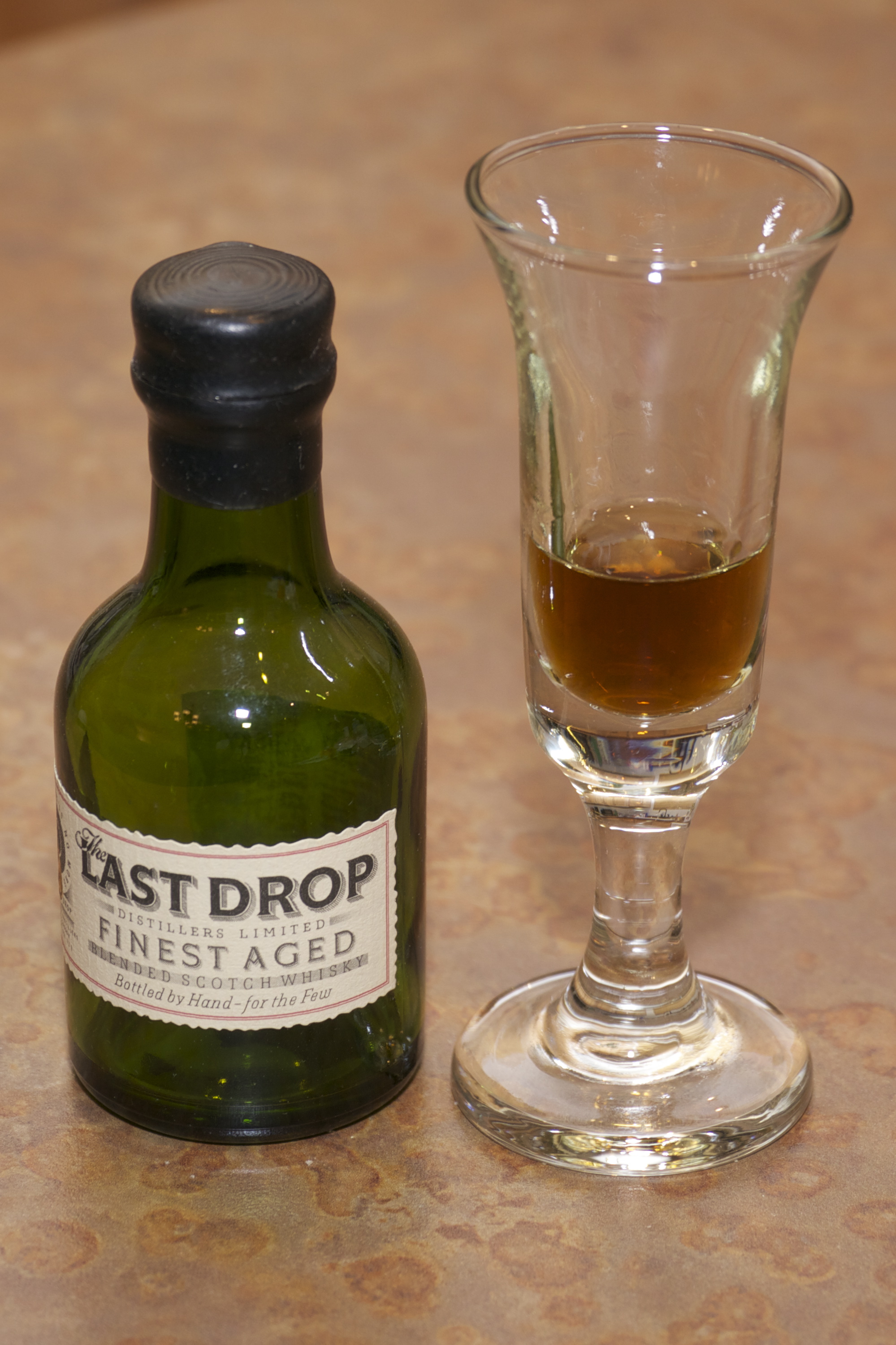
I guess I never did a write-up on the local Compass Box tasting at Sportsman’s I went to a couple of months ago. I’ll have to pull out my notes and do that. That tasting serves as a good example of why I love to get out there and be a part of the “whisky community.” First, I got to try Spice Tree, which still hasn’t made it to Arizona. Second, I scored the last few milliliters of a miniature bottle of The Last Drop (along with the bottle) from one of the guys at the store. It was only around 7 or 8 ml…just enough for one swirl around the tongue and down the hatch. But hey, at $2,000 a bottle, and only 348 bottles imported to the U.S., just being able to take a whiff of it was a special treat, let alone taste it.

Three industry veterans scoured the Scottish countryside before happening upon the three casks that make up this release in an Auchentoshan warehouse. The casks contained a blend of around 70 malt whiskies and 12 grain whiskies, originally distilled in 1960 or earlier. In 1972, then blended whisky was moved into fresh Sherry butts where it sat until being “discovered” in 2008. This truly is a rarity, and a one of a kind bottling. For more on the story, check out this interesting article Bostonist.com, or check out the various information pages at lastdropdistillers.com.

Tasting Notes

Not a tasting note, but check out the color in the picture. I don’t believe I’ve quite seen that shade of brown in a Scotch whisky before.

  • On the nose, the first thing that hit me was that I seemed to be smelling a bourbon, not a Scotch. A very nice bourbon, mind you. It’s sweet, with dark fruit, cinnamon and toffee. Definitely oaky, like you might get from a really good 17-20 year bourbon. You can tell it was aged in sherry casks, too, but I don’t think I would ever guess 36 years worth.
  • On the palate, it coats the tongue nicely, with a reasonably thick feel. So smooth and easy on the tongue, yet still very present, with a nice tingle on the sides of the tongue like there’s a bit of pepper, followed by drying. Argh…after nosing this periodically for a couple of weeks before finally drinking it, I sure wish I had more than a few ounces so I could give it another go!
  • The finish is where this whisky stops seeming like a bourbon, and asserts itself as a very old scotch whisky. It’s what i imagine a 30 year old Aberlour a’bunadh would be like. Again, my small sample is gone all too quickly, but fortunately, it’s lingering for a good long time.

I mentioned a theoretical 30 year Aberlour a’bunadh in the “finish” notes. Based on my very small sample, if I were to try to come up with my own recipe to mimic this blended scotch, it would be a vatting of Parker’s Heritage Golden Anniversary bourbon and a little bit of that imaginary 30 year a’bunadh. Maybe it’s because I’ve really come to appreciate good bourbon lately, but this whisky hit all of the right notes for me.

Conclusion

I’m in love with this whisky. I love the taste. I love the exclusivity of it. I love the simplicity of the packaging. The attitude of the guys I talked to at the Compass Box tasting, who had already tried it, was that it is a good whisky, but no way is it worth the price. I totally get that. I mean, is it really worth almost an order of magnitude more than I paid for my Laphroaig 30 year, based on taste alone? No way. However…

The Last Drop combines a great story with a rich, yet accessible taste. It’s one of those whiskies that you can sit with and nose in the evening while listening to your favorite music and contemplating life. Even better, it would be a great whisky to share with close friends on a special occasion. It’s so well balanced and free of “nasties” that any whisk(e)y drinker should be able to enjoy it. Granted, some will find it lacking if they prefer certain big flavors like peat, but that shouldn’t stop them from being able to enjoy it. What’s especially unique about this whisky is the way it can appeal to both bourbon and scotch drinkers. I’ve never tasted anything quite like it, and I guess there’s a good chance I never will again.

A HUGE thank-you to Bill at Sportsman’s for letting me try this.

Cheers,
Jeff

Introduction

Autographed Single Barrel

We had another great local tasting at Sportsman’s Fine Wine and Spirits in Scottsdale, AZ on April 14. This time, it was Four Roses bourbon, and Jim Rutledge was there to pour our drams. He’s been the Master Distiller at Four Roses distillery since 1995. Like Tom Bulleit, he was a very engaging, down-to-earth guy who enjoyed talking about whiskey, and seemed to get a kick out of seeing others enjoy it. He brought four expressions with him, and didn’t have a problem with folks coming back for seconds of their favorites.

It was an informal, open-house type of tasting, and only cost $10 to attend. We also got special pricing for the night. I ended up spending a grand total of $40, including the entry fee, which got me the samples, plus an autographed bottle of Four Roses Single Batch bourbon. Once again, I strongly recommed getting out there and finding tasting events at your local specialty stores. What a great way to taste new whiskies, learn about the distilleries, and meet interesting people in the industry!

The Bourbons

The four bourbons served at this tasting were the standard Four Roses Yellow Label ($20), Small Batch ($38), Single Barrel ($40), and the 2009 Mariage limited release ($85). I don’t like to attempt any kind of rating based on public tasting events. I’ve found that my opinions can change quite a bit between these types of events and my more controlled tasting sessions at home. I’ll certainly share my thoughts on these, though, along with the the consensus opinions of others in attendance.

Of the three standard releases, my least favorite on the night was the Small Batch, bottled at 45% ABV.  Not because it was bad, it just seemed uninteresting relative to the others. Perhaps my opinion will change in a more controlled drinking environment, but in doing this comparison, the Small Batch came off as being the Four Roses version of Gentleman Jack. Good taste and very smooth, but forgettable. It seemed to be intended more for the occasional drinker than the whiskey aficionado.

The entry-level Yellow Label was of surprisingly high quality, and really caught me by surprise. It’s only 40% ABV, but it’s got a stronger flavor than the Small Batch, with a good mouth presence and a longer than expected finish. It’s sweet, but not sickly sweet, and there’s just enough rye spice to keep things interesting. Despite the price, this seems like a genuine sipping whiskey, not fodder for mixers. This one is easy to recommend.

The Single Barrel expression has the highest rye content of the bunch, and you could tell. It also weighs in at a respectable 50% ABV. I’ve found that in premium bourbons, I tend to prefer wheated over rye. However, the great mouth feel and spicy, yet smooth finish of the Single Barrel really seemed to hit the spot on this night. Granted, this might have something to do with 100 proof being a real sweet spot for me when it comes to whisk(e)y. If you’re a big rye bourbon, or straight rye fan, then you really need to try this. If you’re ANY kind of bourbon fan, you should still check it out. Very nice.

Finally, we have the 2009 Mariage (yes, a single “r”, as this is the French spelling) release, bottled around 57% ABV. The 2009 release has a combination of 10 and 19 year old bourbons vatted together. You can definitely taste the extra wood coming from the older barrels. I happen to like this, and enjoyed this expression as much, and maybe more than the Single Barrel. Most others, including Mr. Rutledge, seemed to disagree. Interestingly, Mr. Rutledge did acknowledge that scotch drinkers seem to enjoy Mariage more than bourbon drinkers. They’re more used to a stronger wood influence, he figured. While I really enjoyed this one, and I understand the “limited release” pricing, I couldn’t bring myself to pull the trigger on a bottle of this at twice the price of the Single Barrel.

The majority of the people attending the event seemed to prefer the Single Barrel. This also seemed to be the favorite for Jim Rutledge, although he was very high on the Yellow Label as well. I seemed to like the 2009 Mariage more than just about everybody else there. One guy even apologized and said he couldn’t finish the Mariage, but asked for another sample of the Single Barrel. Each to their own, I suppose.

Interesting info from Jim Rutledge

Four Roses distillery has an interesting setup when it comes to creating different expressions. They use two mashbills and five yeast cultures to create ten different recipes that are aged separately. This gives them a lot of options when creating new expressions. Rather than repeat all of the details that Mr. Rutledge shared with us, I’ll point you to a guest blog post he did for Malt Advocate.

I got some one-on-one time with Mr. Rutledge, and wanted to share some things I found particularly interesting:

  • I’ve read it elsewhere, but he confirmed that Bulleit Bourbon is created at the Four Roses distillery and uses two of their recipes, with both the 35% and the 20% rye mashbills.
  • The 2009 Mariage vatting that was bottled is NOT the one he originally approved. It was supposed to contain somewhere around 9-10% of the 19 year barrels, but the finished product ended up with about 20% of the 19 year. Mr. Rutledge was actually disappointed with the final result, but glad to see some scotch aficionados enjoying it. 🙂
  • He had just picked out the 2010 Mariage recipe the week before our tasting. He said he thinks it will be the best bourbon they’ve ever bottled. Of course, he’s a bit biased, but considering how candid he was regarding the 2009 release, I’m excited to see what people say about the 2010 bottling.

Stay tuned for more detailed Four Roses tasting notes

While I don’t like to do ratings or in-depth tasting notes based on these public tastings, I’ve been fortunate enough to acquire samples of the three standard releases. I’m looking forward to spending a number of evenings with these whiskies and sharing my thoughts on them.

Cheers,
Jeff

Wow, I see I haven’t posted anything since March 4th! I think that’s the longest I’ve gone without a post since I started blogging almost a year ago. I had intended to post about a couple of tastings I went to early in the month, but got busy with work and preparing for our family Spring Break vacation.

We went to Disneyland for six days and 5 nights. As a “Scotch Hobbyist,” I thought it would be fitting to share my findings on whisk(e)y availability at Disneyland, even though I actually went the entire time without any whisky myself (I did try a flight of tequila at Tortilla Jo’s in Downtown Disney one night, though).

If you’re going to be spending time in the Disneyland Parks (Disneyland-proper and California Adventure) and you’re not familiar with them, I thought you might be interested in knowing that there is only one place to buy alcohol between the two parks: The Cove Bar above Ariel’s Grotto in the California Adventure park. Actually…there IS Club 33 in Disneyland Park, but unless you’re one of the fewer than 500 members, you need to know a member to get into this exclusive restaurant. If you are a member, or know somebody who is…cheers to you. That would be extremely cool.

As for the Cove Bar, it’s pretty ordinary when it comes to whisky, as the focus is on mixed drinks. I stopped in to take a look at the liquor cabinet, and the whiskies I can remember seeing include Jack Daniels No. 7, Jim Beam White (what’s the deal with that? JB Black is so good for a tiny bit more money), Maker’s Mark, Bushmills, Jameson, Seagram’s 7, and maybe Canadian Club. From that list, I’d probably go with Maker’s Mark for a whisk(e)y to drink neat (or Jameson depending on mood). I actually didn’t see any Scotch there at all, not even JW Red…makes me wonder if I missed something on the other side of the bar.

Anyway, that’s my “whisky report” from Disneyland. Now, there are many more options once you get outside of the parks themselves, with a number of restaurant/bars in Downtown Disney, so you always have that option. However, if you’re in Disney’s California Adventure park and looking for a break with an adult beverage, go ahead and make your way over to Ariel’s Grotto and slide up to the Cove Bar. Perhaps the limited whisky selection would make for a good excuse to try one of their mixed drinks. I hear the “Black Pearl” is good.

Introduction

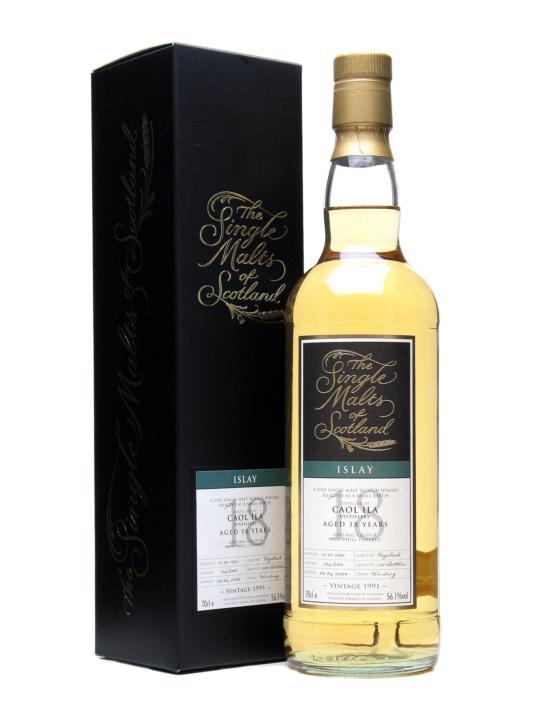
SMOS Caol Ila 1991 18 Year

I’m a big Caol Ila fan, starting with the 12 year standard expression. When I first started getting into Islay malts, trying to figure out what to make of the strong, tarry, oily notes of Laphroaig and Ardbeg, I tried Caol Ila and was immediately impressed by the ashy coal smoke finish. The citrus also seemed to compliment it well. There just wasn’t anything negative going on there. My favorite Caol Ila so far isn’t actually labeled as a Caol Ila…it’s the Port Askaig 17 year by Specialty Drinks, sister company to The Whisky Exchange. When the opportunity came up to get a sample of the Single Malts of Scotland (SMOS) Caol Ila 18 year, distilled in 1991, I jumped on it [Thanks Tim!]. SMOS is another range bottled by Specialty Drinks, and seems to be well regarded. This bottle currently sells for £47.82 excluding VAT, and also currently comes with a free tasting glass (a special deal for any SMOS purchase).

Tasting Notes

Caol ila 1991 18 Year old (Specialty Drinks SMOS); Cask# 194/200; 56.1%

Nose: Initially, fresh oak and peat, with underlying citrus. After a few minutes in the glass, the oak turns more to vanilla. Overall, it’s kind of muted. You really have to stick your nose in there and spend some time searching. Also, the citrus is toned WAY down compared to regular Caol Ilas.
Palate: More juicy now, peat still, and some white pepper. Bigger than the nose let on. Packs a punch similar to Lagavulin 12, and perfectly drinkable at full strength if you’re used to high proof whiskies. Not harsh in any way.
Finish: That classic Caol Ila ashy smoke is in full force here, along with some lingering pepper on the tongue. The smoke lasts a long time, and it’s very “pure.” No young, spirity notes at all. A peat smoke lover’s delight!

Comments:

I really like this whisky. I was surprised to find the citrus turned down a couple of notches from other Caol Ilas I’ve had, but the great mouth feel and long, smoky finish are a real treat. What especially stands out is the purity of the peat smoke finish. I’ve had younger high-peat whiskies (like Kilchoman) that have an almost one-note ash smoke finish, but they all have a youthful, “spirity” counterpart.  Not here. The only thing keeping this from an A rating in my book is that the nose could be more expressive, and it’s not super complex (but not completely one-note either). As a fan of the Caol Ila brand of peat smoke, and big, cask-strength palate attacks, I’d rate this in the B+ range. I think I need to buy a bottle of this.

Rating

This was a big enough sample that I was able to taste it over three sessions. I’m going to go ahead and do the full rating thing…

  • Score: 88/100 points (B+) [My personal score relative to other whiskies I’ve tried]
  • Bottom Line: A little muted on the nose, but great mouth feel and gets my tongue all a-tingle. Brilliant ashy, coal-dust, peat-smoke finish if you’re into that sort of thing.
  • Rate higher if: You’re a huge peat-head, and the palate/finish are much more important than the nose.
  • Rate lower if: The muted nose is going to bug you; you want more than peat smoke on the finish.
  • Value: The Whisky Exchange is selling this SMOS 18 year for the same price as the standard distillery 18 year. Given that I like the standard 12 better than the 18, and I like this SMOS 18 better than the 12 [OB 18 < OB 12 < SMOS 18], I’d call this a good value. A special treat to share with your peat-smoke loving friends. Only 620 bottles available.

Comparisons

I sampled this alone, and along side Caol Ila 12 (43%), Port Askaig 17 (46%) and Lagavulin 12 (57.9%). The family resemblance with the other Caol Ilas is there, but the big ABV difference separates them, and the citrus influence is much bigger in the lower proof whiskies. Also, the Port Askaig 17 offers up just as big of a smoky finish, but it’s more complex. The only thing the PA 17 lacks is the big mouth feel from the high ABV. PA 17 is the first whisky review where I tried to start doing ratings. I gave it an 89…probably should have been a 90.

Frankly, I think the profile of this SMOS 18 year is closest to the Lagavulin 12, though the Laga 12 is more expressive on the nose, and has just a hint of “youth” on the peat smoke finish. The feel in the mouth is very similar, as is the focus on ashy peat smoke, with other flavors toned down in comparison. I’d rate the Laga 12 a point or two higher for additional expressiveness on the nose, and perhaps a touch more complexity.

Other Opinions

I can’t find any reviews of this particular bottling…not even on the Whisky Exchange site. However, Serge at WHISKYFUN.COM rated two SMOS 16 Year expressions (here and here), as well as a 17 Year, all from 1991 and bottled in 2007/2008. You can see that Serge also mentions a toned down nose on the 17 year, which seems to have carried over into this one. He rates the 17 year at 85 points, marking it down because of the nose, but it sure sounds like he enjoyed it more than that.

Introduction

Kilchoman, the 8th distillery on Islay, does not have any expressions available in the United States yet, but if you act fast upon a new release, you can place orders and have them shipped from the UK. By “act fast,” I mean make sure you either have one reserved ahead of time, or place an order the day of release. It’s looking like they plan to do 3 or 4 limited (8,500 to 10,000 bottles) releases per year. The next release will be coming out in March. I’ve already written a few blog posts about Kilchoman, including a review if the Inaugural release. In November, Kilchoman came out with their second official wide-release bottling, called the “Autumn 2009 Release.”

In this blog post, I’ll compare these two releases (thanks to Jason at WHISKYhost for the Autumn 2009 sample). I actually have a bottle of this release now, but haven’t decided if/when to open it yet [I know…don’t become an evil collector :-)]. The Inaugural was matured for approximately 3 years and then finished for 5 months in Oloroso sherry casks. The Autumn 2009 release was also matured for 3 years, then finished for 3 months in Oloroso sherry casks. Additionally, there is one refill bourbon cask mixed into the Autumn vatting.

Kilchoman Inaugural vs Kilchoman Autumn 2009

Tasting Notes

Kilchoman Inaugural Release: See notes in this previous post.

Kilchoman Autumn 2009 Release; OB; 46%; Approximately $60

Nose: A significant helping of cinnamon and apples to go with the earthy peat and ashy smoke. Also some additional spiciness (nutmeg). Seems more mature than the Inaugural release.
Palate: Sweet peat, still some light spices, but not as peppery as the Inaugural.
Finish: Peat and ashy smoke coming up into the nostrils, accompanied by a slightly eggy component…the missing youth from the nose. There’s still some sweetness and cinnamon hanging around, and the peat smoke lasts for a long time.

Comments:

This is really good, and the sherry finish provides some very obvious added complexity. The spiciness that’s added to this release reminds me of how the Madeira finish impacts the latest Balvenie 17 year. The palate seemed a little more tame than I expected…I guess that came with some of the smoothing on the nose. However, the finish is lengthy, with plenty of smoke for the peat lover. As always, I won’t provide a number score when I’m only tasting a sample, but looking through my scoring spreadsheet, it’s probably in the 84/85 range relative to the other whiskies I’ve had. A solid B in my book, and amazing for a three year!

Note: I gave the Inaugural Release 84 points in my previous review. I had commented that it felt like an 81 pointer, but gave it 3 bonus points for the long, peaty finish. In hindsight, given that I’m not inclined to go higher with the Autumn Release score, I would probably subtract one or two of those bonus points for the Inaugural.

Comparing to the Inaugural Release

I had already read other Kilchoman reviews, and people seemed to be liking the Autumn release better than the Inaugural. Still, I was surprised at how much the nose had changed. Maybe I should have suspected as much when I put the bottles next to each other and saw how much darker the Autumn release is. Given that the Autumn release actually spent two months LESS in sherry casks at the end, they surely did something different with regards to first-fill vs refill?

Two things stand out immediately when comparing the Autumn release to the Inaugural. First is the lack of “egginess” that I was picking up on the Inaugural. It didn’t really bother me much when trying the Inaugural alone, but head-to-head, I really appreciate the perceived maturity of the Autumn release. Second, the extra spices in the Autumn release make it much less of a one trick pony. I mean, this is still a whisky for peat lovers, but that’s not all it has to offer. The one area that the Inaugural beats out the Autumn release is in the impact on the tongue. It’s more drying and has more pepper, giving a very enjoyable boost that I wish was still there in the Autumn release. Two steps forward, one step back, I suppose.

I did discover something new about the Inaugural release when doing the head-to-head…a very slight farminess on the nose and finish that I had never picked up before.

Other Opinions

  • WHISKYhost – Jason at WHISKYhost did a comparison right after the Autumn 2009 release came out. He also liked this release better than the Inaugural.
  • WhiskyNotes – Ruben likes the Autumn release better, mentioning a lack of “new make” notes. He also finds something soapy on the palate, which I did not pick up. His notes pretty much nailed it. I find myself agreeing with his notes more than any other reviewer.
  • Whisky Israel – Gal, over at Whisky Israel REALLY likes this release. But then, he’s a total peat freak. 😉
  • Master of Malt – Some nice tasting notes on the Master of Malt web site. I bought didn’t get my bottle from them, but I heard that their buying experience is fantastic.

Back of Kilchoman Autumn 2009 release box

Introduction

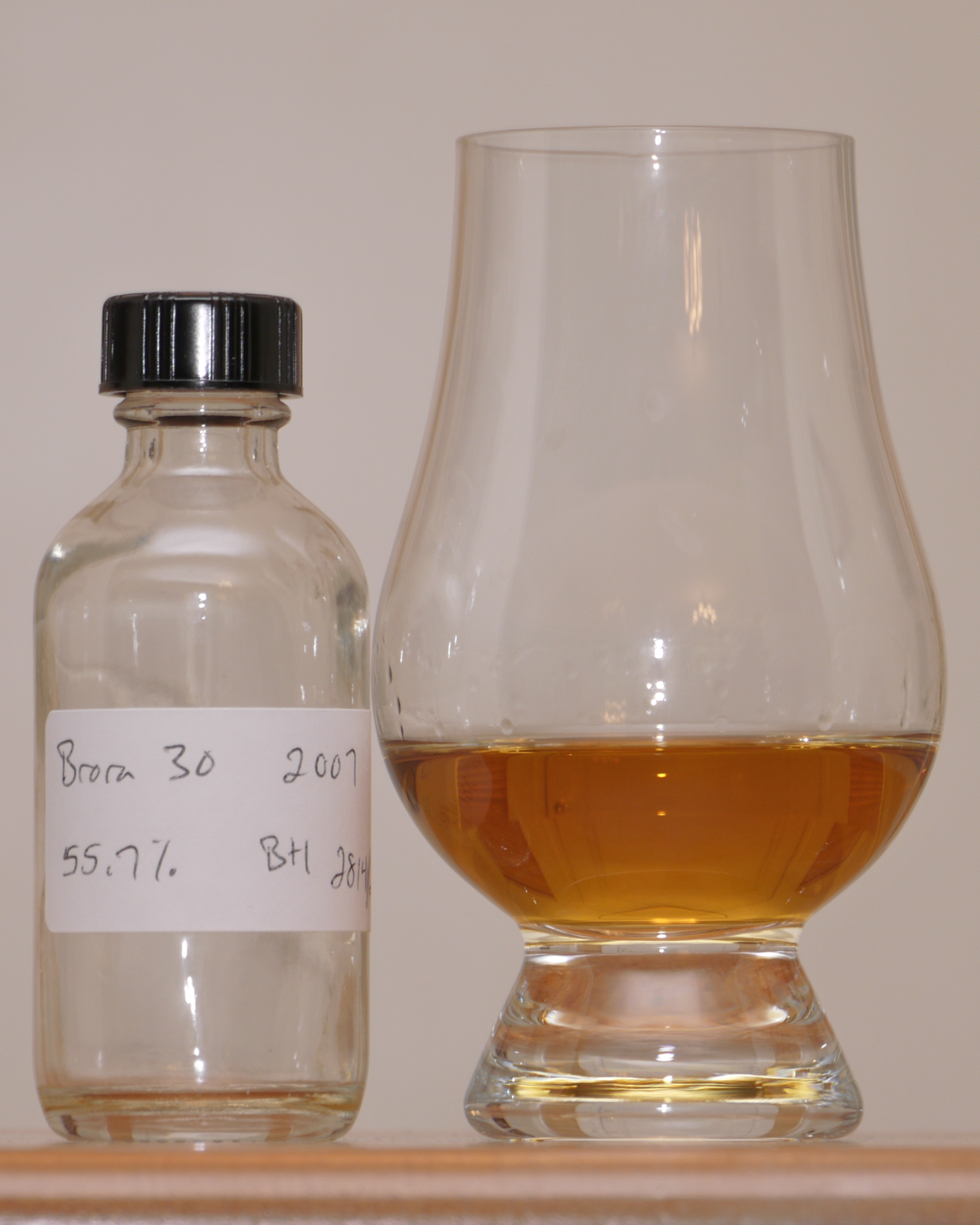
Brora 30 (2007). A bit darker than the 2009 release.

This is a follow-up post to my previous one, in which I sampled the Brora 30 year 2009 release. I just got my hands on a sample of the 2007 release (thanks Bryan!) and wanted to share my notes on this one as well. However, what I really want to draw your attention to is an excellent “Say What!?” guest post on the WHISKYhost blog by Ruben of WhiskyNotes.be fame. He talks about this concept of “farmy” notes in a whisky, which on the surface might sound off-putting, but is actually considered a desirable quality by many whisky drinkers.

Ruben notes [you checked out the “Say What!?” link above, right?] that in a  sherry-matured whisky, any existing farmy notes can be amplified by the possible presence of sulphur. I think this is what happened when I noted a pungent “dairy farm” component on the nose of Lagavulin 21. At times, it was a bit too much for me. As you’ll see, the Brora 30 does not reach this extreme.

Tasting Notes

Note: I’ll be referencing the 2009 release, as well as the Signatory Brora that I talked about in the previous post.

Brora 30 Year (2007); OB; 55.7%; Bottle 2814 of 2958; $400+

Nose: No butterscotch like the 2009. This jumps straight to the oak (stronger oak than the 2009 release) and rich vanilla, with a Talisker-like, earthy peat along side. It then gets a bit more “farmy” than the 2009. Not so much to the point of manure, but certainly hay and the presence of animals.
Palate: Juicy, with an oily coat on the tongue. You get the sense of earthy peat here, too. Not quite as much pepper as on the 2009 release, it seems.
Finish: As soon as you start to swallow, the peat and farmy notes rush up the back of the nostrils, hanging there for a medium to long duration. There’s also a sweetness and oakiness, but the oak isn’t as big as it was on the nose. The farmy profile is similar to the nose, but with more attack here in the finish. It’s still not over the top for me, though.

Comments:

Yes, this 2007 release is more farmy than the 2009 version. However, this is still one cool, sophisticated customer. Not nearly as rowdy as the Signatory 21 year. I didn’t really notice any mint in this one, which is a HUGE part of the Signatory profile, and still subtly present in the 2009 release. If you’re familiar with the peating level of the standard Clynelish and Oban releases, the peat in this Brora is stronger than that. However, it’s not as strong as younger, standard Islay or Talisker releases. 30 years of maturation probably has something to do with that.

I’m really glad I got to try this release. From other descriptions, I feared that I might find this one off-putting. However, the farmy qualities are not such that it makes you snap your head back from the glass. Rather, it puts you in an outdoors frame of mind, perhaps being at or near a ranch. That, combined with the rich vanilla, mature wood notes and peat makes the overall experience very enjoyable. I would rank this very close to the 2009 release. Another A- in my book.

Other Opinions

  • WhiskyNotes.be – Along with his “Say What!?” guest post, Ruben posted a review of this Brora 2007 release on his own blog. He clearly likes it better than the 2009 release. I’m still on the fence, and it might come down to mood.
  • WHISKYFUN.COM – (Scroll down to the “Bonus” review) Serge also rates this 2007 version a couple of points higher than the 2009 version. Now I’m really starting to wish I still had a little of the 2009 left from last week for a head-to-head comparison.
  • Malt Advocate – A short and sweet review by John Hansell, where he hands out 95 points and calls it “Brora at its finest.”
  • whisky connosr – Here’s a review from somebody on connosr.com (I have an account there, where I keep a list of my open bottles). They found the peat and farm notes to be more in-your-face than I did.
  • Whisky Bible – No online review link, but Jim Murray rated this one at 88.5. Good, but below the other Brora releases he has reviewed. He felt that the oak was a bit tired and “off.”