Feeds:
Posts
Comments

Archive for 2009

I love those gift packs where you get a few (usually three) 20 cl bottles of whisky in a nice box.  The cost is usually not much more per cl than you would pay for a full size bottle, but you get to try out multiple expressions.  They’re especially great for a new whisky enthusiast.  I was browsing through The Whisky Exchange (TWE) web site Special Offers a few weeks ago, and a Diageo gift pack stood out at me because it included five 20 cl bottles instead of the usual three.

I noticed that it was an “Islay” gift pack (Islay whiskies being my new obsession), so I clicked on it.  They called it the “Islay Collection 2007”, and I couldn’t believe what I saw:  Caol Ila 12, Caol Ila 18, Lagavulin 16, Lagavulin 12 CS, and…wait for it…Port Ellen 28 year ‘7th Annual Release’!  The price was marked down from 97 GBP ($146) to 70 GBP ($105) [Actually, that’s including VAT.  Outside of the UK it’s 61 GBP ($90)].  They now also have the 2006 version of this same gift pack, which includes, you guessed it, the 6th Port Ellen release.
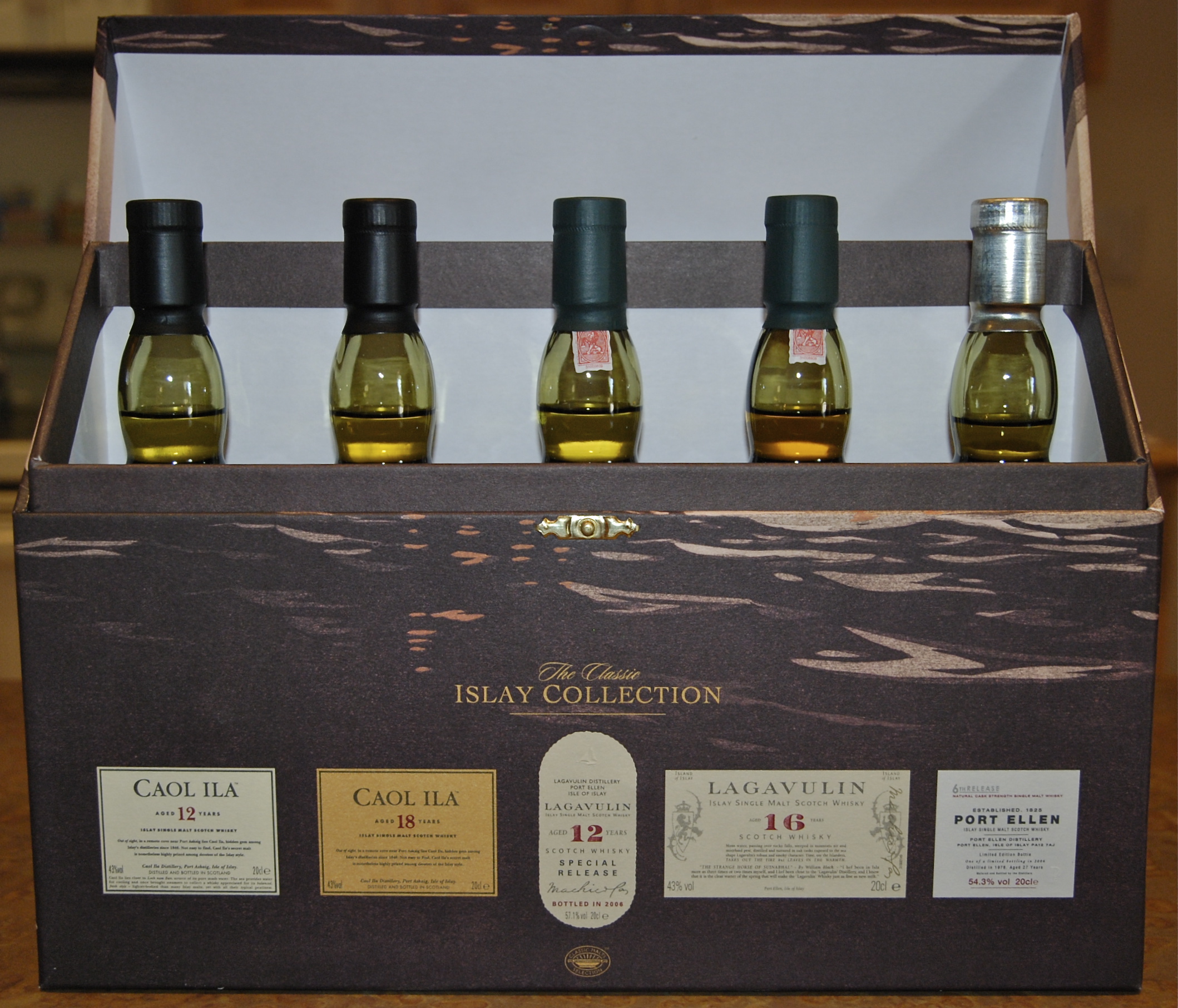
2006 Classic Islay Collection

2006 Classic Islay Collection

Are you kidding me!?  One of the Port Ellen Annual Release original distillery bottlings that I’ve been reading great things about, but was scared off by the $400+/bottle price?  I had to get my hands on this gift pack.  I couldn’t believe that they would stay in stock very long.  On the contrary, six weeks later they now have both the 2006 and 2007 versions of the gift pack available.  How is this staying on the shelves?  Let’s consider the price and value:

Spending over $100 on a liter of whisky is still a considerable purchase.  However, let’s take a moment to rationalize this for ourselves.  What would 20 cl of these five scotches go for if you calculated it based on the full bottle price?  I’m going to go with current TWE prices for reference:

  • Caol Ila 12: 70cl = 25 GBP, so 20cl = 7 GBP ($10.50)
  • Caol Ila 18: 70cl = 45 GBP, so 20cl = 13 GBP ($19.50)
  • Lagavulin 16: 70cl = 40 GBP, so 20cl = 11.5 GBP ($17.50) [This would be much more in the USA]
  • Lagavulin 12: 70cl = 49 GBP, so 20cl = 14 GBP ($21) [This is the 2008 price; might be more if you can find 2006/2007]
  • Port Ellen 6th: 70cl = 299 GBP, so 20cl = 85 GBP ($128)

“Fair Price” Total:  130 GBP ($205)

Another way to look at it is that you’re getting nearly 30% of a bottle of Port Ellen at a discount price, and they’re throwing in the other 800 ml of Islay goodness for free. Yet another view is that a fair price for the four non-Port Ellen bottles is 45.50 GBP, so this is a chance to get 20cl of the elusive Port Ellen for a mere 24.50 GBP ($36). A final consideration is the flat monetary outlay that we’re talking about here in order to taste an OB (original distillery bottling) Port Ellen:  Approximately $100 to $135 depending on tax/shipping vs. $400+.  This is a significant lowering of the barrier to entry.

So, if you’re in the UK, or someplace that allows mail order of this gift pack from TWE, what are you waiting for?  You might also still be able to find this in some specialty shops in primary whisky market areas in the United States.  This is your chance to be a part of a rapidly disappearing piece of history; a chance for us middle/working-class scotch lovers to exchange tasting notes of a rare, expensive malt with the rich and famous.  You’re also armed with convincing numbers to explain to your significant other why it would be like throwing away money NOT to buy this set.  Isn’t it great to turn the tables around now and then?

Update: I forgot to mention another tip if you’re having this shipped to the United States – They charge 32 GBP shipping for this gift pack, vs 26 GBP for a single bottle. However, you can add up to five 50ml miniatures to your order and the shipping cost will stay the same. So go ahead and try out some new malts while you’re ordering the Islay gift pack, expanding your horizons and defraying the shipping costs.

Cheers,
Jeff
Port Ellen, Lagavulin and Caol Ila from the Classic Islay Collection

Port Ellen and friends

Read Full Post »

Introduction

Port Ellen 7th (28 year) in sample bottle

Port Ellen 7th (28 year) in sample bottle

A couple of months ago, I started becoming aware of the buzz around the Port Ellen Annual Releases, and became very interested in this whisky. However, I was pretty sure I would never actually taste a Port Ellen original distillery bottling (OB).  I mean really, $400 for a 750ml bottle? No way that’s happening for me right now.  Then I discovered Diageo’s Classic Islay Collection gift pack.  It’s a box containing five 200 ml bottles (Caol Ila 12, Caol Ila 18, Lagavulin 12, Lagavulin 16, and Port Ellen 7th), and you can get it for around $100 through The Whisky Exchange [Link to my post on this gift pack].

Suddenly, a Port Ellen purchase became much easier to justify. So, here I am with a dram of the Port Ellen 28 year “Seventh Release” (2007) in a Glencairn tasting glass. Life is good. [The picture might look odd. I decided to set aside 100ml of my PE 7th for future use. I poured my 200ml bottle into two 100ml sample bottles, steamed off the label, and stuck it on the sample that I’m saving.]

I’d like to point out that this is a cask-strength bottling of Port Ellen whisky, coming in at 54.7% ABV. Let me also point out that if you buy a full size bottle of this same release, you will find it bottled at a slightly lower 53.8%. I’m not sure why the difference between the two, but I’d love to hear about it if you know.

Update – Tim F from The Whisky Exchange provided the following explanation in the comments section of my Lagavulin 12 post (Thanks Tim!):

Okay, I found the email reply I received from a source close to Diageo when I asked about the different bottling strengths. The following as verbatim from his email:

“…the different bottlings of the same issue (i.e. the 70cl and the 20cl bottles) were filled on different dates and possibly even at different bottling lines. The actual ABV of the spirit can vary a few degrees depending on how and when the different casks (even those from the same year) are vatted together before bottling; and the actual strength is measured precisely on the bottling line and the labels adjusted to reflect the precise measurement, I think.”

So it seems likely that the difference in strengths stems from a delay between the bottlings of the 20cl and 70cl after the batch had been made up. This does make some sort of sense, I suppose.

Tasting

On the nose, my first thought is that this is similar to Caol Ila. There’s a similar fruity sweetness combined with peat and light smoke. But there’s more with this Port Ellen…a rich vanilla scent that now brings Laphroaig 15 to mind. So, we have a complex nose here, but it’s also a little bit muted. I feel inclined to take a bigger whiff, only to then be hit with the high alcohol content (which didn’t stand out to me on normal nosing).

On the palate, it’s not muted at all. There’s a significant presence, kind of “hot” from the cask strength, but also very peaty. On the back of the palate and starting into the finish, I’m again reminded of Caol Ila. This time, it’s coal smoke. However, once again, the Port Ellen continues to deliver where Caol Ila drops off. The finish lasts longer, with a distinct earthy peat (Talisker-like) coming up through the back of the nostrils.

I tried adding a little water, but didn’t take much in the way of notes. I’ll talk more about the effects of water in another post, when I compare the PE 7th with the PE 6th release. The water did seem to take away some of the vanilla on the nose, bringing it back closer to Caol Ila. It also removed the hotness on the palate, but left the peat in tact.

Conclusion

This is a really nice scotch in its own right. The fact that it’s from a highly respected and closed distillery, and is something of a rarity, makes the experience all the more enjoyable. I always find myself trying to associate new [to me] whiskies with ones that I’m already familiar with. In this case, I didn’t have to try very hard to imagine a vatting of Caol Ila 12 and Laphroaig 15, bottled at cask strength. Maybe throw in a little Talisker 18 on the late finish. My interpretation of these associations (to three scotches that I love) is that this is a complex dram that hits on all of the right notes for my tastes. On the other hand, I did find myself wishing the nose was a little less muted. It seems like I have to try harder while nosing this one. At this time, I can’t say whether I prefer it with or without water, but I’ll revisit that in the future.

If you can afford to buy the full size bottle, or if you can get your hands on The Classic Islay Collection like I did, I highly recommend trying this excellent scotch whisky. It slots nicely into the gift pack lineup, somewhere between the Caol Ila and Lagavulin in terms of flavor profile, and shares traits [and level of complexity] with Laphroaig 15. If this was more readily available and you could pick up a 750 ml bottle for closer to $100, I would be all over this as a regular purchase to keep available in my house. At the current price [for a full size bottle], I think you have to be able to appreciate the Port Ellen story/history to get your money’s worth.

Additional Information

  • Info about the Port Ellen distillery
    • Malt Madness Distillery Data – Malt Madness is a sister site to Whisky Fun, and they have great information about most of the distilleries in Scotland.  This is a link to their Port Ellen page.
    • Islay Web Log – Here’s an extract from the book “Port Ellen Distillery and Maltings” by John A Thomson.  While the Port Ellen distillery was dismantled long ago, you still here a lot about “Port Ellen malt”.  This article gives some background on the creation of Port Ellen Maltings, built to supply malt to the Port Ellen, Caol Ila, and Lagavulin distilleries in the early 1970s.
  • Other opinions on the 7th Annual Release
    • WhiskyFun.com – Here’s a comparison of three Port Ellens, including the 7th release.  They really like this one a lot, scoring it 92 points (vs. 86 points for the 3rd annual release).
    • John Hansell – An early “What does John know?” blog post, with tasting notes and scoring for the 7th release.  90 points.
    • Whisky and other wonderful things – A blog by somebody with much more scotch drinking experience than I have.  He’s not nearly as impressed, finding this release a bit too one dimensional.  7 (leaning towards 6) points out of 10.

Read Full Post »

Introduction

A pour of Ledaig 10

A pour of Ledaig 10

Last night I spent some time with the Ledaig 10 years scotch.  Ledaig [led-chig] scotch whisky is distilled on the Island of Mull at the Tobermory distillery.  Ledaig uses a peated malt (peated to 35-40 ppm?), while Tobermory whisky uses unpeated malt (although there is apparently peat in the water source).  I purchased this bottle locally for $43, which puts it in the same range as whiskies like Laphroaig 10, Bunnahabhain 12, Clynelish 14, Glenfarclass 12, and Macallan Cask Strength.  The Ledaig wasn’t really on my radar, but I saw the video review of this from PeatLuvr on YouTube (link below) and decided I wanted to try it.  [Weird – The small image to the right looks much greener on my screen than the full size image when you click on it]

Tasting notes

My first impression upon putting the glass to my nose is of rubber (sulphur?), like when you’re standing in a tire store.  It’s a pungent smell that makes me want to pull away immediately.  Now, if I go back four or five times for additional sniffs, I seem to be able to get past that first impression.  The rubber starts turning to egg, and there’s a sweetness with it, along with lemon zest.  There’s also definitely a very present peat component.  However, if I put the glass down for a little bit and come back to it…Boom, there’s that pungent rubber again.  I’ve had this a few times and it takes me a while to get used to the nose each time.

On the palate, things pick up for me.  Strong peat (this is what I bought it for), along with a peppery heat.  That’s better.  On the finish, that pepper sticks on the tongue a bit, but there’s also some alcohol burn.  This one really seems young and temperamental both on the nose and finish.  I also get a little bit of that rubber again coming up through the nostrils with the peat at the end.

Conclusion – I’m a little mixed on this one.  I think there’s something about the output from the Tobermory distillery that doesn’t quite sit right with me.  I’ve tried a Tobermory before as well, and thought there was something slightly “off”, maybe a bit sulphury again.  It’s not a total loss, as I do enjoy the peat/pepper explosion on the palate.  For general drinking of this bottle, I think I’m going to relegate it to tumblers and not spend much time nosing it.  I also need to try adding a little water to see how that changes it.  I’ll drink this bottle, but don’t have any plans to purchase another any time soon.  There are a lot of other peaty malts out there that I enjoy more.

Other opinions

  • Whisky Magazine – Dave Broom and Arthur Motley provide their impressions and scores.  Neither one of them mentions rubber or sulphur, although Arthur does talk about the sweet egg smell.
  • Whisky Pages – Some info on the distillery, as well as tasting notes and rating.  These guys seem pretty positive on the Ledaig 10, not mentioning any particular negatives.  They give it a fairly average score, though.
  • YouTube (PeatLuver) – Tom really likes it, and doesn’t seem to take any offense to the pungent nose.  Where I get rubber/sulphur, then sweet egg product, he gets “fruity”.  Maybe I just have a mental block based on my first impression (tire store).

Read Full Post »

Birth announcement package from Maker's Mark

Birth announcement package from Maker's Mark

I signed up to be a Maker’s Mark ambassador back in September.  This is similar to being a “Friend of Laphroaig” or an Ardbeg Committee member.  In other words, it’s a marketing gimmick.  Is it geeky?  Sure.  Is it lame?  I suppose some would say that (I like it so far, though).  Is it worth doing?  Yeah, why not?  It’s not like it costs anything.  Anyway, on to the purpose of today’s post:  my wife sent me an email yesterday with a picture attached showing a package that had arrived, stamped with “Historic Birth Announcement Enclosed” on the front.

One of the benefits of being a Maker’s Mark Ambassador is that you can submit your name (or some arbitrary text) to be included along with 29 others on a barrel of new spirit (names inscribed on a plaque).  In 6 or 7 years, when the barrel is mature, you’re then invited to come to the distillery in Kentucky and purchase a couple of 1 liter bottles from your batch.  You’re given your own special label to go on the back of the bottle, and you get to do the wax dipping and stamp a special seal on the wax.  [Note:  My wife actually said to me “You should go do that when your barrel is done”.  Cool!  Note that she said you, though…not “we”.]  I submitted “Arizona Hershauers” (as opposed to the Indiana or Michigan Hershauers from my extended family) in September, and received the following letter in this package:

Letter from Maker's Mark about "my" barrel

Letter from Maker's Mark about "my" barrel

Also included was a “Barrel Dedication Certificate” and a bunch of Ambassador business cards.  I attempted to earn some awe and respect from my wife by presenting one to her (like it says in the letter).  Fail.

Ambassador barrel certificate and business cards

Ambassador barrel certificate and business cards

Finally, here is a picture of the actual plaque that’s mounted on the barrel with the 30 Ambassador names.  Note that you can also order a replica plaque for $40 to mount proudly in your man cave.  You’re also allowed to customize the replica, opting whether or not to show the other names, and you can also change your own text (just in case you put something lame on the original like “ARIZONA HERSHAUERS”.

Maker's Mark barrel plaque

Maker's Mark barrel plaque

So, there you have it.  If you’re feeling alone and insignificant in the world, go become a Maker’s Mark Ambassador and be a part of whisky-making history.  Say what you will about marketing schemes like this, the crew at Maker’s Mark really goes all out to make you feel like a special part of their team.  The materials used for promotional kits like this are high quality, they maintain regular communication via email throughout the year, and from comments on their Facebook page, it sounds like they make you feel very welcome and special when you visit the distillery to collect your batch bottles.

Additional Info

  • Maker’s Mark Embassy:  The Maker’s Mark Ambassador web site link.  You can sign up to become a new ambassador from here.
  • Facebook:  The official Maker’s Mark facebook page.  5,925 members and counting.
  • Other goodies: Maker’s Mark sends out other goodies to Ambassadors at times.  I got a well packaged tube of wrapping paper, along with Maker’s Mark bottle-shaped gift tags before Christmas 2008 (note the MM Bottle snowflakes on the paper):
Note the Maker's Mark bottle snowflakes

Note the Maker's Mark bottle snowflakes

Read Full Post »

Introduction

A pour of Laphroaig 15

A pour of Laphroaig 15

43% ABV?  Bzzzt…wrong answer!  Non-chill filtering? Bzzzt…not here. This Laphroaig 15 year is obviously not with it, as all of the cool kids these days are bottled at 46% abv or higher, and non-chill filtering is all the rage.  It’s only fitting that the Laphroaig [la-froyg] 15 is being replaced by a non-chill filtered 18 year old at 48% abv.  Good riddance, right?  Not so fast…this expression still has a few tricks up its sleeve.  Last night I spent considerable time with a large dram of the Laphroaig 15, and will share my experience here, as well as link to some other resources on the internet.

A note on price: Laphroaig 15 is very reasonably priced here in Arizona. The two main big box liquor stores here are charging $55 and $64 for a 750ml bottle. I understand that the 18 is going to be priced somewhere closer to $100. Certainly something to consider if you run into a bottle of the 15 and are debating whether to pick one up.

Tasting

On the nose, the first impression is tarry peat smoke sweet fruit (cinammon apples [and pears]).  A little longer on the nose and I’m getting vanilla. The peat is there, but it’s not a strong tar and phenol experience like I got when I tried the 10 year (which I need to revisit now that I have more Islay experience). The peat is also very integrated with the other scents. [Update] Bananas! I hadn’t noticed it before, but having just done comparisons between Laph 15 and the 10 CS and 2009 Cairdeas, I’m definitely getting bananas on the 15 year.

On the palate, the sweetness fades quickly, replaced by spices and peat. It’s fairly oily and full bodied as well. I don’t think the 43% abv is a problem here. It’s not until the finish that the tar smoke comes through, rising up through the nostrils with some oak. There is also a drying sensation on the tongue. There is lots of stuff going on here, providing a rich sensory experience.

Conclusion: I mentioned in the Whisky Mag. forums that I like this scotch better each time I try it. This continues to be true, and I now rank it right up there close to Lagavulin 16 (I said “close”, not equal) in terms of the full cycle of nose to palate to finish. I can nose it all night long and it doesn’t get old. There’s also no alcohol roughness getting in the way at any stage of the experience. To maximize your enjoyment of this particular expression, I recommend leaving your preconceptions of a “proper Laphroaig” at the door, and considering the 15 on its own merits. Don’t compare it to the Laph. 10 CS on the same evening (well, not every time, anyway), as I’m sure this one will suddenly seem too light-bodied, or lacking in phenols.

If you like Islay malts, and you haven’t tried this yet, I’m begging you to grab a bottle if you can find one. Even if it turns out to be your least favorite Laphroaig, I can’t imagine that you’ll actually dislike it, and you might love it. Get it while you still can…

Other opinions

Here are some links to other reviews and notes on Laphroaig 15:

  • Whisky Magazine:  Tasting notes and ratings from none other than Michael Jackson and Jim Murray.  MJ rated it very highly, while JM found some faults.  Scroll down for links to a number of discussions on Laphroaig 15, including comparisons to other Laphroaig expressions.
  • WhiskyFun.com:  Notes and ratings on a number of Laphroaigs circa 2006.  The 15 did very well here as well, scoring 90 along with the 30 year expression.
  • Whisky For Everyone:  Another whisky blog that I enjoy reading…some good information about Laphroaig in general, plus notes on the 15 year.
  • Whisky Party:  A comparison of the 15 year to Quarter Cask.  They also recommend grabbing some 15 year while you can, finding it a bit more complex than the QC. [Update 6/5/09]
  • Laphroaig 15 on YouTube:  Check out the PeatLuvr and IslayScotchWhisky reviews, then watch Ralphy partake of some Laph. 15 from the top of Merrick Summit in Scotland.

Distillery location:

Read Full Post »

I’ve been sitting on a 50ml miniature of Bowmore 18 for a while.  This past week, I finally purchased a bottle of Bowmore 12, so I decided to go ahead and compare these two expressions for my “nightly dram” last night.  The 12 is bottled at 40% ABV, while the 18 is bottled at 43%.  Interestingly, the 12 years miniature is bottled at 43%.  [What’s up with that?  It seems like false advertising.]  Anyway, I’m going to compare the 40% and 43% 12 year at a later time.  For this sitting, I wanted to get a feel for how the 12 and 18 compare in their regular bottling expressions.

Bowmore 12 and 18 comparison

Bowmore 12 and 18 comparison

Availability and pricing here in AZ

There is quite a jump in price here in AZ from the lower Bowmore expressions to the higher ones.  Here’s the progression:  Legend = $22-$28; Bowmore 12 = $38-$46; Bowmore 15 Darkest = $70; Bowmore 18 = $95.  I picked up the 12 hoping that, at $38, it would become my go-to low to mid-priced Islay dram.  I suppose I should have started with the Legend, but I’m looking for something with enough maturity to compete with Caol Ila 12 (which costs $50-$60 locally).

Tasting

Bowmore 12

On the nose, there’s really nice earthy peat and light smoke right up front.  It’s also a little sweet, but more fruity than toffee.  As I persist, something else pops in there…it reminds me of a flavored hot tea.  [Update 5/25/09: Upon revisiting Bowmore 12, I think the “flavored tea” is actually more of an interplay between the smoke and a passion fruit scent.  The first time around, when I couldn’t place it, it kind of turned me off.  Now I don’t mind it so much.]

On the palate and finish, I get the earthy peat coming through loud and clear, which I really like.  There’s a little sweetness on the palate, but not much at all.  The body seems a little light, almost watery.  I’m going to have to compare this to the 43% mini I have.  On the finish, I really like the continued peat and smoke, but it’s slightly masked by kind of a dusty sensation.  That “hot tea” thing is coming back as well, in the form of a slight bitterness that sticks around after the peat and smoke dies off.  To be honest, this is a slight turn off to me.

Bowmore 18

On the nose, I think the 18 offers pretty much the same profile, but it’s stronger, with quite a bit more fruit.  I’m not getting that “hot tea” thing as much with this one.  Just peat, smoke and mixed fruit.

On the palate, again you can tell this is in the same family as the 12.  However, there’s more body.  Additionally, there’s some spice in the form of a peppery grip on the tongue.  It’s not as strong as a talisker, but it’s there, and I like it.

Summary

Overall, I thought these were perfectly nice single malts, and worth a try.  I used to think of Talisker as a “gateway” to Islay, but now I’m thinking you don’t need a gateway.  If you want to get an idea of what peat and smoke are like, but don’t want to get overpowered, go right for the Bowmore 12, and it won’t cost a lot.  It’s actually tamer than the Talisker 10 and 18, as it doesn’t have the strong pepper finish that those offer.  The peat and smoke in the Bowmore is also very Talisker-like…there’s none of the tar and coal like you get from Ardbeg, Laphroaig or Caol Ila.  I like the Bowmore 18 better than the 12, with the extra body and spiciness on the palate.  However, at $38 vs. $95, I’m having a difficult time with the Bowmore 18 price point.  For now, I’ll be happy to finish the Bowmore 12, but I’ll stick with Caol Ila 12 and Ardbeg 10 as my main, mid-priced Islay malts.  I am, however, curious about the Legend at $22 as an entry-level Islay scotch.

Related links

  • Whisky Magazine – Bowmore 12 review:  tasting notes and scores from Michael Jackson and Dave Broom (they really like it).  Dave Broom mentions a “lavender-tinged smoke”.  I wonder if that’s the “hot tea” flavor I’m talking about.  Scroll down for links to Whisky Mag. forum posts about this expression.
  • WhiskyFun.com – Check out this comparison of all four of the latest Bowmore OB expressions.  They kind of panned the 18 year old, which surprised me.  This is a great site, btw…scroll to the top of their page and check out the side bar on the left to get links to the various distilleries, then browse all of their articles/ratings for that distillery’s expressions (OB and IB).
  • Whisky For Everyone – Another whisky blog that I follow.  Here is some general information about Bowmore, followed by notes on the 12 year.
  • YouTube Videos – Both PeatLuvr and IslayScotchWhisky have done videos on Bowmore 12.  You might want to also check out the IslayScotchWhisky review of the Bowmore Legend for comparison with the 12.

Read Full Post »

Overview

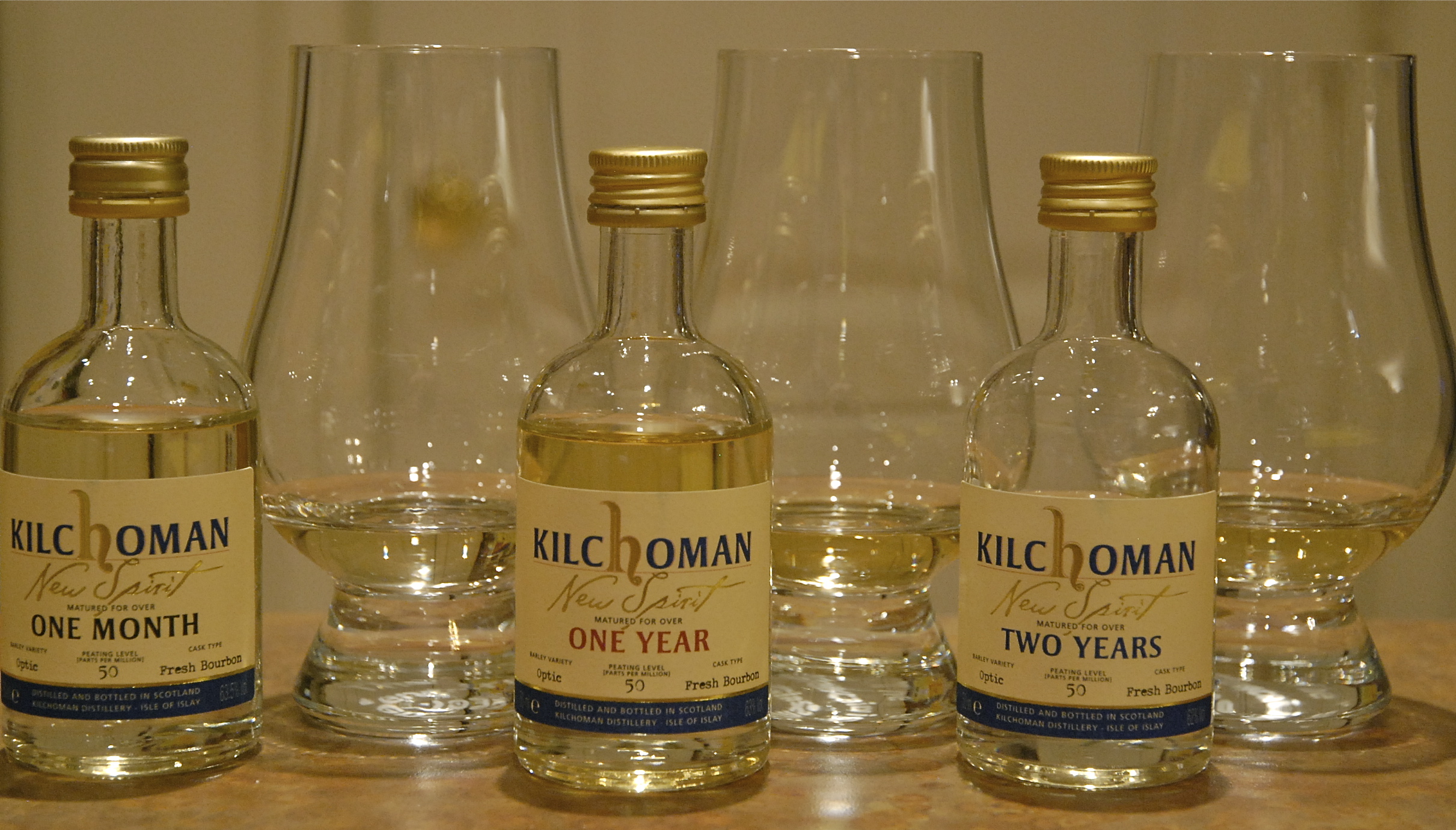
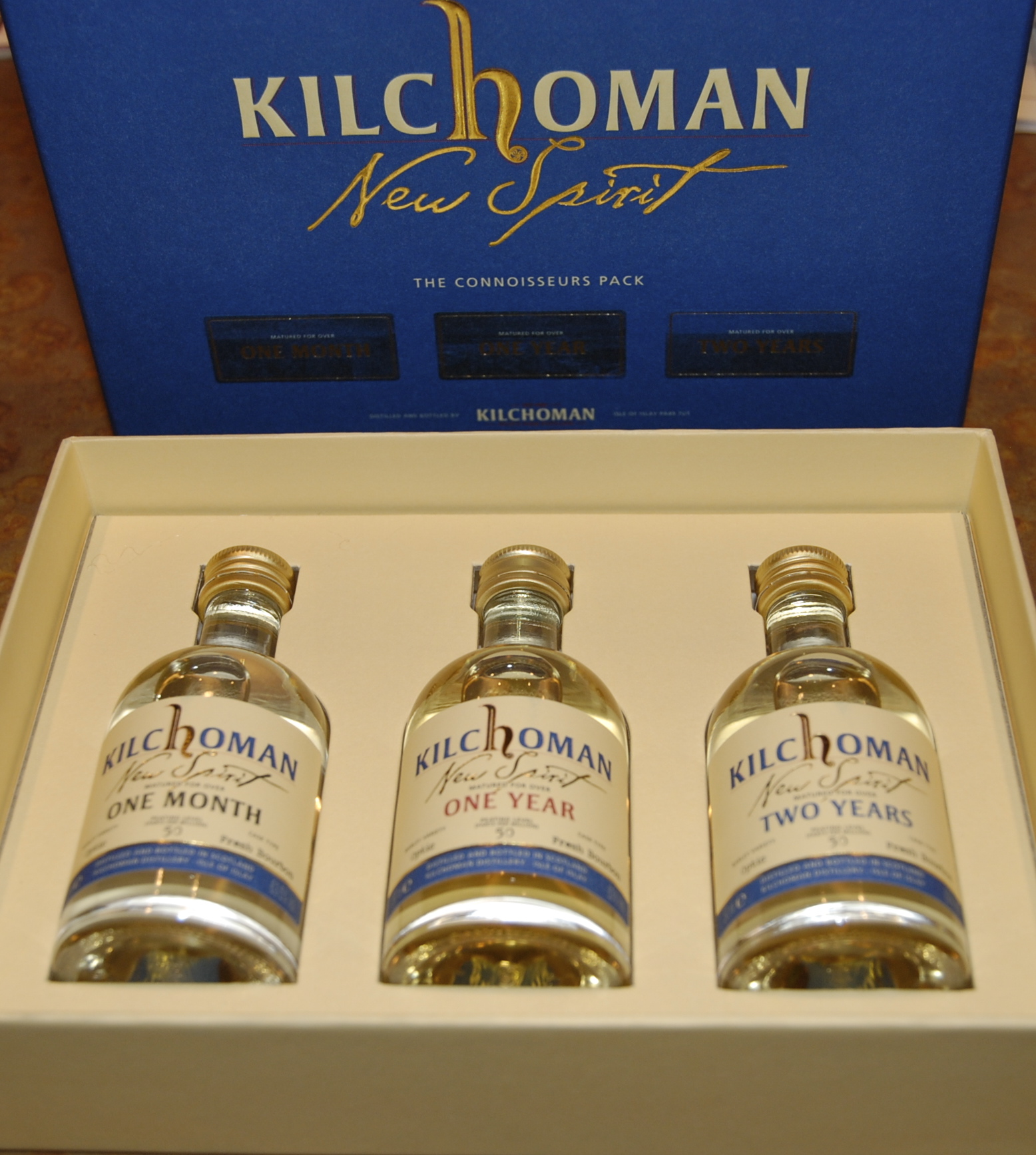
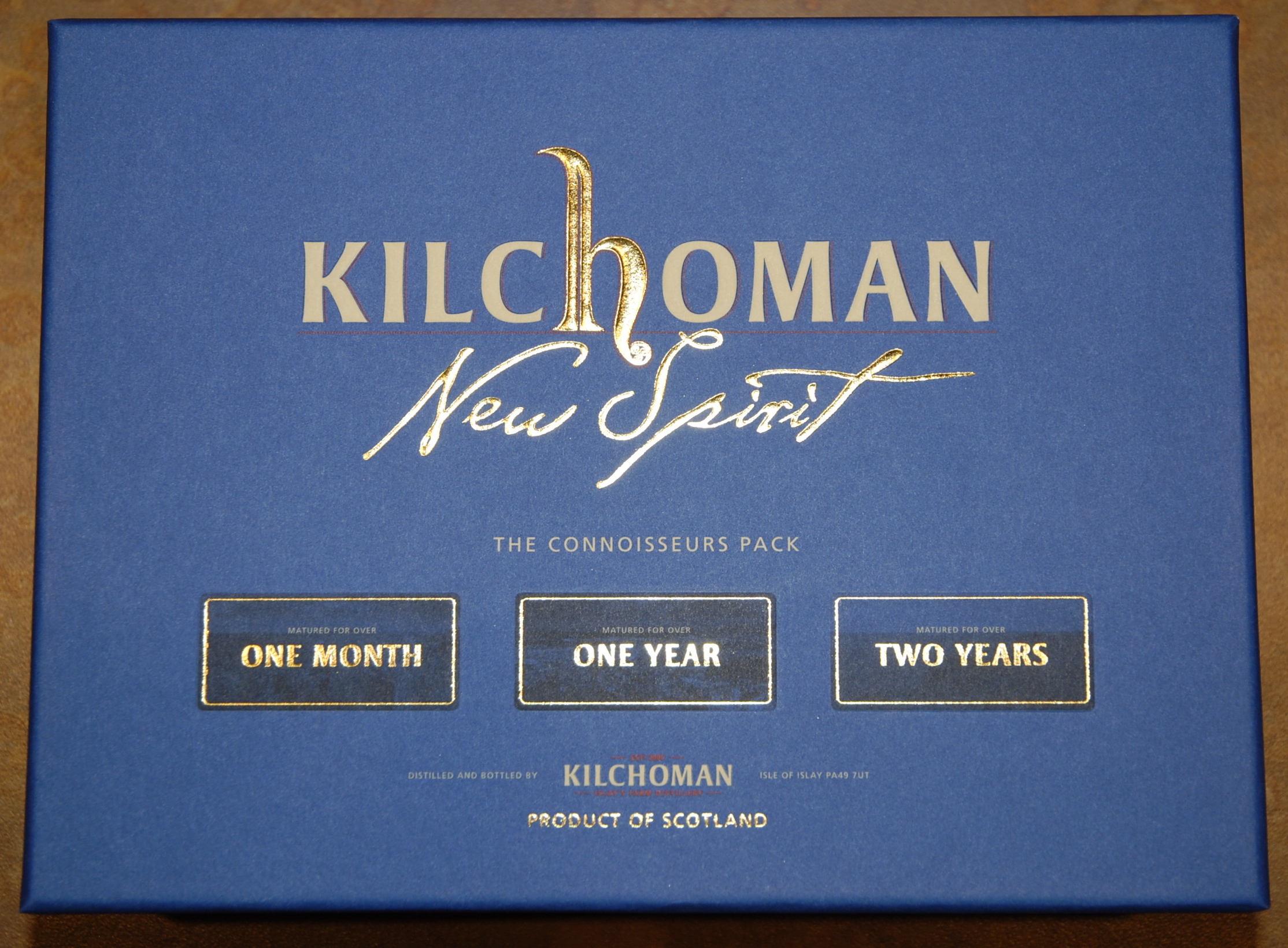
On Wednesday, I received my Kilchoman Connoisseurs Pack, containing three 50ml samples of new spirit from the Kilchoman [Kil-HOH-man] distillery, established in 2005 on the island of Islay.  Their first official whisky, a 3 year expression, will be out later this year, but this sample pack should give a good idea of the Kilchoman profile.  In my Wednesday Nightly dram post, I shared some pictures and provided an initial reaction to my small taste of the 2 year old.  Tonight, I’m comparing all three samples of Kilchoman new spirit, and sharing some additional information I’ve learned about the Kilchoman distillery and their approach to single malts.

Back of Connoisseurs Pack box

Back of Connoisseurs Pack box

The Connoisseurs Pack contains the following samples:

  • One Month New Spirit – 63.5% ABV
  • One Year New Spirit – 63% ABV
  • Two Years New Spirit – 62% ABV

All three of them are matured in fresh bourbon casks, and are made from Optic barley peated to 50ppm.  While Kilchoman does have their own malting floor, they also use malt from Port Ellen.  I believe these samples are of the Port Ellen variety, based on the 50ppm peating (more on that below).

Tasting Notes

On Wednesday, when I tried a very small sample of the 2 years, I tasted it at full proof.  Tonight, I’m going to try each of them with water added so as not to kill my taste buds with the first dram.  I’m starting by nosing them neat, then adding 1 teaspoon of water to 1/2 oz of whisky.

Kilchoman Tasting

Kilchoman Tasting (pre-water)

  • One Month: Medicinal, something plasticy or rubbery, and ashy peat on the nose.  There’s a little sweetness, but I have to hunt for it.  More ashy peat on the palate and finish, with a hot tingly sensation on the tongue.  At the end…take a deep breath in and out and enjoy the lingering peat coming up through the nostrils.  Very nice!
  • One Year: Medicinal and ashy peat, but also some noticeable vanilla.  The plastic/rubber scent has subsided, but is still there a little.  Very similar on the palate and finish to the one month, including the tingling.  I expected it to mellow out a bit, but still very “hot”.
  • Two Years: The peat is coming out more over some of the medicinal notes, and there’s a woodiness with the smoke.  The vanilla is there, but I have to hunt for it.  It’s more prominent on the 1 year [what’s up with that?]. Really not getting that rubbery scent at all now.  That bodes well for future releases.  Similar taste profile on the palate as the others, but not as tingly on the tongue, and I get more sweetness.  It’s starting to mellow a bit.  That lasting peat in the back of the nose is still there.  I love that! [Update Second time around, I’m getting a distinct lemon scent on the nose along withthe smoky peat and vanilla.]

Summary:

If you like peat, especially dry ashy peat, you should like this.  The distillery notes talk about fruitiness, but I’m not really getting that yet, and the sweetness and vanilla is very subdued [Update As noted above, I’m definitely getting citrus/lemon on the 2 year nose now].  In fact, at the end of my tasting session I poured a wee dram of Ardbeg 10, and the nose was like caramel apples relative to the Kilchomans.  Much more so than I’ve ever noticed when just drinking Ardbeg on its own.  An interesting note about my samples…the 1 year was slightly darker in color than the 2 year.  I wonder if this is related to my noticing more vanilla on the 1 year.  At this time, while there is lots of peat, I’m not getting any of the tar/oil notes that I recognize somewhat with Ardbeg, and significantly in Laphroaig.

My enthusiasm for this young Kilchoman spirit is a little lower today than it was on Wednesday, but I still really like the peat, and feel that the future is very promising.  I’m not expecting to favor this over Ardbeg or Lagavulin any time soon, as this is much more one-dimensional [for now].  However, as a complimentary whisky in my collection, I’ll have no problem buying a bottle of the young Kilchoman each year and following their progress.  I wouldn’t be surprised if there is an aha! moment a few years from now where the Kilchoman suddenly seems crazy good.

I’m glad I tried this spirit, and I’ve ordered another Connoisseurs Pack to store away for future use (or just to collect for when Kilchoman is hugely popular).  I’ll definitely try to get my hands on a full size bottle of the 3 year Kilchoman whisky when it’s released later this year.

Distillery Info

Here are some interesting notes about the Kilchoman distillery from the SingleMalt.tv interview with Anthony Wills, Managing Director at the distillery [Interview video links –  Part 1, Part 2, Part 3]:

  • While they have their own peating floors at Kilchoman distillery, a significant percentage of their malt comes from Port Ellen:
    • The Port Ellen malt is peated to 50 ppm, and uses the same spec as Ardbeg.
    • The Kilchoman malt is peated to 20-30 ppm.
    • They’re keeping the malts separate, and will market the home-malted expression as “100% Islay”.
    • Based on this peating info, it appears that the samples I tried are using the Port Ellen malt.
  • The stills have a tall, narrow neck in an effort to get a light, floral, fruity spirit that matures quickly.
    • They also use a ball neck base in case you’re interested.
    • Contrast this still shape to the short, stumpy stills at Ardbeg.
  • Cask types
    • They’re using a 1:1 ratio of fresh and refill bourbon casks from Buffalo Trace.
    • They’re maturing a small quantity of spirit in oloroso sherry butts, but have not yet determined what they will do with this.
  • As of this 2006 interview, they were planning to bottle their first whisky at 4-5 years.
    • This has obviously changed, with their 3 year expression coming out this year.
    • They must have been encouraged by the positive early reviews of their spirit, combined with the industry acceptance of younger single malts these days (especially from Islay).  It looks like people will pay for a 3 year from Kilchoman, so why not put it out there.

Notes from the distillery web site:

  • The in-house floor maltings use barley grown right on the distillery land, and will be bottled on the island for their “100% Islay” expression.
  • Annual production of 630 bourbon barrels and 40 sherry butts
  • 30% of annual production to use home-grown and floor malted barley
  • Link to Tasting Notes by Jim Murray (of their New Spirit)

[Update] Additional links

  • Additional Kilchoman-related links have been posted by some helpful members of the Whisky Magazine forums in this thread.
  • Tasting notes in the Spirit of Islay Forums (Warehouse No.4). [Thanks Mr. Fox!]
  • Distillery page on the Spirit of Islay web site.  Check out the Spirit of Islay site in general for great info on Islay whisky!
  • Here’s a blog post on the Islay Weblog [another great resource!] with a link to a video showing the preparation of the first bottle of Kilchoman Single Malt, which is being auctioned off for charity.
  • Auction press release:  Here is a press release with more details about the auction, taking place May 28th, the distillery’s “open day” during the Feis Ile festival.
  • Here’s a direct embed of the video mentioned above.  Thanks for the Tweet, @hansemalt!

Read Full Post »

Kilchoman preview

Next on my tasting list was going to be a comparison of Bowmore 12 and 18, but then my Kilchoman Connoisseurs Pack arrived:

Kilchoman connoisseurs Pack

Kilchoman Connoisseurs Pack

This pack consists of three ages of Kilchoman New Spirit in 50ml bottles, all with a peating level of 50ppm:

One month – 63.5% ABV
One year – 63% ABV
Two years – 62% ABV

Kilchoman will be releasing their first official scotch whisky (3 years) later this year.

The Kilchoman [Kil-HOH-man] Distillery had slipped under my radar until I saw it mentioned as the 8th Islay distillery in the Black Bottle blog.  As an Islay fan, this immediately piqued my interest, and I started looking around for more information.  I checked out their distillery web site, discovered that there had actually been some mention of it in the Whisky Magazine forums that I frequent, and found an interview with the Kilchoman managing director on Singlemalt.tv.  This definitely looked like something I wanted to keep my eye on.

When I discovered that you can get samples of the New Spirit (and even a full size bottle of the 2 years), I had to order some, as I’m too impatient to wait for the official whisky release.  I ended up busy with other things tonight, and was too tired to do a full comparison of the three makes, but I couldn’t resist sneaking a wee dram of the 2 years (yes, I’ve jumped to the back of the book before to see how it ends).

Quick tasting notes: Of the other distilleries that I’ve tried, the first one that jumped to my mind upon nosing the Kilchoman spirit was not another Islay, but rather, Springbank (Longrow CV).  There is certainly a strong peat smell.  There’s also a sweetness that reminds me of burnt sugar (top of a creme brulee).  [Edit – Hmm…I just realized that Kilchoman uses “creme brulee” in their description of the 2 year nose.  They’re talking about a vanilla scent, while I’m just talking about the torched sugar on top…still, I wonder if I read that on their web site and subconsciously recalled it as I wrote this.]  I think there’s a slight sulpher influence that lends kind of a coal smoke smell as well.  I really enjoyed the nose.  I can’t believe how inoffensive it was for such a young spirit.  Not feinty at all.  The peat carries on through to the finish, and the sweetness remains on the palate.

I tasted a very small dram tonight, and will revisit this (and the other two) within the next couple of days and post my results.  My first impression is VERY favorable, though.

More Info…

[Update] My follow-up post, Cuckoo for Kilchoman, contains full tasting notes of the three spirits, as well as additional info and links about Kilchoman.

Kilchoman New Spirit bottles

Kilchoman New Spirit bottles

Kilchoman Connoisseurs Pack box

Kilchoman Connoisseurs Pack box

Read Full Post »

In my post yesterday, I talked about the Glenmo/Ardbeg tasting I attended, and the fact that they served a cocktail with Ardbeg in it:

Smoky Peach

Smoky Peach

Smoky Peach

  • 2 parts Navan vanilla cognac
  • 1 part Ardbeg 10
  • dash of Fee Brothers Peach Bitters
  • served on the rocks.

After the big tasting yesterday, I was going to skip my nightly dram tonight, but having purchased some Navan and Peach Bitters on my lunch break today, I wanted to try making a small Smoky Peach.  I purchased Navan vanilla cognac, the same one they used at the tasting. I was interested in Meukow VS Vanilla (yes, admittedly because I thought the bottle was cool), but after reading this comparison on Scottes’ Rum Pages blog, I decided to stick with the Navan. I want to be able to serve this to people who don’t care for a heavy “spirit” nose, and I think the strong vanilla component is important for this cocktail.

I started with 35ml of Navan and 20ml of Ardbeg, then added a little under 1/2 teaspoon of peach bitters and finally the ice. Too much bitters for me! A little really does go a long way (I guess the shaker cap was a good clue to that this was the case). I added a few more drops of Navan and Ardbeg, then let the ice melt a bit and it was closer to what they served last night. Next time, I’m going to try 44ml Navan, 25ml Ardbeg, and somewhere around 1/4 (or less) teaspoon of bitters and adjust from there.

I’ll post an update if I find the “perfect” mix (for me).

[Update 6/6/09] The 2-1 ratio of Cognac to Ardbeg seems to work just fine.  It’s the peach bitters you need to be careful with.  Start with just a drop and work up.  I made a mix with 8 oz Ardbeg and 16 oz Congnac, and I only needed a few drops of bitters.

Read Full Post »

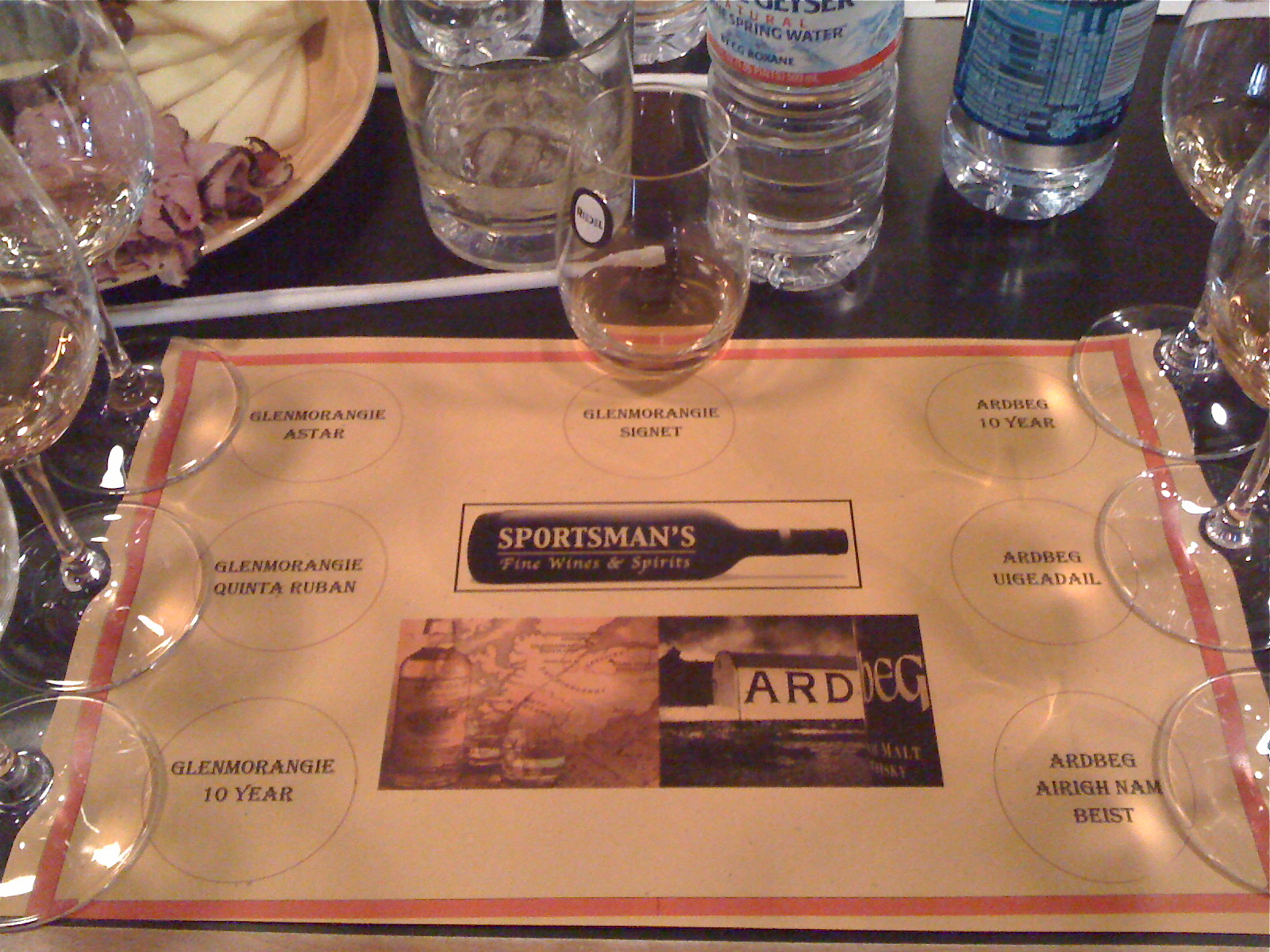
Tonight, a couple of friends and I traveled 50 miles to a Glenmorangie and Ardbeg tasting. My neighbor’s wife was nice enough to drive us, although when we signed up, we thought the Sportsman’s Fine Wines and Spirits where it was held was located about 15 miles closer. I’m glad we didn’t realize that until today, as we probably wouldn’t have signed up, but it was totally worth it (easy for me to say, having hitched a ride). For $35, we got a cocktail, some snacks, a dram of the 7 whiskies listed below, a Reidel “O” glass, and special pricing on the whiskies in the tasting. I believe there were around 25-30 participants.

Glenmorangie/Ardbeg tasting matt

Glenmorangie/Ardbeg tasting matt

They started us out with a cocktail, which I believe they called the Smoky Peach. I can’t remember the specifics (I’ll have to email them and find out), but it contained Ardbeg 10 along with either peach bitters and cognac, or some other kind of bitters and “peach cognac” [is there such a thing?]. Anyway, it was much more tasty than I expected, and I’d like to try it on some non-whisky drinking friends sometime.

Update – I got the details:

Smoky Peach

  • 2 parts Navan vanilla cognac
  • 1 part Ardbeg 10
  • a dash of peach bitters
  • served on the rocks.

Next, we went through the following whiskies:

  1. Glenmorangie 10 year (40%) – Lightly sweet with orange blossoms. Perfectly nice, but doesn’t move me.
  2. Glenmorangie Quinta Ruban (46%) – This one surprised me. A little time in port casks really made a difference over the 10 year. Richer. The port really comes through on the nose. I got some enjoyable spiciness sticking on the tongue through the finish. I like it a lot…it’s on my list to buy.
  3. Glenmorangie Signet (46%) – This I enjoyed a lot. I don’t know if it was the power of suggestion or what, but I tasted the elements of dark chocolate the organizers described. Usually I don’t sense chocolate in whiskies where other people do. I would love to buy some of this…at half the going price. The packaging is really sexy, though.
  4. Glenmorangie Astar (57.1%) – This was a big hit tonight. Lame pun alert…as this starts showing up in more tastings, expect to hear about how it was the “star” of the show. Yuck…that hurt to write. Anyway, this was supposedly the first time this was made available in Arizona, and there was a mad rush at the end to grab the available 15 or so bottles. To me, it was just a more potent 10 year old (although, admittedly a VERY drinkable cask strength).
  5. Ardbeg 10 year (46%) – This is a great value relative to the other Ardbegs in this tasting, which cost over twice as much as the 10 here in Arizona. It’s hard to go wrong with this one, and I have an open bottle in my cabinet.
  6. Ardbeg Airigh Nam Beist (46%;1990 vintage) – While the Quinta Ruban surprised me in a positive way, I was actually a little let down by Nam Beist. Don’t get me wrong, it’s a very enjoyable drink. All Ardbeg, but a little mellower and more creamy than the 10. It does have a long, long finish though. I guess what disappointed me was that it wasn’t “beastly”…it was the tamest of the three. Of course, it IS the oldest, but that name gets you thinking it’s going to be all kinds of crazy. I wouldn’t hesitate to buy this at $75-$85 a bottle (relative to the $55-$60 the 10 goes for), but Nam Beist is going for around $140 here in AZ. That disparity with the price of the 10 doesn’t work for me.
  7. Ardbeg Uigeadail (54.2%) – Mmmmmmm. That sherry influence really works with the peat, although the sherry isn’t nearly as strong as it is in the Lagavulin DE. What a nose on this one! I took advantage of the discount price and bought a bottle.

This was a great time and well run. The three of us that went together gave it a big thumbs up, and it was nice to meet Sean from the Whisky Magazine forums. Sean said the Sportsman’s Scottsdale location (much closer for me) is going to do a Signatory tasting sometime. I want to be there.

Tasting some tasty scotch

Pretty decent turn out for the tasting

Pretty decent turn out for the tasting

Nice place (Sportsman's)

Read Full Post »

« Newer Posts - Older Posts »