Feeds:
Posts
Comments

Introduction

Caol Ila "Unpeated Style" 2009

As with the two elder Taliskers and the Mannochmore 18 that I reviewed recently, I bought a 30ml sample of Caol Ila Unpeated 10 year from whiskysamples.eu as part of a set of 2009 Diageo Special Release samples. However, after taking a tiny sip of this CI, I proceeded to purchase a full bottle the day it became available at Loch Fyne Whiskies. I suppose I’m probably giving away the direction I’m headed with this review. 🙂

Caol Ila has historically produced their whisky primarily for blends, with the regular CS, 12 and 18 year single malts having just been introduced in 2002 [according to the Malt Whisky Yearbook]. Caol Ila is a key component of the Johnnie Walker blended whiskies. While their bread and butter is a peated malt (I love the 12 year), I guess Caol Ila has been experimenting with low/no peating for quite some time. Perhaps some of that was put into blends in the past, but their first unpeated single malt offering just hit the shelves as a special release in 2006. For the past three years, this unpeated special release was aged for 8 years, as opposed to the 10 years of the 2009 release.

Tasting Notes

Caol Ila 10 “Unpeated Style” 2009, OB, 65.8% abv

Disclaimer: I’ve been reviewing all of the cask strength special releases at full strength. In this case, the CI 10 smells great at full strength, but pretty much burns the taste buds right off my tongue. I’m going to provide my notes based on adding 1 part water to 4 parts whisky. According to my handy dandy Easy ABVs iPhone calculator, that brings it down to about 53% ABV. The great thing about CI Unpeated is that it holds up very well when adding water.

Nose: Lemon drops as the primary component, followed by rich vanilla cream and some fresh oak. With a little more time, the oak seems to turn into spices (nutmeg and ginger?).
Palate: Thoroughly entertaining. Fizzy lemon sherbet turns to ginger powder (and possibly white pepper). My tongue is all kinds of tingly.
Finish: Lemon and vanilla, with a return of the oak for a medium duration, while the spice continues to linger for a while.

Conclusion

My top two goto whisky experts for notes and opinions, Ruben at WhiskyNotes.be and Serge at WhiskyFun.com, both gave the CI 10 Unpeated a good score, but not a great one. This certainly isn’t the most complex whisky out there, and I can understand the desire to mark it down a little because of that.

Fortunately, I’m not a whisky expert, so I’m going to unapologetically state that I love this CI Unpeated. Sure, that wonderful Caol Ila coal smoke is gone, but the citrus is there, and it’s balanced with just the right amount of sugar and spice to make everything nice [that’s right…I just said that]. The fizzy lemon and spices make for a party in the mouth, and I can’t find anything “off” in the entire experience. This instantly became one of my favorite whiskies, and the bottle is disappearing fast.

Rating

  • Score: I’m going to say 89 points for now (same as Port Askaig 17). It could go higher.
  • Rate it higher if you’ve tried and loved some 15-20 year Rosebanks but wanted more excitement on the palate and finish (and fewer floral notes).
  • Rate it lower if you need high complexity to get close to 90 points, or if you require peat.
  • Value: The lowest price of the 2009 special releases, I think it’s a must buy if you can find it. [$60 – $70]

Other Opinions

In addition to the reviews mentioned above by WhiskyNotes and WhiskyFun, here are some other notes on this release from the whisky web:

Several bloggers attended a Diageo tasting of the whole Special Release lineup. Notes for CI Unpeated included:

I also sent a sample of the CI Unpeated over to Jason at WHISKYhost, and his notes have a lot of similarities to mine. I don’t think he likes quite as much as I do, though, based on his reference to Cragganmore.
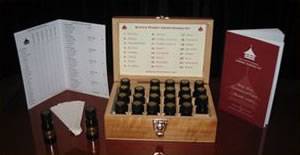
Have you ever seen these nosing/tasting kits? I think it looks like a great idea, but they’re a little more expensive than I would like.

Nosing and tasting kit

Now The Balvenie is offering up a chance to get one for free. I got an email from them today with the following info:

Just in time for the holidays, The Balvenie is offering the chance to win a one-of-a-kind prize: An exclusive Scotch Whisky nosing and tasting kit. This unique kit contains 24 separate aromas and a dedicated nosing guide, as well as other essential whisky tasting tools. The lucky winner will also receive an exquisite Balvenie hipflask.

Visit this link to enter:
http://www.thebalvenie.com/en-us/sweeps.php

It’s really easy to enter. Just provide your name and email address. No long surveys to fill out or anything.

Good luck!

Introduction

I’ve had a number of people ask me about good gifts for the whisky enthusiast in their lives. I’m no expert, but I AM enthusiastic about whisky, so I can certainly share some ideas that appeal to me. A bunch of these whiskies and whisky accessories are ones I already own or have experience with, but I’ll also include some things that I’m interested but don’t have yet. I’ll mark those with an * so that my wife can use this as my wish list as well. 🙂

Before I get into recommending full bottles of whisky, I’m going to touch on a number of accessories such as books, glassware, and whisky samples. It’s much more difficult to recommend a bottle of whisky with confidence without knowing the recipient’s preferences and boundaries. I’ll take a shot at that as well, though.

Update: Check out the comments for some additional gift ideas. I also posted a 2010 Gift Guide here.

Books

Here are some books I own that are current, and would make excellent gifts:

World Whisky

  • World Whiskey – Edited by Charles Maclean, with contributions by well known experts/authors such as Dave Broom, Hans Offringa, Ian Buxton and Charles himself. At first, this hardback book looks like potentially a “fluff” coffee table book (albeit one with great, current pictures of over 700 whisky bottles). However, dig in and there are tasting notes for all of those whiskies, plus behind-the-scenes secrets of a bunch of the distilleries. They also offer “whisky tours”, with recommended itineraries for visiting the different whisky-producing regions, including the Scottish regions and world whiskies from Ireland, Japan and the United States. Only $16.50 from Amazon right now, this one is a no-brainer.
  • Whisky & Jazz by Hans Offringa – Something a little different, for the whisky and jazz lover in your life. I’ve REALLY enjoyed this book. You can see my full review here. $40.
  • Malt Whisky Yearbook 2010 – Another book with contributions by multiple, well respected whisky authors, this one is updated yearly. The primary focus is on distilleries from all over the world, providing history, profiles, interesting facts and tasting notes. There’s also a section at the end on the year in whisky, with all of the latest interesting news from the whisky world, and lists of whisky-related resources. This is a very well respected publication with something for all levels of whisky enthusiast. Approximately $20.
  • Jim Murray’s Whisky Bible 2010 – Jim Murray is probably the most recognized whisky ambassador in the world since the passing of Michael Jackson in 2007. In his bible, he provides notes and ratings on nearly 4,000 whiskies! The book is printed on very fine paper with tiny print, though, so it’s small enough to easily carry around (almost pocketable). There seems to be some minor controversy around some of his ratings, as he has a hand in a number of whisky expressions as a consultant, but overall, he seems to offer unbiased opinions, and provides concise, entertaining notes. Highly recommended as an additional opinion source to go along with the myriad of whisky web sites. $20.
    • Update: Penderyn Whisky is offering 25% off of a SIGNED copy of the Whisky Bible. Details on Facebook.
  • Malt Advocate (magazine subscription) – I got my money’s worth out of this subscription just with the one article on sherry and oak interaction in whisky barrels in the Winter 2009 issue. The link I provided is to a blog post on the current offer to get 2 years for the price of 1 for new subscribers (good through December). $18.

Glassware

Whisky Glass

  • The Glencairn Whisky Glass – Specially designed for nosing and tasting whisky, this glass has become quite popular, and is fairly readily available (at least online). This is a great all-around whisk(e)y glass. It’s my favorite in terms of hand feel and drinking. It does a good job of forcing the aromas up to the top of the glass for nosing, although I have another glass that I think is slightly better in this department. $8 to $14 per glass depending on source. Macy’s currently has a 6-pack for under $50. I’ve had good luck ordering from bkblankenshipon eBay.
    • Along with the Glencairn glasses, you can also order watchglass covers to keep the flavors in if the glass is going to be sitting out for a while (like during a multi-whisky tasting session). If you look at the bkblankenship auctions in my link above, you’ll see that some of the glasses come with the covers, and you can also order the covers individually for $2.
  • Nosing Copita

    Nosing copita – This seems to be a very common whisky glass style, specially designed for nosing the whisky. I do find it slightly better than the whisky glass for nosing, but not as good for drinking. Still, it’s kind of a fun little glass, and looks great. Note that it has a smaller opening than the whisky glass, so the watchglass cover that comes with this glass is smaller as well. Similar price to the whisky glass, and also available from bkblankenship on eBay.

  • Water Jug – I don’t put water in my whisky all that much, and when I do, it’s usually a few drops using a straw. However, I do like to put water out with the whisky when I have people over, and this is certainly an elegant way to do that. $35, or $60 as a gift pack with two whisky glasses. Once again, you can get this on eBay from bkblankenship.

Water Jug

Whisky Gift Packs

The Glenmorangie Collection

  • The Glenmorangie Collection – Pictured above. This range of Glenmorangie expressions is sweet and smooth. See my full review here. $30-$50.
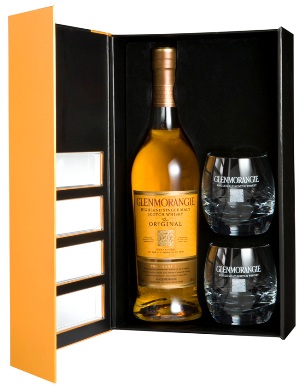
  • Glenmorangie Original Gift Pack – This one is a full-size bottle of Glenmo 10, along with two tumblers. I usually go with whisky glasses, but as tumblers go, these are really nice. Heavy bases and a tapered opening to capture some of the aroma. $35-$50.

Glenmo Original Gift Pack

  • The Islay Collection – An amazing Diageo gift pack, containing 5 200ml bottles, including Port Ellen, which would cost $400 as a full bottle. Note that these are all big, smoky, peaty whiskies, so make sure the person you’re buying this for likes this style. See my full review here. $125.

The Islay Collection

  • Other Diageo gift packs – Diageo sells a bunch of other gift packs with 200ml bottles, typically with three bottles per box. If you can find these locally, they’re usually well worth buying. You can also find them online at The Whisky Exchange and Loch Fyne Whiskies. $40 – $70.

Whisk(e)y

I’ll go ahead and throw out a few whisk(e)y ideas, including some that are on my wish list (for my wife to check out). It’s definitely easier to buy for somebody if you already have an idea what their preferences are, and if there are certain expressions/styles that they flat-out don’t like, or that they love.

  • The Macallan 18 – If you’re looking to spend a good chunk of change on somebody, it’s hard to go wrong with this one. It’s a very safe purchase. I think the worst I’ve seen written about it is that it’s too expensive for an 18 year old. I suppose a few negative Nancies will call it overrated, but they’re probably just upset about the price, too. However, any whisky lover is going to appreciate the effort to acquire a bottle of Mac 18 for them. Even if it’s not their favorite, it’s a very nice bottle to bring out for company. $100 – $140.
  • Lagavulin 16 – This is a little more risky, as it’s a strong, peaty Islay whisky. However, Lagavulin has a fantastic reputation, and deservedly so. If the backing of a pop culture icon would help, do a page search for Lagavulin in this interview with Johnny Depp. 🙂 Laga 16 is one of my favorite whiskies, and for the quality, it’s reasonably priced at $60 – $80.
  • Highland Park 18 – Voted “best spirit in the world” by Paul Pacult. This is one of the most balanced whiskies you’ll find. Like the Mac 18 and Laga 16, HP 18 is very widely acclaimed, and will be very appreciated as a gift by any whisky connoisseur. $85 – $100.
  • The Glenlivet Nadurra Triumph 1991 * – I’m specifically recommending the “Triumph” version of the Nadurra for my fellow Americans. It’s a limited bottling exclusive to the United States. I’m a sucker for that kind of thing. Plus, it got a great review by John Hansell (link). $85.
  • Diageo Special Releases – Each year, Diageo puts out a highly anticipated set of special release single malt whiskies. ANY of these would make fantastic gifts. At $60, I highly recommend Caol Ila Unpeated 10 year for something different. With a little water, this is like drinking lemon cream pie.
  • A few less expensive, easy drinking single-malt scotch whiskies to consider: Highland Park 12 ($40); The Balvenie 15 year single barrel ($55); Glendronach 12 year ($40); The Macallan 12 ($40); The Glenlivet 18 * ($50-$60)
  • Stranahan’s Colorado Whiskey * – This one is on my wish list. It’s from a micro-distillery in Colorado, which is cool. Plus, I’ve heard it tastes pretty good, and the shot glass cap is interesting. $50 – $60.
  • Wild Turkey Rare Breed * – Jim Murray went crazy over this inexpensive bourbon, calling it “one of the wonders of the whisky and whiskey world.” At $36 for a bottle, consider my curiosity piqued. I’ve also seen this in a wood box gift pack with two tumblers for the same price as the stand-alone bottle.
  • Evan Williams Single Barrel (2000 vintage) * – John Hansell gave the 2000 vintage a great review, and it’s quite inexpensive, so I want to try it. $26.
  • Buffalo Trace Antique Collection (BTAC) – For the bourbon and rye whiskey lover in your life, any of the five BTAC releases will be a slam dunk. These are limited bottlings released each Fall, and usually sold out by Spring. William Larue Weller is one of the top two bourbons I’ve tried. $65 – $85.
  • Johnnie Walker Blue (200ml) * – Now THIS is one that whisky connoisseurs often call overrated. On the other hand, to the uninitiated, JW Blue seems to often be considered the pinnacle of whisky excellence. While I’m sure there are plenty of single-malts that can best JW Blue for the price, I need to try it for myself and see what the fuss is about. I’ve seen 200 ml bottles in my local Total Wine & More for $60. That’s still pretty expensive per oz, but not an outrageous sum of money relative to the $180 – $220 full bottle price.
  • Johnnie Walker Gold – If the person you’re buying for is a blend drinker, and you know they drink a lot of Johnnie Walker Black, they’ll most likely consider a bottle of JW Gold a special treat. I’ve tried it and thought it was very nice. $60-$80.

For a more in-depth look at whisky gifts by flavor profile, check out this blog post over at Whisky for Everyone: Which whisky should I buy for Christmas?

Other ideas?

Any other whisky gift ideas out there? I’d love to hear about it in the comments. Obviously, there are tons of great whiskies to choose from. Are there unique ones that make especially good gifts – maybe because of special packaging or a good story? What about other accessories?

Thanks,
Jeff

Introduction

Continuing on my tasting journey through the Diageo 2009 Special Release samples that I got from whiskysamples.eu, I decided to compare the 25 and 30 year Taliskers to my bottle of Talisker 18 year. Talisker 18 has been one of my favorite whiskies for under $100, along with other great expressions such as Highland Park 18, several Laphroaigs, and Lagavulin 16.

I’ve been very curious about the older Taliskers, but at $200 to $350 for a full bottle, that wasn’t going to happen any time soon. That’s why I love the concept of whisky sample services such as the one offered by whiskysamples. It wasn’t cheap…I payed around $80 for my 7 samples, but I’m getting to try several whiskies that go for $200 – $400 per bottle.

I forgot to take a picture of the 25 and 30 year olds in a glass, but the color is not appreciably different than the Talisker 18.

Three Taliskers

Tasting Notes

Talisker 18

According to the Oddbins website, Talisker 18 is aged in a combination of American and European oak refill casks, but I can’t find anything official to confirm. This standard expression is bottled at 45.8% ABV, and I think they made a very wise decision not to go with 40 or 43%. When the Talisker 18 could be found on the shelves here in AZ, it went for $70. However, it disappeared in the Spring and hasn’t come back. Fortunately, I have a couple of backup bottles to tide me over.

Nose: Toffee sweets up front are immediately replaced by earthy peat, light smoke and fresh oak. There is also a mild medicinal quality to it. Then vanilla, and finally a little lemon citrus.
Palate: Sweet at first, with a nice full mouth feel, you can taste that earthy peat, too. Then pepper starts to build and gets reasonably strong, if not as big as the 10 year.
Finish: Continued pepper on the tongue lasts quite a while, and the smoky peat comes up into the back of the nostrils, also lasting a long time. Actually, the earthy peat sticks on the tongue as well. Excellent!

Comments: This is one of my favorite semi-regular whiskies. Great balance between sweets, pepper, peat and smoke. The peat on this is the closest I’ve found to sniffing a block of actual peat (as I got to do in Edinburgh at the Scotch Whisky Experience tour). There is some iodine, but none of the tar that you find in some Islays. Still, this is VERY close to an Islay profile. I rate this the same as Highland Park 18, but if I had to pick just one, it would be the Talisker by a peaty nose. Plus, at $70, it’s an amazing value. 90 points.

Talisker 25

This is a limited release of 5862 bottles. It’s aged in a combination of American and European oak refill casks, with the American oak presumably being from bourbon casks. I’m not sure what the ratio is between the cask types. Being 100% refill casks, the color is not particularly dark. It’s bottled at the natural cask strength of 54.8% ABV. Recommended price in the U.S. is $200.

Nose: Much more citrus than the 18 or 30, but not as much vanilla. A little more oak than the 18. A little furniture polish, perhaps from the higher alcohol. Not noticing the medicinal notes of the 18 as much, and the earthy peat is hiding behind the citrus. With a couple of drops of water, the citrus dies down and it’s more balanced, with the vanilla and peat being more noticeable.
Palate: Huge pepper hits you over the head, with sweetness and earthy peat behind it. Wow, that is some serious impact!
Finish: The pepper continues for a long time, and like the 18, the light smoke comes up through the nostrils and brings the earthy peat with it. The pepper is still huge.

Comments: This is the 18 year on steroids. It seems slightly less complex at full strength, but with just a few drops of water, it becomes very balanced like the 18 year while retaining some additional pepper kick. Without taking price into account, I would say that I prefer this just a little over the 18 because of the extra punch, which can be toned down as desired. 91 points.

Talisker 30

There are 3000 bottles of Talisker 30 year for 2009. It is matured in a combination of American Oak and European Oak refill casks, and has a golden color. This release is bottled at 53.1% abv, and has a recommended retail price of £215 (around $350 if it’s shipping to the U.S.).

Nose: Less citrus than the 25 year, and probably a little less peat. There is still a little more oak than the 18 year. The big difference with the 30 year is a rich vanilla component that stands out more than the other two. It’s creme brulee rich.
Palate: Soft at first, without the big pepper hit, but that rich vanilla is still there, giving a luxurious mouth feel. Just as you head into the finish, the pepper builds up like you would expect with a Talisker. It’s kind of cool the way it comes out of nowhere later in the drinking process.
Finish: The pepper continues to build, then levels off and stays for a long time, and of course there is the smoke and peat in the nostrils. The oak is still present, but not in any way overpowering. Unlike the 18 and 25 year expressions, there is absolutely no bitterness to the finish on this one (I get a very slight bitterness with the other two).

Comments: With the extra richness and utterly flawless finish, the 30 year steps up to “special” status, but just barely. It’s not like it’s leagues ahead of the other two. This is the third 30 year I’ve tried, and I’ve loved them all. I wouldn’t rate this one quite as high as the HP 30 or Laphroaig 30, though. 92 points.

Comparison and Value

The Highland Park line uses varying combinations of first fill and refill casks, along with different ratios of European and American oak to achieve differing profiles between expressions. With these Taliskers, the profiles all seem very similar, and I haven’t read anything to indicate that there are significant differences in the maturation process. The reason for taste differences seems to come down mostly to age and ABV.

I highly recommend all three of these Talisker expressions, and the 25 and 30 year certainly qualify as “special” releases. The Talisker 18 provides the base profile from which the older expressions build, and I don’t think you can go wrong with it (if you like peat). Get a bottle if you can find it. The 25 year provides the goodness of the 18 year in an explosive package. Finally, the 30 year just exudes class, begging to be sipped savored with its richness and sophistication.

I’ll keep an eye out for a sale on the Talisker 25 and grab it when the opportunity presents. As for the 30 year, while it does seem “special”, I’m putting it in line behind HP and Laphroaig on my super premium 30 year wish list. The 18 year is close enough in quality to satisfy my Talisker cravings right now, and it’s a bargain to boot.

Other Opinions

WhiskyNotes.be – One of my favorite sites for tasting notes, Ruben has fantastic notes and scores for all three of these expressions: Talisker 18, Talisker 25, Talisker 30.

Several bloggers attended a Diageo tasting of the whole Special Release lineup:

Knob Creek commemorative barrel bung

Knob Creek barrel bung

Knob Creek has apparently closed out their Drought of 2009 marketing campaign, and they’ve done it in style. A bunch of Stillhouse members have reported receiving a package in the mail with a commemorative barrel bung to celebrate the resumption of Knob Creek bourbon bottling.  I just got mine today.

It comes in a box with the following text:

Dear Knob Creek Lover,

Thanks for being patient. After 9 long, rewarding years, your batch of 2000 Knob Creek Bourbon is ready to enjoy. In honor of this occasion, we’d like to share a commemorative 2000-2009 Knob Creek barrel bung.

Cheers! Your friends at Knob Creek

Now, I never actually saw any difference in availability on the shelves here in AZ, but it was still a fun campaign, and now i have my own barrel bung. That’s a pretty cool chotski for the ‘ol liquor cabinet. Perhaps they’ll send out the bourbon barrel that it goes with for Christmas, so hurry and get your Stillhouse membership. 🙂

Additional Pictures

The drought is over.

I survived the drought of 2009 and all I got was this bunghole.

Introduction

Mannochmore 18 Sample

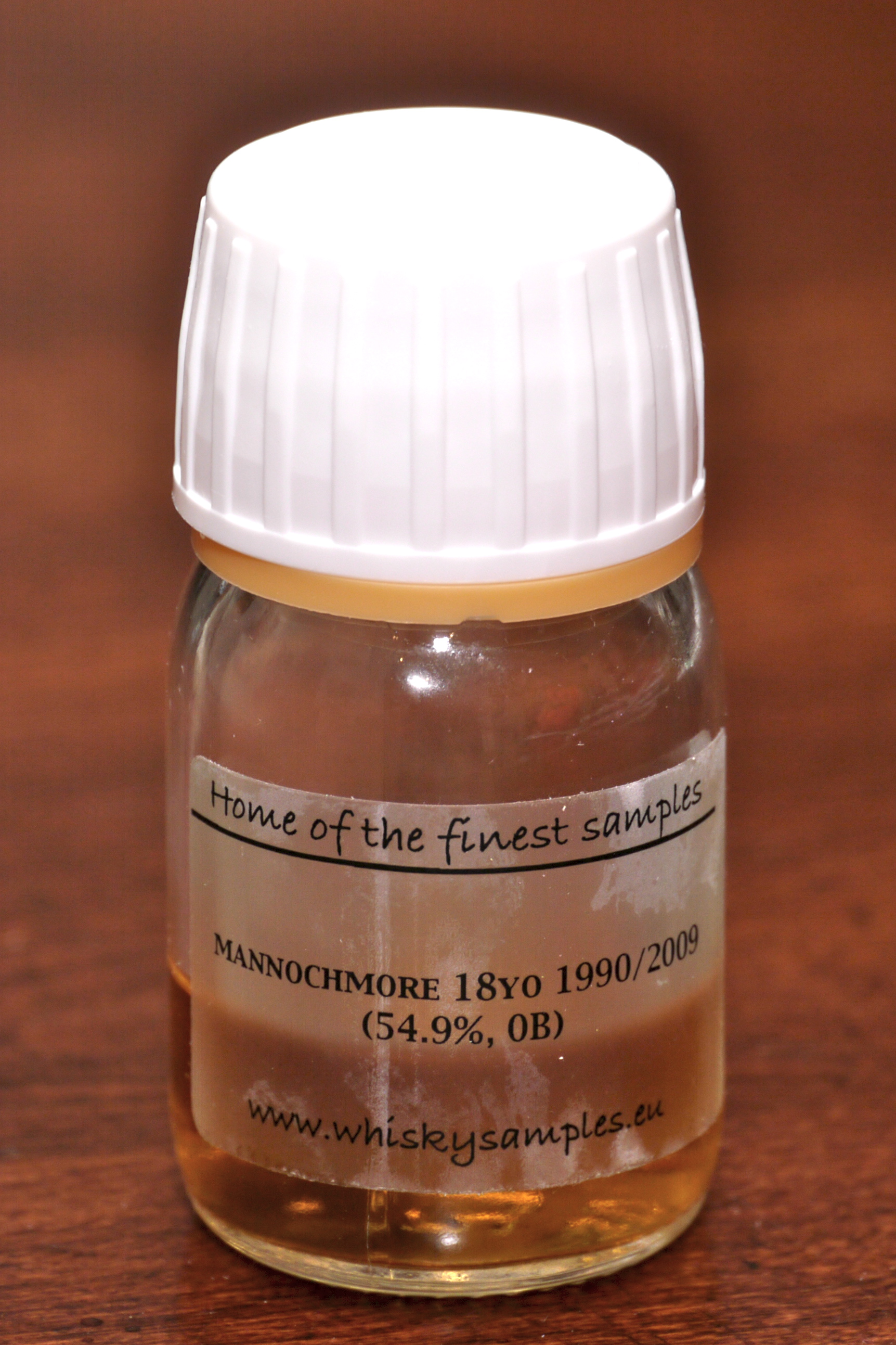
Every fall, whisky connoisseurs look forward to Diageo’s annual Special Releases. These special, limited run bottlings come from a subset of Diageo’s active and closed distilleries. There are nine Cask Strength bottlings in this year’s release, and I ordered a set of 30ml samples from whiskysamples.eu that contains seven of these. The first one I’m sampling and writing about is an 18 year old from Speyside distillery Mannochmore, distilled in 1990.

Have you ever tried a Mannochmore single-malt before? Yeah, me neither. Ok…I guess there is a Flora & Fauna release, plus a few IBs, but there aren’t many expressions out there – especially in the United States. This bottling is especially interesting because of the way they have prepared it. It’s been aged using three different cask types:

  • Re-charred ex-sherry bodega European oak
  • Re-charred ex-bourbon barrels
  • New American oak casks that previously held sherry

Bottled at 54.9%, this is a limited release of 2,604 bottles, and sells for a recommended 105 GBP. Unfortunately, this one is not being shipped to the United States.

Tasting notes

Mannochmore 1990, 18 year, OB, 54.9%

Nose: Lots of spice, oak and vanilla, plus some toffee sweetness and dried fruits…very boubon-like. On first nosing, it’s a little “hot”, with some furniture polish notes due to high abv. That goes away after getting adjusted to it. As I continue to nose it, there’s HUGE vanilla, with apples coming through as well.
Palate: Sweet fruits and cinnamon spice. Maybe a hint of walnut. Starts hot at full strength, but pretty easy to drink still.
Finish: More spices, the oak comes back, and it’s a bit malty. Maybe some apple skins, too. This is a pretty long lasting Speyside malt!

Comments: Before I had even read about the re-charred casks, I opened up the sample bottle, took a whiff and thought…Bourbon! Except on continued nosing, the fruits are lighter, with Speyside apples/pears coming through. Still, this is the closest I’ve ever experienced to a Speyside bourbon (Spourbon?). It’s quite complex on the nose, has pleasant spices to keep things interesting on the tongue, and the finish is pretty long. I like it! That being said, it doesn’t have nearly as much going on in the mouth as my 1989 Macallan 18 (bottled at 43%). I can imagine the rating inching up if I had more time to spend with it, but based on my 30ml sample, I’d tentatively rate Mannachmore 18 at 88/89 points (B+).

At around $100 (or maybe even $125 based on the rarity of Mannochmore), I’d consider buying a full bottle. However, at $150 plus overseas shipping, I’m not quite ready to pull the trigger. Somebody want to send me a bigger sample to see if I change my mind? 🙂

Other opinions

Several bloggers attended a Diageo tasting of the whole Special Release lineup:

Additionally, Ruben over at WhiskyNotes.be provided his own stand-alone review of this Mannochmore. He really liked it and bought a bottle.

Introduction

This is part 2 of my look at the Highland Park core expressions. In Part 1, I shared some details about how HP creates their whisky, and compared the 12, 15 and 18 year offerings. In this post, I will continue with the 21, 25 and 30 year expressions, for which I ordered a 50ml sample of each. The only core expressions I’m leaving out of these posts are the 16 year and 40 year. I might be getting a sample of the 16 soon, though.

Three HPs

Highland Park 21, 25 and 30

Highland Park 21 (47.5% abv; $100-$120?)

Bottle Stamp: L0886H 22:10

The 21 year was released in 2007, exclusive to travel retail and duty-free. The 21 year is based on the DNA of the HP 1977 Bicentenary (singlemalt.tv video link) special release, with an emphasis on refill sherry casks. This is supposed to bring out more smoke. There is also a “slight emphasis” on American oak (from the April 2008 HP newsletter), but I don’t know what the percentage is. While the 1977 Bicentenary release was bottled at 40% (43% in the U.S.), this new one was released at 47.5%. However, this past year, Highland Park announced a shortage of casks for the 21 year, so they are now bottling it at 40%. If you see the 47.5% version, get it!

Nose: Take the 15 year and add raspberry to the lime on the nose, plus additional smoke and oak. However, the smoke seems to subdue the citrus relative to the 15.
Palate: Initial sweetness, then intense citrus on the palate. The extra 4.5% abv over the younger expressions really does seem to add impact as the liquid moves from the front to the middle of the mouth.
Finish: Smoke and citrus hit the back of the nostrils hard on the finish, but then dissipate quickly, leaving a medium smoke for a reasonably long time.
Comments:I kept wanting to compare this to the HP 15 43% expression. It really does seem to have a similar underlying profile, but with a purposeful infusion of smoke, and an impact on the palate that makes you want to sip and enjoy. The 15 year, meanwhile, doesn’t offer much of a challenge to the palate, but it’s extremely (dangerously) drinkable. Compared to the HP 18, I felt that this 21 year was less complex, but certainly offers more of a punch. It’s a trade-off between complexity/balance and smoke/impact. I call it a tie at 90 points.

Highland Park 25 (48.1% abv; $250-$275)

Bottle Stamp: L0914G 13:11

Highland Park introduced the 25 year in 1998, a year after the 18 year was released. The 25 year extends a pattern with the 12 and 18 year bottlings, with a focus on European oak, and an increase in the use of first fill casks with each successive release. The 15, 21 and 30 year (all introduced later) all break from this pattern in some way. Bottled with 50% first fill sherry casks, the HP 25 is the darkest whisky in the lineup (HP does not use caramel coloring in any of their releases). This high proportion of first fill sherry casks is also intended to provide a very sweet experience (the sweetest in the lineup).

Nose: We’re back to the dried fruits, figs and berries of the 18. However, it seems a little muted in comparison, and it’s more fig than berry. Not particularly smoky.
Palate: It starts a little flat and dull, then explodes with smoke and pepper at the back of the palate and into the finish. Only the fig remains of the fruits.
Finish: Big hit of smoke and dried fruit, but for me, it subsided much more quickly than I expected and turned a bit flat.
Comments: This is an excellent whisky, but I’m a little disappointed. I’ve seen a number of whisky enthusiasts expressing a preference for the 25 year over the 30, and at $200 less, that makes for the kind of “bargain” that I love (granted, we’re still in super premium range). However, the nose never seems to blossom with this one. It’s got nice impact on the palate, but the pleasure is fleeting, and to me, it lacks the complexity I was seeking in a 25 year HP. 89 points.

Highland Park 30 (48.1% abv; $450)

Bottle Stamp L 0999G 23:11

The 30 year was just introduced in 2005 as a regular release. The maturation “recipe”, if you will, for the 30 year differs significantly from the 25. In this one, only refill casks are used. 25% of them are American sherry oak, and the other 75% are European sherry oak. As mentioned with the 21 year, the focus on refill casks is intended to bring the smoke more to the fore, in order to balance the heavier sweetness that comes from the long period in European oak casks.

Nose: Rich toffee sweets turn to dried fruits, then it blossoms into fresh berries and kiwi. There is a light to medium smokiness. Surprisingly subtle oak given the age.
Palate: More fruit and sweets up front, then turns peppery approaching the finish. My tongue is all a-tingle.
Finish: This one just goes on and on, with lingering pepper on the tongue and fruity smoke dancing in the nostrils.
Comments: The 30 year is everything I hoped the 25 would be. Looking at other reviews now, I see mention of orange and chocolate for the 30 year, which I equate to the combination of American and European oak. However, my own sensory interpretation of this one is that the American oak takes the fig and dried fruit from the European oak and turns it into fresh berries. It reminds me of the fruitiness that comes from my all time favorite Laphroaig 30. I’m tempted to rate them as equals, with the HP 30 providing more impact in the mouth than the Laphroaig, but the Laphroaig 30 having a magical nose that I haven’t found the equal of yet. If I had to pick just one, it would be the Laphroaig. Let’s say 92.5 points.

Big HP, little HP

The three expressions in my Part 1 post were all bottled at 43%, while the three discussed in this post are in the 47-48% range. The additional abv definitely makes a difference in palate impact, and that seems to carry through to the finish.

When comparing the full lineup, I think it’s easy to get drawn into the impact of the higher abv (big) releases and suddenly find the younger (little) ones feeling weak and less satisfying. I urge caution when taking this approach.

For example, when I tasted the HP 18 immediately after the HP 30 (with some water in between), I had momentary doubts about my professed love for the 18 year expression. Should I really rate it as close to the 30 as I did, even with the obvious difference in mouth impact and smoke? However, when I pull out the 18 year and evaluate it on its own, the doubts disappear. It’s a fabulous, complex, well balanced whisky.

Conclusion

I’m thoroughly impressed with the whole HP line. Having learned a little bit about the way they use their casks in the maturation process, I’m also in awe of their blenders. I’ll feel very “safe” purchasing new expressions from this distillery (like the upcoming Earl Magnus 15 yr. cask strength). As for the six expressions from these two posts…

The HP 12 is a fantastic value at around $35, but as long as I can afford it, I’ll opt for a combination of HP 15 and HP 18 in my cabinet for regular Highland Park cravings. I love the lime and sheer drinkability of my 43% U.S. bottling of the 15 year, but not sure what to think of the 40% version based on my 50ml sample experience. If I could get my hands on the 47.5% 21 year, that would be a no brainer, too, but I’d like to sample the new 40% bottling first. In the super premium category, if I came up with $250+ to spend on an HP (not this year), I’d mail order a 30 year from the U.K. for about the same price as the 25 year goes for here in the States.

Finally, it’s the 18 year and 30 year expressions that stood out the most to me. I totally get it if some people feel the 18 doesn’t have quite enough smoke, or impact in the mouth, but I think that’s overlooking the amazing complexity and balance of that dram. Deciding between the 18 year and 21 year kind of feels like choosing between a luxury sedan and a sports car. Now, the HP 30…that’s a freaking Porche Panamera. Luxurious accommodations, but still does 0-60 in 3.3 and pulls 0.92g on the skid pad. The Highland Park 30 looks better than the Panamera, though. 🙂

Introduction

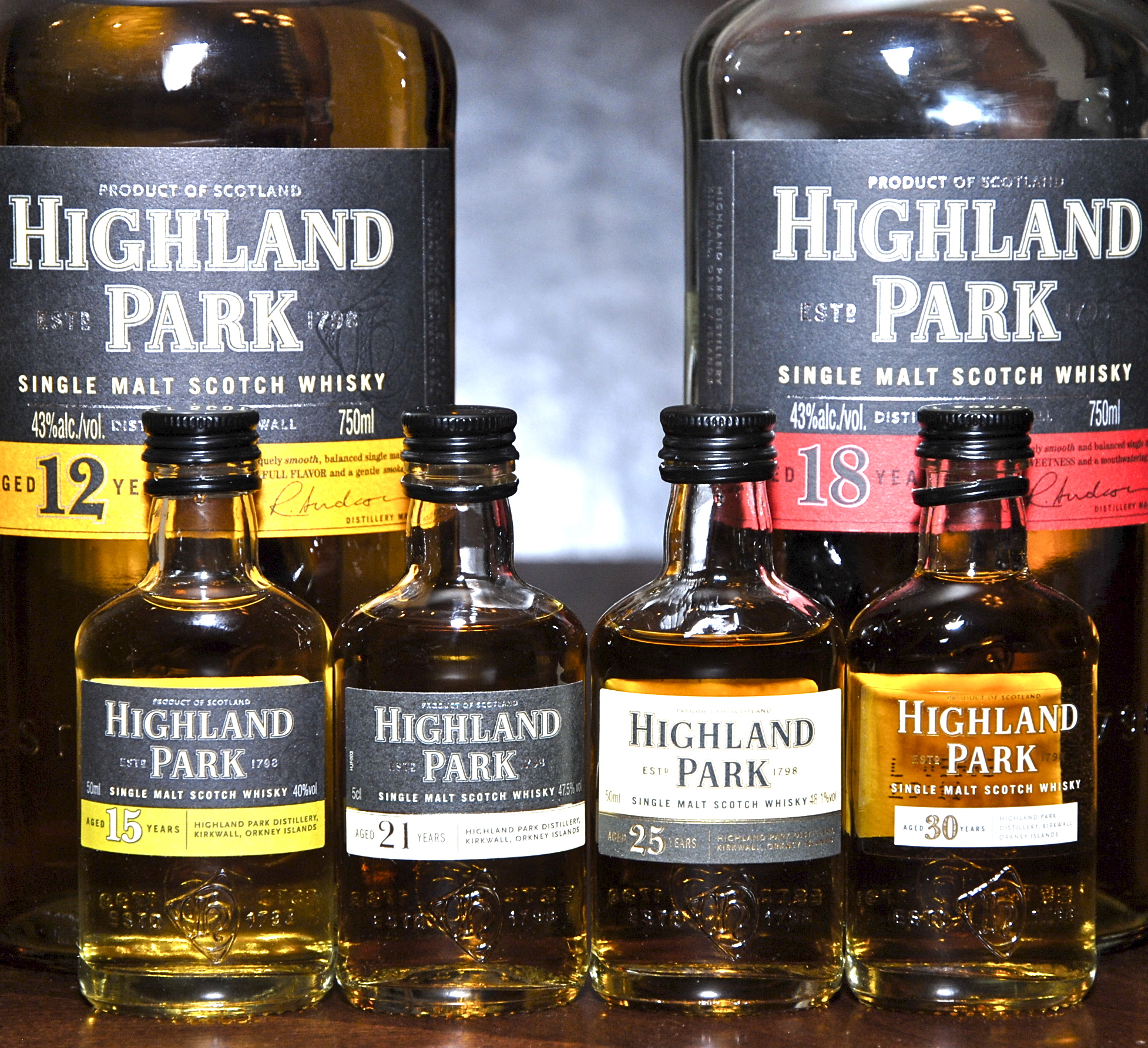
I haven’t had the opportunity to attend a Highland Park tasting event, but I did notice that they bottle miniatures of most of their lineup, so I decided to buy some of those and do an HP comparison in the comfort of my own home. I already owned full size bottles of HP 12 and 18, so I purchased miniatures of the 15, 21, 25 and 30. Later, I discovered that the UK bottling of the 15 year (and the 12 year for that matter) are at 40% vs. the U.S. 43% version, so I ended up buying a full size bottle of HP 15 locally for the comparison.

Highland Park lineup

In this post, I’ll share my tasting notes and thoughts on the 12, 15 and 18 year bottlings. I’ll then post a “Part 2” to compare the 21, 25 and 3o year, and discuss how those older, higher proofed bottlings relate to these first three. I’m leaving out the 16 year duty-free and 40 year bottlings from this comparison, as I wasn’t able to find miniatures of those two.

The Highland Park whisky making process

Highland Park seems to be known for its sweetness up front, which turns to drying and a light smoke at the end. The smoke comes from the use of some peated barley. The peat itself comes from Orkney, and the fact that it’s formed from the heathery moorland supposedly results in adding a honey sweetness to the barley, in addition to the smoke.

Assuming that they always start with the same basic spirit, coming from the same stills, I was curious as to what components go into the “recipe” for creating the individual HP expressions besides the length of maturation:

  • Cask type: HP uses only sherry casks in the making of their whisky, but they use a combination of Spanish and American oak casks. The Spanish oak contributes dried fruit flavors, while the American oak provides vanilla and citrus notes.
  • Refill cask ratio: They use varying combinations of first fill and refill sherry casks, with the ratio between these two being used for color consistency as well (they don’t caramel color their whisky).
  • Cask Harmonization: Each batch of whisky, after a primary maturation period in different types of casks, is vatted together, and then returned to casks for six or more months of additional maturation. The older HP expressions are “harmonized” for longer periods. This process adds consistency to the HP releases.

I don’t think they disclose the specific ratios for all three of these elements of maturation, but I’ll share what information I’m aware of as I discuss each of the expressions.

[Note: All prices listed are just the local price range from a couple of big box liquor stores (Total Wine & More and Bevmo)]

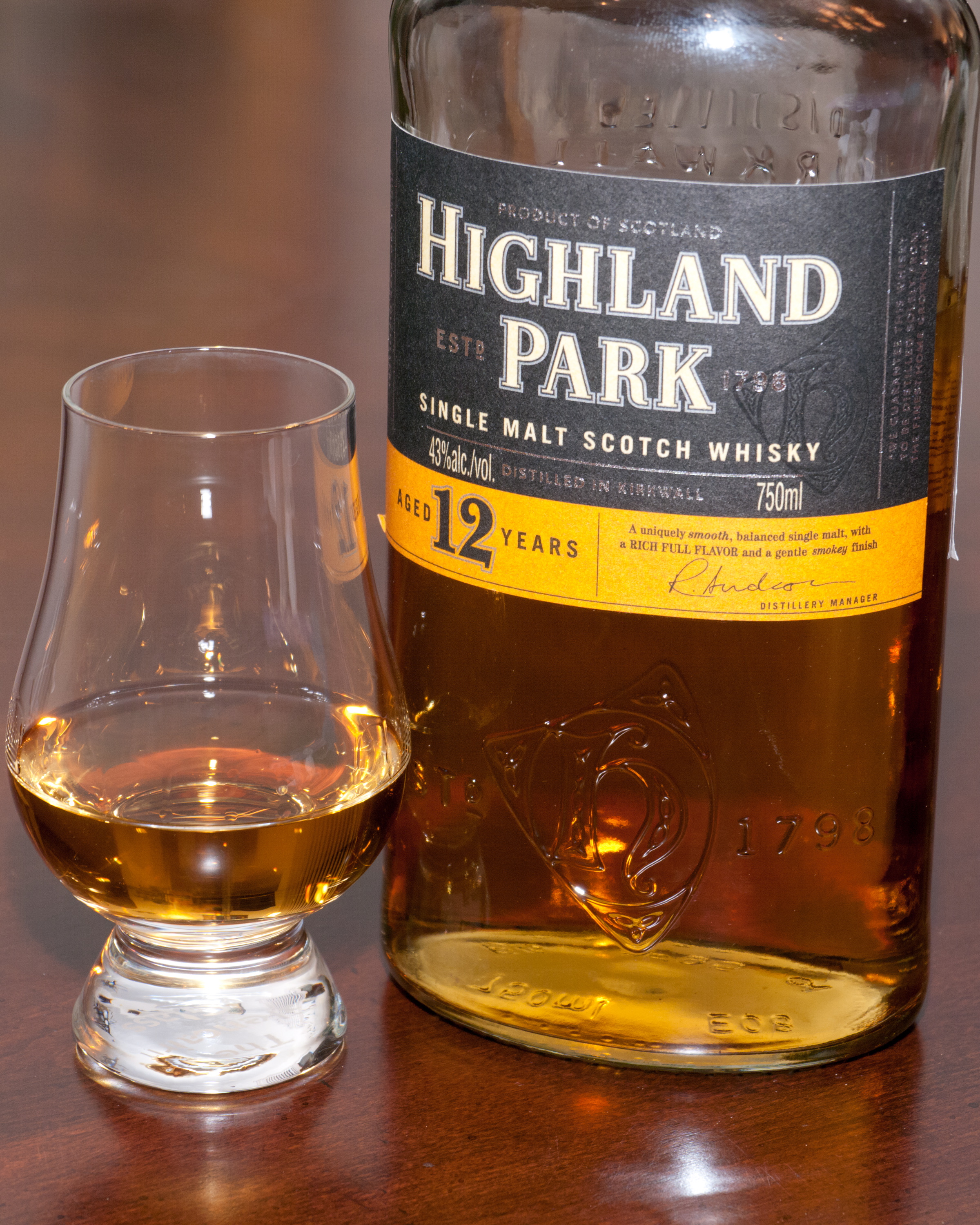
Highland Park 12 (43%; $35-45)

HP 12HP 12 was the first Highland Park single malt, and the only standard expression from 1979 until 1997, when they introduced the 18 year expression. The 12 year is matured predominantly in Spanish oak casks, 20% of which are first fill.

Nose: Peaches in syrup, a hint of leather (that’s right…I said leather, not heather), and something a little earthy/vegetal, though I hesitate to say peat. Sometimes the peaches seem more like candied orange.
Palate: A good mouth coating with more sweets, some spice and a nice tingle on the tongue. Becoming dry at the end.
Finish: Medium length with continued drying. The fruitiness is back, though muted, and enveloped in a light smoke.
Comments: Ok, is it just me, or does the HP 12 nose have a lot in common with Dalmore 12? However, the HP separates itself with more impact in the mouth, and a longer, more interesting finish. I felt the Dalmore 12 was worth 83 or 84 points, and this one deserves a couple more points for the improvements in the mouth. An excellent standard expression! 86 points.

Highland Park 15 (43%; $55-65)

HP 15The 15 year is matured in 30% first fill casks, vs 20% for the 12 year. Additionally, there is a higher proportion of American oak casks. I don’t know what the ratio of American to Spanish oak casks is, though. The 15 year was just introduced in 2003.

Nose: Seems simpler than the 12, actually. HUGE lime (like it’s infused with lime peels) with a little bit of oak, and just the slightest hint of smoke.
Palate: Citrus with some sweet spices. More drying than the 12, and a little more zip and tingle on the tongue.
Finish: Drying, with big lime coming back, along with the light smoke that seems to be a signature HP trait.
Comments: The 15 year is not a natural progression on the way from the 12 to the 18. The shift in focus from Spanish to American oak really changes the profile, and I can understand where some people would find this a bit disconcerting. I’m a big fan, though. It’s not super complex, but that infusion of lime perks me up and makes me take notice. I love the way it adds zip in the mouth, while still retaining the fascinating drying and light smoke from the 12 year. Personally, I’m inclined to reach for this one over the 12 in most cases. Is this one of those guilty pleasures? Will the lime start seeming excessive by the time I empty the bottle? I don’t know, but right now I’d give it 88 points.
[Update] I revisited the 15 year in my Earl Magnus blog post and the lime does seem a little more over the top now. The palate is a little more watery, too. I updated my rating to 87 points just to show a little more separation between this and the 18 year and Magnus. I still think the 15 is a great whisky.

A tale of two HP 15 year olds: I mentioned at the top that I had also ordered a mini of the 40% HP 15 from the UK. I wanted to provide notes on the 40% vs 43% bottlings, but I encountered a problem. My 40% sample was completely flat on the palate, and when it hit the finish, an off-putting soapy flavor came up into my nostrils and stuck with me until I washed it away with one of the good HPs. For now, I’m giving HP the benefit of the doubt, and assuming I somehow got a bad sample. If that’s not the case, and this is what the 40% 15 year old tastes like, that would be a real shame.

Highland Park 18 (43%; $83-99)

HP 18Now we jump up to 45% first fill casks, and predominantly Spanish oak like with the 12 year. The 18 year was the second core single malt expression introduced…18 years after the 12 year was introduced, funny enough.

Nose: Darker and richer than either the 12 or 15. Much more fruity. Starting with dried fruits and sweet spices and turning into fresh red fruits and berries. Not a sherry bomb, but the additional first fill casks are obvious here. I think I’m also picking up a little bit of fresh oak underneath the fruit.
Palate: Good body and fruity flavor. Bigger mouth feel than the 12 or 15.
Finish: More red fruits. There is smoke, and it’s starting to get bigger than with the first two…lifting the fruits up into the back of the nostrils and staying for a while.
Comments: Wow! Amazing balance on this one. The way the Spanish sherry cask influence comes out, but doesn’t completely take over is very appealing. It doesn’t seem quite as drying as the first two, actually, but still a great mouth feel. Sweets, spices, oak, fruit, smoke…they all enter and exit at the right points, and mix together in the right way. It’s hard to explain, but I just have a hard time finding fault. That’s not to say it can’t be improved upon. There could be more mouth impact and more smoke, and I wouldn’t complain one bit. Still…this is a pretty amazing whisky. I rank it right up in the neighborhood of my favorites at 90 points.

Comparison

It’s interesting how they’ve used the sweet/smoky combination to  achieve a common, identifiable distillery character across the expressions, yet each is a very distinct experience. I don’t know that age has contributed to the differences between the 12 and 15 year so much as the maturation “recipe”, especially with regards to the use of American oak. The 18 year, on the other hand, seems to have a richness about it that indicates a sweet spot in the aging process.

If you just look at the point ratings I assign to these three expressions, it looks like I’m phoning it in and awarding a couple of points for every 3 years of aging. That’s not the case at all, though. These three expressions arrive at their satisfaction level and rating in completely different ways, with age potentially playing just a little bit of a roll in the 18 year story. I could imagine somebody switching these ratings around based on personal preference, but I find it easy to recommend all of these as high quality drams with a good value proposition (not taking into account that 40% 15 year sample).

Coming in Part 2…

In my next post, I’ll compare the 21, 25 and 30 year, which all have a higher alcohol percentage. I’ll also talk about them relative to these younger expressions with regards to profile similarities and value proposition. I REALLY want to like the 25 year more than the 30 because of the price difference, but will it be able to pull off the upset? Also, my take on the 21 year being voted the best whisky in the world this past year in the Whisky Magazine awards.

Update: Here’s the link to The HP core expressions – Part 2

Singlemalt.tv and Highland Park teamed up to do a live webcast back on September 28th. Gerry Tosh, head of brand education at highland park, and his boss Jason Craig discussed (and tasted) the new Earl Magnus 15 year Cask Strength special release that is coming out by the end of the year. They also talked about the general plan for HP special releases in the near to medium term, and hinted at a possible addition to the standard HP lineup.

Check out the video here:
http://blog.singlemalt.tv/?p=444

[Update: The above link isn’t working well for me right now. Here’s a link to the High Resolution Video on singlemalt.tv]

Now, for those who don’t feel like watching the full 25 minute video, I thought I’d go ahead and summarize some of the most interesting tidbits:

  • Special Releases
    • HP looking to put significant effort into satisfying enthusiast/collector demand for special releases.
    • Earl Magnus is Edition 1 of a series of “affordable collectible” releases to come out in round bottles with darker glass.
    • Also looking at some high end collectible releases: Vintages, 50 year, etc.
  • Earl Magnus
    • 15 year old cask strength at 52.6% ABV.
    • To be priced in the 75 to 85 GBP price range. [Update: Looks like 85 GBP]
    • Just under 6,000 bottles to be released.
    • Will contain some older casks as well.
    • American oak and high ABV combines to make the smoke stand out. Not as sweet as the Hjarta.
    • Lemon/lime/coconut flavors due to the American oak.
    • Update [12/7/09] – Whiskyfun has now reviewed Earl Magnus. 90 points.
    • Update [12/15/09] – Check out a high resolution picture over at Edinburgh Whisky Blog.
    • Update [2/10/10] – My own unbottling and initial impressions, with lots of pictures and packaging details.
  • “Affordable collectible” Edition 2
    • The follow-up to Earl Magnus will come out next year.
    • Age not yet determined…could move to an 18 year or go back to a 10-13 year release.
    • If 18 year, probably closer to 4,000 bottles to be released. If younger, maybe 7,000 to 9,000 bottles.
    • Price will be 10-20 GBP higher or lower than Earl Magnus depending on age.
  • Vintages
    • Yet another bottle style. Jet-black glass with flared bottom.
    • 2 vintage releases per year.
    • Looking to release 10 vintages over the next 4-6 years.
    • 1964 and 1968 to be the first two vintage releases.
      • Coming in March/April 2010.
      • 290 bottles of 1964; 1,550 bottles of 1968.
  • 50 Year
    • They have some casks that will turn 50 in Jan. 2010.
    • Still planning the details of the 50 year release.
    • Look for it in Summer 2010.
  • New Make Spirit
    • Planning to make new-make spirit available, probably only at the Distillery (or possibly from web site).
    • Probably would come in smaller bottles.
  • 12 year Cask Strength core range bottling
    • Gerry and Jason both feel that they should do a standard 12 CS release.
    • Hjarta showed strong demand for higher strength.
    • Hoping for success with Earl Magnus…could play into the decision.
    • No commitment or details…just hinting that it’s very possible.
  • HP Packaging
    • Current flat bottle design based on some bottles they found in their archives from 1920s/30s. Not just dreamed up out of nowhere.
    • They also had some quality problems with the old bottle that led to the change.

Are these exciting times for HP or what? Apparently their traditional focus on primarily the standard 12 year bottling (up until 1997/1998) has allowed them to build up quite a stock of older casks. That’s why they’re now able to offer the 30 and 40 year as permanent releases. This also affords them quite a bit of creative freedom with these special releases.

Cheers,
Jeff

Introduction

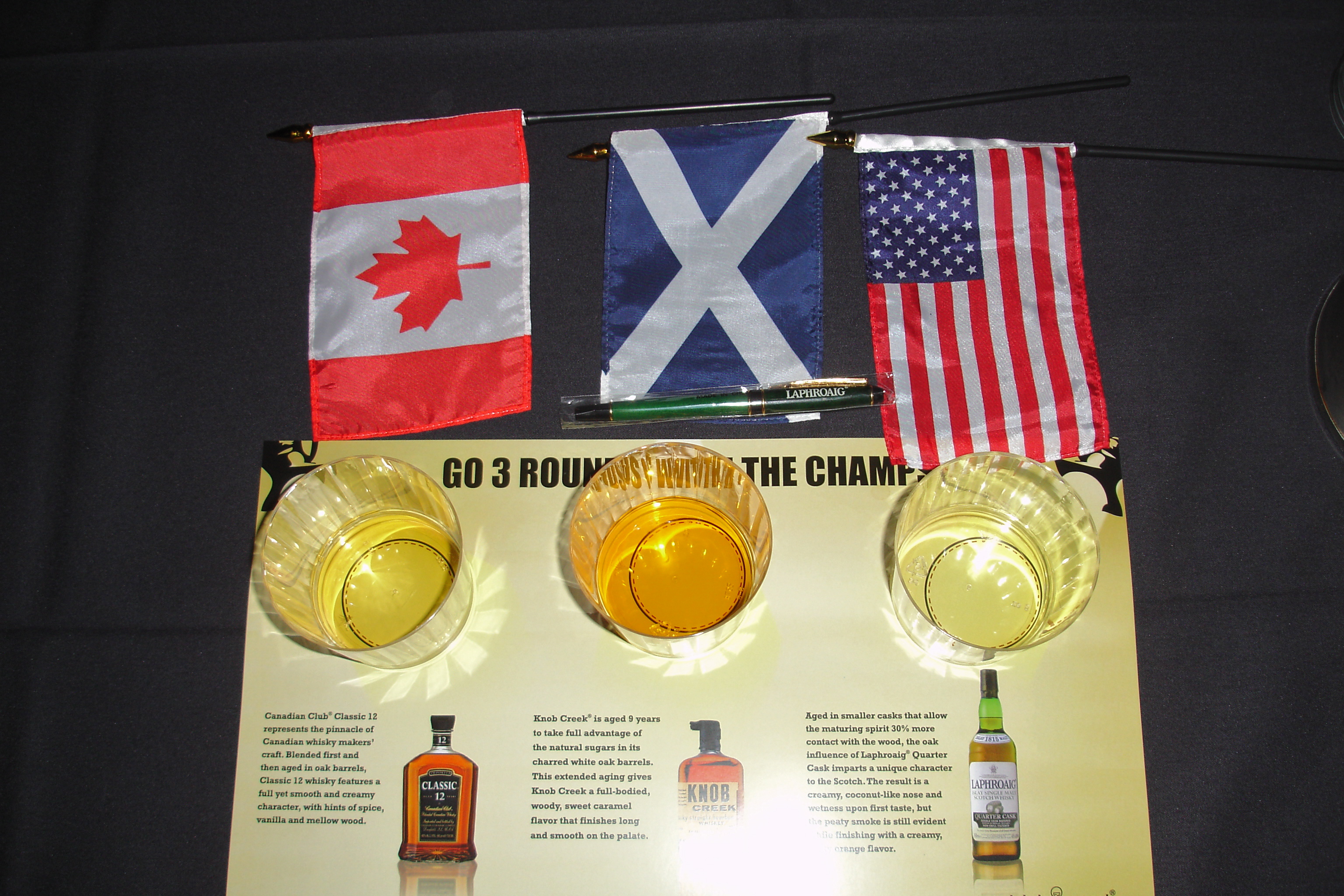
Beam Global is doing a pretty cool marketing campaign, pitting whisk(e)y from three countries against each other in a debate between brand ambassadors as they battle for whisky supremacy. Attendance is free, and along with an entertaining evening put on by the debaters, participants get to try whisk(e)y samples from the three distilleries involved. This stop on the debate tour was in Scottsdale, AZ at the Hotel Valley Ho (yes, they worked a joke about the hotel name into the debate). The three Distilleries were Knob Creek, Canadian Club and Laphroaig, with brand ambasadors Bernie Lubbers (a Beam “whiskey professor”), Dan Tullio, and Simon Brooking respectively. The moderator was Steve Cole (also a Jim Beam whiskey professor?).

Now, don’t take my calling out of this event as a marketing campaign as a passive-agressive knock on Beam Global or the people involved. I’m just calling it what it is, but I think it’s a great idea, and I love these types of marketing events. Bring ’em on spirits companies! I’ll go to them, write about them, and buy your whiskey.

How did I find out about this event? I got an email invite because I am a Knob Creek Stillhouse member.

For a good overview of the Chicago version of this event, check out this post over at WhiskyParty.net.

The Debate

Prior to the debate, they sent everybody up to the roof of the hotel where they were serving cocktails made from the three whiskies that we would be tasting. I can’t remember what the make-up of the cocktails was. I just heard “Canadian Club with blah, blah, blah; Knob Creek with Blah, Blah, Blah.” Finally, there was Laphroaig 10 year with water and ice. I ordered that one, but without ice. And I had him skip the water, too. Ahh…now that’s a good cocktail.

The format of the debate involved first having each ambassador introduce the type of whisk(e)y they were representing (bourbon, canadian whiskey, and Islay scotch whisky). Then Steve Cole asked each ambassador a question and had them explain why their whisky was the best. After fielding questions from the audience, the panel made their final arguments and then the attendees voted by raising miniature American, Canadian and Scottish flags that were provided with each place setting.

We had a pretty strong Scottish contingent making a lot of noise at this event, but I think bourbon won out. There were actually a pretty decent number of votes for Canadian whiskey as well. As the event is all in good fun, though, it was declared a draw.

Talking about the "water of life"...on water.

Talking about the "water of life"...on water.

The Whiskies

Wide-mouth plastic cups don’t serve as the best vessels for critical analysis, but here are a few notes on the samples supplied:

Canadian Club Classic 12 Year

Ridiculously sweet, with vanilla, toffee and cinnamon. Weak palate and short finish. No alcohol burn…not even any warmth to speak of. VERY easy to drink…the non-whiskey drinker’s whiskey?

Knob Creek Bourbon (9 year)

Sweet smelling, but not as sweet as the CC. A much stronger nose than the CC, too. Nice spicy notes on the tongue (from the Rye?), and pleasing warmth going down. Maybe slightly rough, but not bad. The finish is longer than the CC for sure, but no lingering smoke like the Laphroaig. Enjoyable and totally worth the $25 it goes for locally.

Laphroaig Quarter Cask (No Age Statement)

Classic Islay with some iodine and lots of smoke on the finish. Sweeter and more oaky than the standard Laphroaig 10. Nice long finish. This is a fantastic whisky, even in a plastic cup. Still, at an event like this, it’s not as “accessible” as the Knob Creek. I think the people that voted for this one were familiar with the Islay profile coming in.

Whisk(e)y Debate place setting

Whisk(e)y Debate place setting

Shout out

Cheers to Sascha and Julie, a couple of SMWS members from Australia who happened to be in town for the SAP conference. Sascha and I were on each other’s Twitter follow list due to a shared interest in whisky, and the three of us ended up attending the whisky debate together and hanging out talking afterwards at the bar. A couple of the nicest people you’d want to meet – how cool is this online social networking thing?

Video from the event

This isn’t very high quality video, but I thought I’d share some clips from the event. I took these with my Point and Shoot, and quickly realized that I wasn’t going to have enough memory to record the whole thing. I decided to focus mainly on the scotch-related  portions of the debate, given the name of my blog. Too bad, though, as I failed to record a really funny bit from Bernie Lubbers.

Here’s Simon Brooking providing an introduction to Islay Scotch Whisky, and an amusing story about kilts:

Next up was Bernie Lubbers introducing American Bourbon:

It was during Dan Tullio’s Canadian Whiskey introduction (note the Canadian Club hockey jersey) that I realized my limited memory situation on the camera, so I cut him off in the middle…seemed like the American thing to do:

Not to fear, though…here’s a link to another Great Whisk(e)y Debate event with more from Dan, as he explains how Canadian Club can help improve the American economy:

Moving along with the debate, Steve Cole asks Simon Brooking – “Is Laphroaig the whisky of change, or the whisky of experience?”

And now Simon Brooking walks the audience through a tasting of Laphroaig QC, and shares a funny “toast” story:

Fielding questions from the audience, Bernie Lubbers discusses the impact of oak and charring on bourbon maturation:

Simon Brooking follows up on the use of bourbon barrels for maturing scotch whisky:

Finally, here’s the closing toast, after the three debate participants ganged up on moderator Steve Cole and threw him in the pool: