Feeds:
Posts
Comments

Archive for 2011

Introduction

Goldilocks, a Scottish man with curly blond hair and wearing a kilt, walked into a pub and found three tumblers of whisky sitting at an empty table. Being a curious chap, he sat down and began sampling the single malts. The first one, a Bowmore 12 year, was nice, but a little gentle for his tastes. He jumped to the third tumbler, filled with Laphroaig 10. The iodine/tar notes in this one were too much! He already had enough hair on his chest, thank you very much. Finally, he took a sip from the middle tumbler, a Caol Ila 12 year. Ahh, just right…

Caol Ila 12

Tasting Notes

Caol Ila 12 Year (2010; 43%; $55)

Nose: On initial pour, an ashy coal dust smoke rises into the air. Letting it rest a minute, and taking a couple of whiffs out of the glass, the smoke dissipates and leaves a fair amount of lemon, with a hint of furniture polish. The smoke is less noticeable, but still there, along with some peat and a little barley. Sometimes I get a salty, vegetable soup type of smell at the end. More so on initial pouring, dropping off after letting the whisky sit in the glass for a while.
Palate: Juicy, peaty and fairly viscous, yet somehow still “fresh” and lively. Turns a bit hot and peppery in a good way, similar to the Talisker pepper kick.
Finish: Heading into the initial finish, there’s a bit of a raw barley present that reminds me of younger peated whiskies. That dies off and leaves a combination of lemon and that ashy coal smoke. No tar like you find in Ardbeg or Laphroaig, and only a tiny bit of iodine making an appearance. The smoke lingers for a medium duration in the back of the nostrils.
 
Note: That faint reminder of younger peated whiskies makes me wonder about the recent discussion here about cask maturation. I wonder if Caol Ila, a distillery with HUGE output, is one of the distilleries that re-uses barrels as many as 4-6 times. Could that slow the maturation some, leaving a younger barley flavor that I haven’t noticed in other 12 year expressions?

Comments

There’s something different about Caol Ila peat. One evening I poured glasses of Caol Ila 12, Laphroaig 10 and Ardbeg 10 for comparison. My wife had cooked a ham and bean soup that day and the Laphroaig and Ardbeg both seemed to take on the strong salty ham aromas that had filled our house. Meanwhile, the Caol Ila maintained its unique ashy coal dust flavor, and had more of a fresh sea breeze quality. That really stood out to me, and the uniqueness of this peat smoke (although I get a similar smoke profile from Lagavulin 12) earns an extra point on my personal scale. Otherwise, I put the quality of this very close to Laphroaig 10. A solid B (85 Points).

Conclusion

I’ve now completed my run of “core Islay malt” reviews. Yes, there’s Bunnahabhain, but I’m focusing on the peated offerings for this series. Bruichladdich also has peated whiskies, but those are relatively new, and they don’t have any “standard” 10-12 year offerings that have been around for a while with a price below $60. Finally, we have the newcomer, Kilchoman. Very much worth checking out, but still a toddler, with no real “core” expression to be had for a few more years.

Caol Ila 12 is well worth a try if you’re looking for a “smoky” whisky. You should especially check this out if you have tried and liked Talisker, but thought Laphroaig, Ardbeg or Lagavulin were just a little “too much” for you. I personally put this expression a little above Laphroaig 10, but not quite on par with Ardbeg 10 or Laphroaig QC. They’re all of very high quality and worth comparing to see where your own preferences lie.

Cheers,
Jeff

Read Full Post »

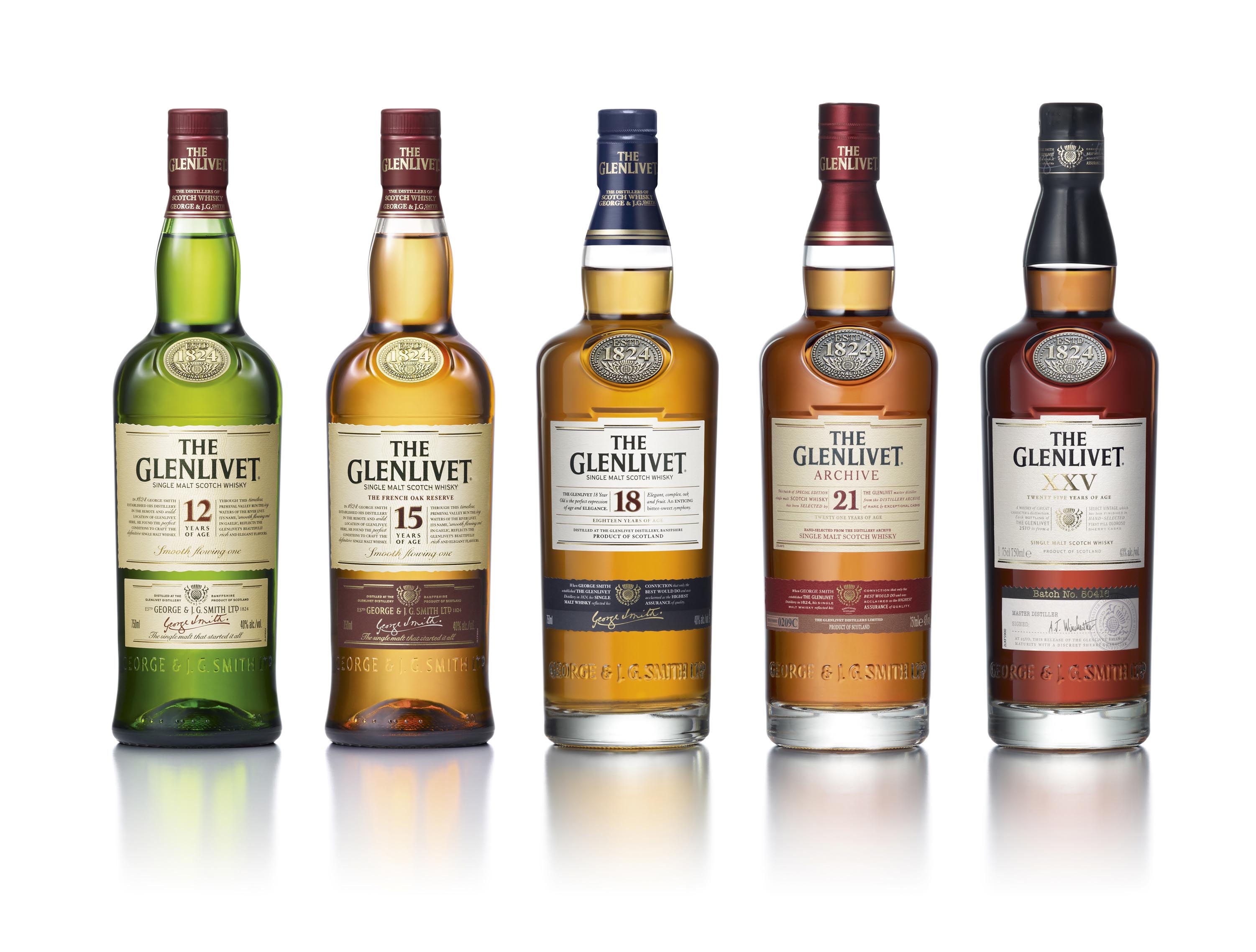
The Glenlivet is getting ready to roll out new packaging across the core line. I don’t generally post these press releases, as I’m sure you’ll see this info popping up in more prominent blogs and web sites. However, this one stands out to me because of the new Glenlivet 18 Year bottle design. Note the heavier base on this one, to match the 21 Year Archive and 25 Year expressions. I wouldn’t be surprised to see a price bump to go along with this change, so you might want to keep your eyes and ears open for any price changes if you’re a big 18 year fan, and buy a few bottles at current prices if that seems to be happening.

On a side note, I think the new design is pretty sweet. 🙂

Press Release

THE GLENLIVET INSPIRES WITH LUXURIOUS NEW PACKAGING

The Glenlivet, the world’s No 2 single malt Scotch whisky, has revealed striking new packaging to provide the ‘single malt that started it all’ with an enhanced luxurious and sophisticated look, in line with its position in the super premium spirits category.

The new packaging to be implemented across the core range, comprising The Glenlivet 12 Year Old, 15 Year Old French Oak Reserve, 18 Year Old and Nàdurra, will remain recognisably The Glenlivet, yet offer a more contemporary, elegant look. Available in all markets including duty free, the new bottles are enhanced with higher shoulders, a shorter neck and an enlarged base giving them a stronger presence, while the embossed stamp of the whisky’s founding family ‘George & J. G. Smith’, continues to portray the legacy and heritage of The Glenlivet. As a strong point of reference for consumers, the cartouche, which indicates the brands history dating back to 1824, has been given a more prominent position on a raised platform.

The Glenlivet 12 Year Old bottle will retain its iconic green colour, recognised by consumers the world over, while the 15 Year Old French Oak Reserve will move to a clear bottle for the first time to showcase the rich golden colour of the whisky. Both expressions will be presented in a new, luxury carton with premium cues to increase gift appeal, while additional information highlighting the whisky’s quality credentials will benefit both aficionados and new drinkers.

The packaging upgrade has seen The Glenlivet 18 Year Old elevated to align with the ultra-premium and prestige expressions within the range including The Glenlivet 21 Year Old and The Glenlivet XXV. Changes to the 18 Year Old bottle design, including the heavier base, signify its status as the most awarded expression in the range and the whisky favoured by many distillery workers. The new bottle is housed in a significantly upgraded permanent gift box.

In addition, The Glenlivet Nàdurra, the non-chill filtered expression in the range, will also be presented in a new, bolder bottle and feature the logos and icons seen across the range while maintaining the individual character of the artisanal, highly crafted whisky.

Neil Macdonald, Brand Director for Malts at Chivas Brothers, comments: “The Glenlivet is recognised by whisky aficionados around the world as an exquisite, premium whisky, and our new elegant packaging will confidently reflect this quality with its striking new shape and luxury cues.

“The stylish bottles and gift cartons will offer increased on-shelf stand-out for the on and off trade and will support our ambition to see The Glenlivet become the No 1 selling malt whisky in the world.”

Since 2005, The Glenlivet has been the biggest contributor to the global single malt category and is only the second single malt to achieve sales of over 600,000 9l cases. In 2010 The Glenlivet completed its £10 million distillery expansion increasing production capacity by 75% to meet global demand.

New Glenlivet bottle design

Read Full Post »

Introduction

There are plenty of resources out there explaining how Scotch whisky goes from new-make spirit to full-fledged Scotch via maturation in casks (I’ll include some links at the bottom of this post). However, I decided to go ahead and do a blog post that pulls together some of that information. More specifically, I want to point out and discuss areas where I often see confusion and debate even amongst whisky enthusiasts. Hopefully I’ve got this down, but I’m open to correction if I’ve screwed anything up. 🙂

Scotch whisky, after being distilled, must be matured for at least 3 years in oak casks before it can officially be called Scotch. It’s right in the Scotch Whisky Association regulations. American oak (Quercus alba) and European oak (Quercus robur) are the most common species used for cask creation. Additionally, most Scotch whisky casks were previously used to mature bourbon or sherry. On a lesser scale, there are other  types of previously used casks, such as Rum, Madeira, Port, Tokaji, and other wines. These are often used to “finish” a whisky after its initial maturation in sherry or bourbon casks, but can also be used for the full maturation period. Springbank 11 year “Madeira Wood”, for example, was matured entirely in ex-Madeira casks.

It’s all oak!

This brings me to the first point of confusion that I’ve witnessed. American oak bourbon barrels are the most common source for Scotch whisky casks. I’m not sure where it started, but it’s common to see the term “traditional oak” used to describe a whisky matured in ex-bourbon casks. I think in conversation, this sometimes gets shortened to “oak.” Now you have people talking about whether the whisky was matured in sherry or oak casks. Oak becomes a synonym for an ex-bourbon, American oak barrel. That’s very misleading.

All of these casks (bourbon, sherry, madeira, etc.) are made from oak. The maturation differences come down to type of oak, whether the wood on the inside of the barrel was charred or toasted, and what kind of (if any) liquid was previously matured in it. Scotch casks can also be re-used, which becomes another factor in the flavor and color profile of the whisky.

Update: Immediately after posting this, I saw a tweet advertising Black Bull 12 Year, along with the claim “Matured in oak.” This is the kind of lame marketing that adds to the confusion. Stating this on the bottle or marketing literature would seem to imply that it could have been matured in something else. Doesn’t it just make them come across as looking either dumb or condescending, and not like somebody you would want to buy scotch from? I supposed the practice could date back to before oak was called out as the required wood type. However, wouldn’t that at least make it “lazy” marketing at this point in time?

American oak. It’s not just for bourbon.

Myth: All American oak casks previously matured bourbon.

This is point of confusion #2. While it’s true that you can generally assume that a whisky matured in ex-bourbon barrels was matured in American oak, you can’t assume that an American oak cask was previously used to mature Bourbon. American oak is also used to make sherry casks. In fact, Highland Park uses ONLY sherry casks for the maturation of their standard line of whiskies. To adjust the flavors in their expressions, they play with the ratio of American and European oak casks used, as well as the number of times those casks have been refilled.

Stop giving me the stink eye

When I mention that HP only uses sherry casks, I seem to usually get met with a stink eye look. It seems to be very commonly believed that when Highland Park talks of American oak influence on expressions like the 15 year, they’re talking about ex-bourbon casks. However, their web site very explicitly states that they only use ex-sherry casks. I think part of the reason this is hard to believe is that when you think sherry, you don’t think of America. However, keep in mind that using American oak for sherry doesn’t require that the casks were actually made and used in the United States. The wood can be shipped to, coopered and seasoned in Europe.

I actually wondered about this myself. I believe HP when they say they only use sherry casks, but how do they get the quantity of American oak sherry casks that they need? Then I read James Saxon’s blog post about his Highland Park distillery tour. Here’s how his guide explained it to him…very enlightening!

They have the most dedicated wood policy in the industry – £2 million a year on casks and wood management. This is more than the rest of the industry combined. This was the first I’d heard of it. When it comes to wood, it is Glenmorangie which toots its horn the loudest. Well, like Glenmorangie, Highland Park has its own forests in America where they harvest the wood, lend them to the Sherry industry, then bring them back to Orkney to mature Highland Park. There are no Bourbon barrels in the place, just American oak seasoned in Europe in addition to European oak.

Great stuff! I highly recommend reading the rest of James’ Highland Park tour description, and checking out his other distillery tour reviews on the Scotch Odyssey Blog.

Update: Ok, found another source on the HP sherry cask debate…direct confirmation from Gerry Tosh at HP via Jason Debly’s Scotch Whisky Reviews blog in his nice HP 15 Review.

New Oak. Also not just for bourbon.

Myth: Scotch whisky MUST be matured in used casks.

Scotch is almost always matured in used casks, but there are exceptions. There is nothing in the Scotch Whisky Association regulations prohibiting the use of new (or “virgin”) oak casks in the maturation of Scotch whisky. Meanwhile, there ARE regulations stating that Bourbon must be matured in charred new oak containers. I can see where one might assume that a regulation exists dictating used oak on the Scotch side, but that’s not the case. They just choose to go with used casks to get the flavor profile they’re looking for.

Great resources for more information

  • Malt Madness Beginner’s Guide – The whole beginner’s guide at maltmadness.com is awesome. For information on casks and maturation, check out Chapter 5.
  • Whisky for Everyone – For a quick guide to the types and sizes of casks used to mature whisky, check out this very straight-forward blog post on whisky cask types and sizes.
  • whiskywise.com – Here’s a very comprehensive article on whisk(e)y barrels discussing how oak gives real character to the whisk(e)y.
  • World Whiskey by Charles MacLean – This physical book is highly recommended, especially for the new whisky enthusiast, and served as one of my sources while writing this blog post. At $16.50 from Amazon right now, there’s no reason not to own this book. [No, my link does not earn me any kind of affiliate money]
  • The Balvenie Whisky Academy – The amazing Whisky Academy video series by The Balvenie includes a 10 minute video on Maturation in Module Two (You’ll need to enter your birth date before entering…Doh!). Satisfy your inner whisky geek and check out as much of the series as you can handle. 🙂

Read Full Post »

Introduction

Fancy yourself a whisky connoisseur? I don’t – not yet, anyway. However, I do obviously spend a fair amount of time reading about and tasting whisky. But has all of this focused effort led to any kind of improved ability to discern whisky expressions by taste, smell and color? I’m not sure a single blind tasting is any way to determine that, but from what I’ve read of them, it’s a good way to gain some perspective, and perhaps a little humility. I’m game for that.

My local Single Malt Scotch Society (which I just discovered a year ago) periodically does blind tasting meetings, and I just recently attended my first one. This is a great group to drink and discuss single malts with. They’re much more experienced than I am, some of them being members of PLOWED, so it’s great to hear about the world of whisky from their point of view. Fortunately, it’s a laid back group, and the primary goal is to have a good time, not impress each other with our tasting prowess.

Let the games begin…
Rules of the game

There were 9 of us in attendance. We received a cheat sheet ahead of time listing 13 possible expressions. Of those 13, 10 would be chosen at random by a non-participant (the brother of John, our leader and host). Those 10 were to be poured into jars and numbered. The name of the malt was written on a card and placed in an envelope with the appropriate matching number.

The cheat sheet

Islay malts

  • Ardbeg Airigh Nam Beist 1990, 16 yr., OB, 46%
  • Lagavulin 16 yr., OB, 43%
  • Laphroaig 18 yr., OB, 48Q%

Speyside malts

  • Balvenie DoubleWood, 12 yr., OB, 43%
  • BenRiach 1994 Peated Oloroso Sherry Finish, 12 yr., OB, 57%
  • Cardhu 12 yr., OB, 40%
  • Glenfarclas 25 yr., OB, 43%

Highland malts

  • Ben Nevis 1986, 14 yr., Cadenhead bottling, 62.9%
  • Clynelish 14 yr., OB, 46%
  • Highland Park 18 yr. OB, 43%

Campbeltown malts

  • Springbank 15 yr., OB, 46%

Lowland malts

  • Auchentoshan Three Wood, NAS, OB, 43%
  • Rosebank 1990, 14 yr., Whisky Galore bottling, 46%

Upon arriving…we were each given a scorecard to fill out. For each malt, we would fill in the information below. You can get up to 10 points per malt. The winner earns bragging rights in the next society newsletter.

Scorecard breakdown:

  • Region (3 pts): Multiple Choice from:
    • Islay
    • Speyside
    • Other Highland
    • Lowland
  • Age (2 pts)
    • 12 yrs or less
    • 13-17 yrs
    • 18+ yrs
  • Strength (1 pt)
    • 40%
    • 43%
    • 46%
    • Above 46%
  • Cask type (1 pt)
    • Bourbon only
    • Sherry
    • Other Finish
  • Distillery (3 pts)

The Tasting

Malt #1 – BenRiach 12 year

My Scorecard: Speyside (3 pts); 12 yrs (2 pts); Above 46% (1 pt); Other Finish (0 pt); BenRiach (3 pts) – Total 9 pts

Comments: A sherry and peat combination came through clearly. Fortunately, I have tasted a couple of other BenRiach peated whiskies (and own one). There’s something distinctive about the BenRiach flavor of peated whisky (at least their finished ones) that just stood out right from the start. I questioned myself at first, as the cheat sheet didn’t say this was a “peated” BenRiach, but I decided to go with my gut. I’m glad I did! Unfortunately, I screwed up the scorecard on this first one. I put “Other Finish” because it is a “finished” whisky. The correct answer was “sherry.” Basically…I didn’t follow directions.

How I’m feeling (after the reveal): At this point, I’m thinking “hey…I’m going to completely kick ass at this!”

Malt #2 – Rosebank 1990 14 year

My Scorecard: Other Highland (0 pt); 13-17 yrs (2 pts); 46% (1 pt); Bourbon (1 pt); Clynelish (0 pt) – Total 4 pts

Comments: I took one whiff of this, a quick sip, and immediately wrote down that it was the Clynelish. I thought it had kind of a rough and tumble highland flavor that I associate with Clynelish, and I decided to go with my initial instinct. It worked with the BenRiach. A swing and a miss, but the catcher dropped the ball, so I was able to run to first. While I completely missed this one, the age, strength and cask type just happened to match.

How I’m feeling: “Doh! Coming back down to earth, but hey…I’m not familiar with the Rosebank. It just fooled me. I’ll get the next one.” I don’t know if it was because it immediately followed a peated whisky, but most of us were totally surprised to find out this was a Rosebank.

Malt #3 – Clynelish

My Scorecard: Speyside (0 pt); 12 yrs (0 pt); 40% (0 pt); Bourbon (1 pt); Cardhu (0 pt) – Total 1 point

Comments: I was completely stumped on this one. It seemed easier going than the previous dram (Rosebank), so I started down the Speyside track (I think I had Clynelish mentally blocked out because I had just guessed it on the previous dram). I also heard other comments in the group about it being smooth and easy. Only one of the four Speysides looked like it might have only a bourbon cask maturation…Cardhu. Well, it doesn’t seem as smooth and sweet as I’ve heard Cardhu described, but then, I’ve never had it before. A total guess on my part.

How I’m feeling: At this point, I’m thinking “hey…I completely suck at this!”

Malt #4 – Glenfarclas 25

My Scorecard: Other Highland (0 pt); 18+ yrs (2 pts); 43% (1 pt); sherry (1 pt); Glenfarclas (3 pts) – Total 7 pts

Comments: This one tasted a lot like the Glenfarclas 17 year to me, which I’m quite familiar with. However, I expected the 25 year to have a bigger “classic sherry” taste to it. Still…it seemed distinctly Glenfarclas. As we bantered a bit as a group, it seemed like a number of others thought it was HP 18. I couldn’t buy into that, but then, I was completely wrong on the last two. Ok…hedging my bet and going Glenfarclas, but putting “Other highland” for the region, just in case.

How I’m feeling: “Whew! Back in the game!” Although, my failure on the previous two kept me from fully committing. Oh well…I’d take 7s the rest of the way, no problem.

Malt #5 – Lagavulin 16

My Scorecard: Islay (3 pts); 13-17 yrs (2 pts); 46% (0 pt); sherry (1 pt); Ardbeg (0 pt) – Total 6 pts

Comments: This was obviously one of the three Islays. The color was darker than I remember either the Ardbeg ANB or the Laphroaig 18 being. However, I KNOW Laga 16. It’s one of my favorites. I’m not getting that certain iodine/fruit combination that I know and love from the Laga. Hmm…I know his bottle of ANB is 16 years vs. my 18 year bottle. Maybe it’s a little bigger with less vanilla at 16 years (at this point, my mind is playing games, and I’m forgetting about how dark the whisky in my glass is). Ok, if this was Laga 16, I would just “know it”, so I’m going to hedge my bet between ANB and Laga 16. At least they’re the same age, so I should get the region and age right, regardless.

How I’m feeling: I thought I’d be happy with 6 or 7 points, but…“I’m feeling like a complete fraud for not being 100% sure that this was Lagavulin 16, supposedly one of my favorites, and one I’m most familiar with. On top of that, I’m an idiot for not paying more attention to the color.” I felt a little better to find out this was an older bottle, and has been open for a number of years. That might play into it a little. Still…

Malt #6 – Highland Park 18

My Scorecard: Other Highland (3 pts); 18+ yrs (2 pts); 43% (1); Sherry (1 pt); HP (3 pts) – Total 10 pts

Comments: Sherry for sure, with a little peat, but not Islay peat. I hear a couple of people talking Ardbeg/Laphroaig. No way…I know this one. I’m going all in on HP 18, and feeling good about the fact that our host, John, just indicated that he feels the same way.

How I’m feeling: Back from the brink. “Ok…the whisky gods threw me a bone on this one. It’s good to know I can pick out at least ONE of my favorites.”

Malt #7 – Cardhu

My Scorecard: Speyside (3 pts); 13-17 yrs (0 pt); 40% (1 pt); sherry (0 pt); Springbank (0 pt) – Total 4 pts

Comments: Doh! I really let the group banter get to me on this one. After an initial sip, I checked “Speyside” on the card. Now I just had to figure out if it was Cardhu (which I’ve never had) or Balvenie. We then took a break mid-dram to get some food, as our palates were starting to get tired.

After taking a break, drinking some water and eating a few potato chips, I returned to taste some more. I heard others talking about Springbank. Hmm…maybe that sweetness on the close was a sherry cask sweetness. It didn’t taste like Balvenie, though. Maybe it was turning salty…or was that the potato chips? Time up – everybody else has marked their cards. I decide to quickly do a 3-way hedge between Cardhu, Balvenie and Springbank.

How I’m feeling: Like Charlie Brown: Wishy-washy. Sigh…

Malt #8 – Balvenie DoubleWood

My Scorecard: Lowland (0 pt); 12 Years (2 pts); 43% (1 pt); Sherry (1 pt); Auchentoshan (0 pt) – Total 4 pts

Comments: It seemed obvious on this one that it was either the DoubleWood or the Three Wood. I heard others debating the same thing. I’ve only had a single dram of the Auchentoshan before, and I remember it stood out as being very “woody”…more so than I expected from a NAS expression. Well, this one immediately struck me as being woody as well, and it just didn’t quite seem to have that Balvenie honey/apple combination that I THOUGHT I could easily recognize. I didn’t dare look at Adam on my right…he’s a big “Balvenie guy”, and I knew he’d probably be beaming if this was the DoubleWood. I wanted to get this on my own, though. I’m going with the Three Wood.

How I’m feeling: “Doh! (again)” I’m taking it all more in stride, though. It’s become clear that nobody in the group is able to nail these expressions consistently. Heck, even Adam (who sure enough got this one right) admitted that his taste buds are shot and it was the color that he thought gave this one away.

Malt #9 – Ben Nevis 1986 62.9%

My Scorecard: Other Highland (3 pts); 13-17 yrs (2 pt); ABOVE 46% (1 pt); Bourbon (1 pt); Ben Nevis (3 pts) – Total 10 pts

Comments: Everybody nailed this one. This was the only high ABV whisky left on the cheat sheet. It was very good, though.

How I’m feeling: “I just coated my tongue with 62.9% of Highland goodness. Will I be able to taste #10?”

Malt #10 – Surprise…Laphroaig 30 Year!

My Scorecard: Islay (3 pts); 43% (2 pts); 18+ years (1 pt); Sherry (1 pt); Bowmore? (0 pt) – Total 7 pts

Comments: For this last dram, we had a surprise “off the cheat sheet” whisky. John and Richard disqualified themselves (Richard supplied the bottle). We knew, once they announced this, that it was something special (and it was). Up front, there was a gentle but prominent peat, but it lacked the big medicinal, tarry, oily notes you would get from a younger Laphroaig or Ardbeg. It reminded me of my favorite Laphroaig 30 year, but if that was the case, I would expect more red fruits to come out at the end. This one had some wonderful dried fruit notes, but I didn’t get any ripe berries. Certainly, this was an older (25+ years) whisky, and the proof was relatively low.

A few others speculated about the Distillery, with Bowmore mentioned more than once. I suddenly had visions of having the opportunity to taste one of the famous older Bowmores (Black, gold, etc.). Hey, with this group, I wouldn’t be surprised if somebody owned something of that caliber.

How I’m feeling: “Oh, come on! This is supposed to be my all time favorite whisky and I couldn’t nail down the taste profile?” Oh well..at least I didn’t think it sucked! In fact, it was so good, I elevated it beyond Laphroaig 30 status and tried to figure out which famous, all but unobtainable whisky it might be.

Total: 62 points.

Conclusion

We added up our points, and believe it or not, I was tied for first at 62 points with Adam! Not so fast, though…after pumping my fists in the air, I realized that with Richard reporting 61 points, but taking a disqualification on the Laphroaig 30, he was clearly the #1 blind taster. Second would be John, who scored 55, but would have had 62 to 65 if he could have gotten points for the Laphroaig. Even with a point tie, I would put John before either of us, as I was “playing the game” and hedging bets, and Adam openly admitted to simply “guessing” the last 4 correctly after his taste buds were shot and his allergies bugging him.

I think a lot of the remaining tasters scored in the 40s, but when you take into account that many were going all in on their guesses (not hedging their bets), there were probably quite a few 1 point scores, even though they may have been close to guessing correctly. I’m also not sure how seriously everybody took it. I will admit, though, that I really, really tried. I was jumping up in between drams and blasting my glass with water in the sink and wiping it with a fresh paper towel, making sure it was as clean as possible. Michael, one of the long time society (and PLOWED) members was laughing at me…saying he used to be the same way. Today, he was just having a great time…he had nothing to prove.

So, what is my takeaway? Trying to guess a whisky based on a blind test is hard! Even if the field is narrowed. However, based on the few successes I had, and realizing how my mind played with me on some of the failures, I DO think there is room for a certain amount of olfactory training when it comes to recognizing distillery profiles. I look forward to practicing more blind tasting at home, and participating in another group event in the future.

How well do you think you know your favorite whisk(e)y, wine, beer or other spirit? Try putting yourself to the blind test to find out…the results may surprise you!

Cheers,
Jeff

Read Full Post »

Introduction

Continuing on with my Core Islay Expressions exploration, I’m stepping back from the big Ardbeg and Laphroaig malts and taking a look at the two entry-level Bowmore expressions. Bowmore presents a gentler, less phenolic side of Islay peat, and while the uber-expensive bottlings from the 1960s seem to get lots of attention, I never seem to see much written about the more common expressions.

Much of what I’ve seen on message boards about Bowmore focuses on some sort of “lavender” scent/flavor known as “FWP” that appears to have been introduced in the mid-90s, lasting into the early part of the last decade. I’ll let you read more about FWP in this distillery profile on the Malt Madness site. Some real damage seems to have been done to the Bowmore reputation (at least in whisky enthusiast circles) during this time. This issue seems to have been put to rest, though, and I don’t find my 2008 – 2010 bottlings to be off-putting at all.

Bowmore Legend and 12 Year

Tasting Notes

Bowmore 12 Year (2008; 40%; $40)

Nose: Orange and chocolate, reminiscent of Dalmore (more orange than chocolate, though). An equal helping of earthy peat, much like Talisker, but with more of a tea leaf note as it tails off.  This isn’t a strong peat, nor is it very medicinal. Finally, there’s something sweet going on here. I’ve read about Bowmore having Lavender notes before, but this doesn’t seem flowery to me. A pretty complex nose, really. One to sit with a while and enjoy.
Palate: Sweet peat on the palate, along with a hint of cinnamon and nutmeg.  It’s not big, but it’s not thin either. Frankly, it could use a bit more oomph, as it falls down a little here in comparison to Talisker or other standard Islay malts. However, if those big whiskies aren’t your bag, then you might find this to be a relief!
Finish: Peat and tea leaves in the back of the nostrils are accompanied by a return of  sweets and fruit. Although, now, instead of oranges, it’s more like passion fruit. On the tongue, I get some more of that Dalmore chocolate with some mild drying. Interestingly, as the dryness wears off, I’m left with a salty after-taste.

Comments: Dang, this is a pretty fine single malt! It has a lot to offer on the nose, and it’s great for sitting with and sipping neat out of a nosing glass. I think the nose promises a little more than the palate/finish can deliver, though. This might disappoint some people. Also, while I’ve decided that the sweet/peat combination is enjoyable, I’m not sure this will appeal to everybody. For me, this is a solid B whisky (84 points)

Bowmore Legend NAS (2010; 40%; $25)

Nose: Very “spirity” at first, screaming “I’m a young malt!” I think there might be a little lemon trying to get through, but it’s hard to say. Getting beyond that, I’m getting a fairly simple nose of peat smoke and toffee sweets. Interestingly, the peat itself doesn’t come across as particularly young. If you’re planning to spend some time nosing this one, let it sit for 15-20 minutes in the glass and the peat comes through more clearly.
Palate: You know those “Sugar in the Raw” packets at some restaurants? On the palate, this whisky is like a combination of that sugar and a reasonably juicy barley/grass component.
Finish: A one-note finish of peat, but it’s an enjoyable, somewhat “pure” peat. It IS a somewhat short finish, though. Nothing spectacular going on here, but harmless and enjoyable enough.

Comments: Ok, this is a pretty straight-forward expression, and the initial, youthful nose didn’t wow me. However, it quickly turns into an enjoyable and easy drinking whisky. For me, this will be a tumbler dram. No need to pull out the nosing copita…just pour a glass and enjoy the sweet barley on the mouth and the clean peat smoke finish. I think I found my Islay version of Glenfiddich 12. B- (80 Points)

Conclusion

The Bowmore Legend is not just a younger version of the 12 Year expression. They’re completely different animals. Actually, the Legend DOES seem kind of like a baby Bowmore Tempest, which I’ve sampled, but don’t have a full bottle of. My guess is that the Legend is matured in mostly (if not all) bourbon casks, while the 12 year is a combination of bourbon and sherry casks.

As I said in my comments above, I think the Legend is a perfect “tumbler dram.” Pour it in a glass and drink it neat, on ice, or mixed with something else for a smoky cocktail. I think @whiskywitch nailed it on Twitter when she said:

Legend has been the “go to” Islay Scotch for lots of my 20-something clients- it pairs well with pizza or burgers + fries

As for Bowmore 12 year, I’ve gained a greater appreciation of this expression over the past couple of years. When Islay whiskies were new and exciting for me, the Bowmore just didn’t seem to hold up to the higher peating in other Islay malts. Now I’ve chilled a bit and can appreciate the more subtle nuances in this whisky. Sometimes it strikes me as Dalmore’s pipe-smoking cousin, and other times as Talisker exploring its feminine side. Actually…if you have both Bowmore 12 and Talisker 175th anniversary on hand, pour a glass of both side by side. They’re really not THAT far apart in terms of nose profile. The Bowmore doesn’t hold a candle to the Talisker on the palate and finish, though. 🙂

I can easily recommend both of these whiskies given the right circumstances. However, if you’ve tried and liked Talisker and are looking to see what this whole Islay craze is all about, the Bowmore 12 isn’t going to break any new ground for you. Laphroaig and Ardbeg are where the main phenol frenzy is at, and Lagavulin is on a whole different plane. Still, the Bowmore 12 year offers a unique take on sweet peat and is very much worth a try. With the Legend, you can check your pretension at the door, party a little bit, and enjoy that smoky finish.

Cheers,
Jeff

Read Full Post »
Introduction

The Single Malt & Scotch Whisky Extravaganza is a traveling event put on by the Scotch Malt Whisky Society of America (SMWSA). Apparently this is the 18th year of the Extravaganza, and the first year that it has come to Phoenix, AZ. I’ve never been to other, bigger whisky shows, but from what I can tell, this is a similar format for the main event (a bunch of booths where you can try whisky and talk to industry representatives), minus the additional “master classes” that are offered at some of the other shows.

The event appears to be run mainly by the Shayne family. Alan Shayne is the president of the SMWSA, and his daughter, Gabrielle, is the one who has provided marketing information to me and other bloggers on the event. Both were also active participants during the Extravaganza itself. There is a pre-show whisky panel session from 6pm to 7pm, then the main show from 7pm to 9pm.

The SMSW Extravaganza costs $120 for SMWSA members, and [theoretically] $135 for non-members. However, it’s easy to get a discount code for the member price. Gabrielle Shayne has worked with a bunch of whisky-related sites and blogs to get word out on the event and make discount codes available. There is a Scotch Hobbyist code of “SH2011” that can be used for this purpose. From one of my emails, it looks like I could have gotten a free ride for blogging about the event, but I actually paid the $120 and went as a non-press attendee. I met up with a friend, Adam, from a local Single Malt Whisky Society (not affiliated with SMWSA), and hung with him during the event.

Whisky Panel

Prior to the main “extravaganza” there was an hour long Whisky Panel session available on a first come first served basis. I got there just before this session started, and entered the room to find what felt like around 25 people in the audience, along with 8 or so Whisky Panel members. The panel was made up of industry representatives, including well known ambassadors such as Simon Brooking (Laphroaig), Mitch Bechard (Glenfiddich), Ricky Crawford (The Glenlivet), and David Blackmore (Glenmorangie). I think a few additional audience members joined in, but not sure of the total count. It wasn’t a huge group, anyway.

We each got a nosing glass, pre-filled with some Laphroaig 10 year. Apparently the Panel members take turns supplying the dram served during the session, and it was Simon Brooking’s (U.S. Ambassador for Laphroaig) turn. We also received note cards, upon which we could write down a couple of questions that we would like to have answered by the panel. The questions are chosen and read by Alan Shayne, and this Q&A process makes up the full focus of the session.

One of my two questions was read and answered. I asked why there are differences in ABV between some of the UK and USA bottlings. Specifically, we get an extra 3% ABV (43 vs 40) in a number of popular standard bottlings. It would appear that it really just comes down to money, and especially the fact that the standard expressions have been reduced to being something of a commodity item in the UK big box stores. They’re getting next to no margin on these bottles, so they’ve dropped the ABV.

My other question was not asked…I was wondering which is better, Ninjas or Pirates. Apparently Mr. Shayne didn’t feel this was the appropriate forum to have such a question answered. And so, I await a chance to ask somebody more in the know.

Main Event

The Whisky Panel Q&A session ended a few minutes before the 7pm official start time for the main show. They led all of us panel attendees in through the back entrance of the main event ballroom with the ambassadors, giving us first dibs at the whisky booths and the excellent buffet. There were booths lining the sides of the room, with food at one end, and large tables in the middle for dining and chatting. There were typically one or two distilleries represented per booth. There was a single booth for the Diageo Classic Malt distilleries, and SMWSA had two booths…one with five of their private bottlings, and another booth representing their “public” face (Spirit Imports), where they had a couple of Classic Cask expressions, some Douglass Laing, and Big Peat.

The booths were staffed by a combination of the ambassadors, other distillery representatives, and models. Alan Shayne spent a fair amount of time at the SMWSA booths, and his lovely (and knowledgeable) daughter Gabrielle was the primary host for the SMWSA private bottlings. There was also a booth where you could pick up a couple of cigars (Warlock and VegaFina) and register for a raffle at the end, where you could win one of a number of bottles of whisky or a full box of cigars. Finally, there was a booth dedicated to SMWSA membership information.

Glenfiddich Booth (featuring Snow Phoenix)

I have mixed feelings on the models at the booths. I mean, they looked great, but I also want to ask questions about the expressions and the distillery. I guess my vote is for a combination Ambassador/Model approach (or find more all-in-one hosts like Gabrielle). Win/win :-). It was also amusing to see the interaction of some of the attendees with the model hosts. I waited for the ridiculously good looking woman at the Aberlour booth to pour me a sample of the 18 year while some guy chatted her up. Nice try, but I don’t think so.

All in all, I was very satisfied with the layout and flow of the event. I got to try quite a few better-than-average expressions (detailed below), eat some great food, and enjoy some entertaining conversation. Towards the end of the show, they made an announcement that the “Super Pour” period had begun. Some of the booths pulled out special expressions that had been held back prior to that point.

Coolest Booth: Laphroaig/Ardmore – They had raw barley that you could chew on to get a feel for the taste, and blocks of peat representing both the Laphroaig and Ardmore styles of peat. They would light up the peat so you could take in the aroma, noting the differences between peat types, and better understanding how this fuel type influences the flavor of the heated barley, and ultimately, the distilled spirit.

Picking nits? A few of the booths offered underwhelming expression selection. Highland Park only had the 15 and 18 year. I sure would have liked to see a bottle of 25 or 30 year brought out for the Super Pour period. Some might have also been disappointed at not having the Glenfiddich 30 year make an appearance, but I get the focus on Snow Phoenix right now. Maybe next time. Also, if I had a ride, or was staying at the hotel, another 30 minutes to sample a few more expressions would be welcomed.

Whiskies I tried

  • Aberlour 18 – Perfectly nice, I tasted this towards the end of the evening. Hard to say if it’s worth the premium over the excellent 16 year. Didn’t seem like it tonight.
  • Ardmore Traditional Cask – I’ve had Ardmore in Compass Box blends, but never as a single malt. It’s actually better than I thought it would be. Not a huge peat, but some pretty nice spices. It has a notable pine taste that you could also smell in the peat at the booth.
  • Balvenie 17 Year Peated – This was very good. The barley isn’t actually peated. They start with regular Balvenie whisky casks, and then do a finish using barrels that previously contained peated whisky (peated Balvenie whisky in fact). The peat cask influence is fairly subtle, but makes for a very balanced whisky. Not sure about paying $120 for it, though.
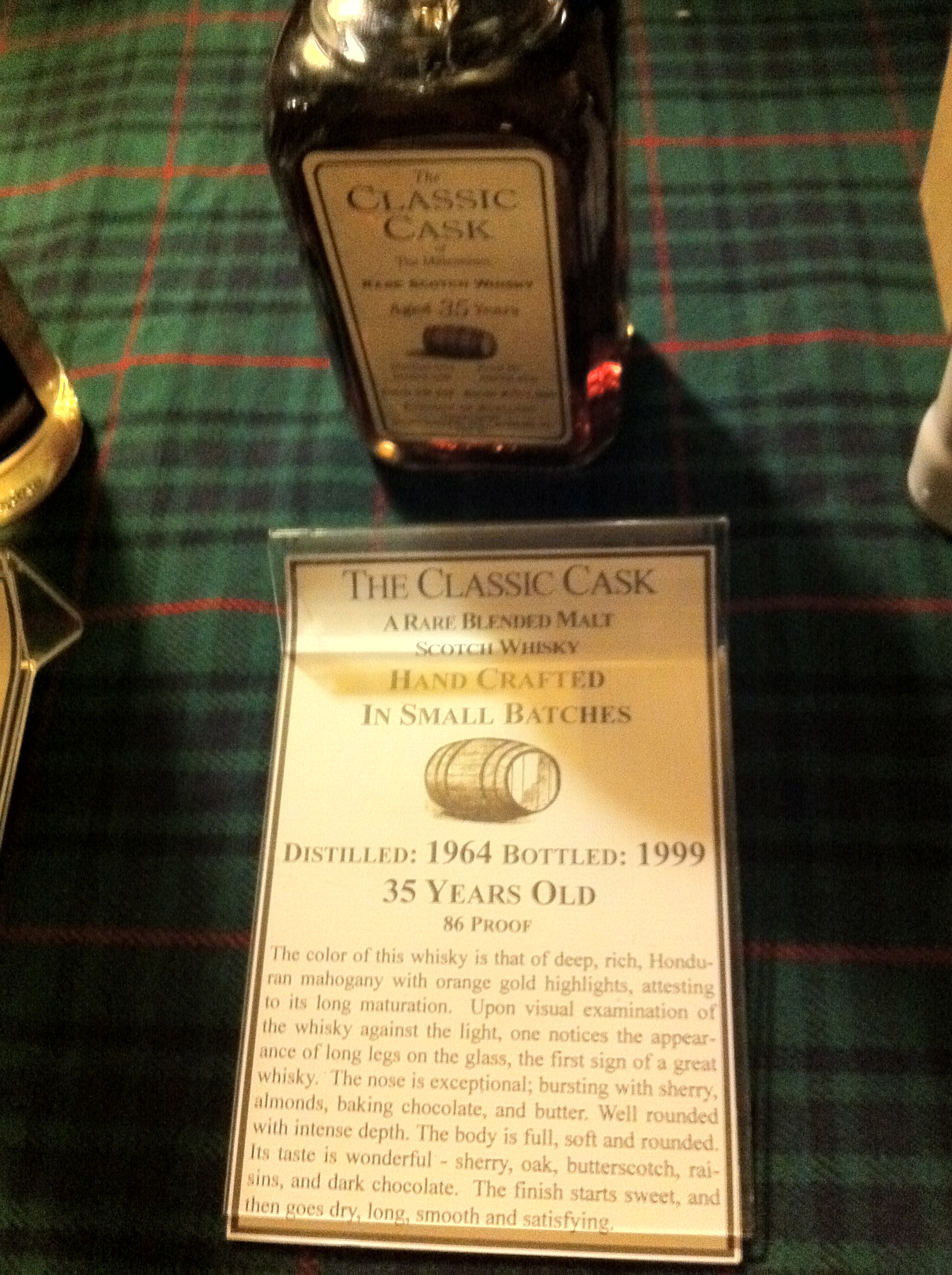
  • The Classic Cask – Rare Scotch Whisky 35 Year Blend – This was the first and last whisky I sampled on the evening, and my favorite overall. If I recall the information on this expression correctly, it’s comprised of 30 or so single malts, matured for 25 years in varying cask types. They’re then vatted together with about 15% grain whisky (making it officially a “blend”) and matured another 10 years in first-fill sherry casks. A total of 600 bottles were produced. More notes on this one at the end of the blog post…
  • The Dalmore 18 Year – A solid dram, very much of the Dalmore profile. The subtleties of this one were somewhat lost on me, though, having tried it later in the evening.
  • Glenfiddich Snow Phoenix – Another solid dram. You’ve probably read about this one, produced from casks of various types ranging from 13 to 30 years old, plucked out of warehouses where the roof had collapsed in last year’s winter storms. I’ve not been a huge Glenfiddich fan (relative to some other Speyside distilleries), but I did enjoy this quite a bit. It’s another one that probably calls for a more controlled environment and a dedicated glass. Worth another try in the future.
  • Glenmorangie Finealta – This was my second sample on the evening, and I was very impressed with it. Peated to a mere 8-10 ppm (according to David Blackmore), you’re certainly not going to confuse it for an Ardbeg. However, I really liked the peat that showed up…very earthy like a Talisker or Bowmore, and a nice compliment to the vanilla and citrus notes more typical of a Glenmorangie whisky.
  • Glenrothes 1985 – Here we go…a sherry cask matured Glenrothes. I’ve been wanting to try one of these. It was a very enjoyable whisky, but not as bold as the Classic Cask 35 or Yamazaki 18. I’d like to try this one on its own sometime. It seemed like a very “clean” sherry presentation, with no sulfur to speak of.
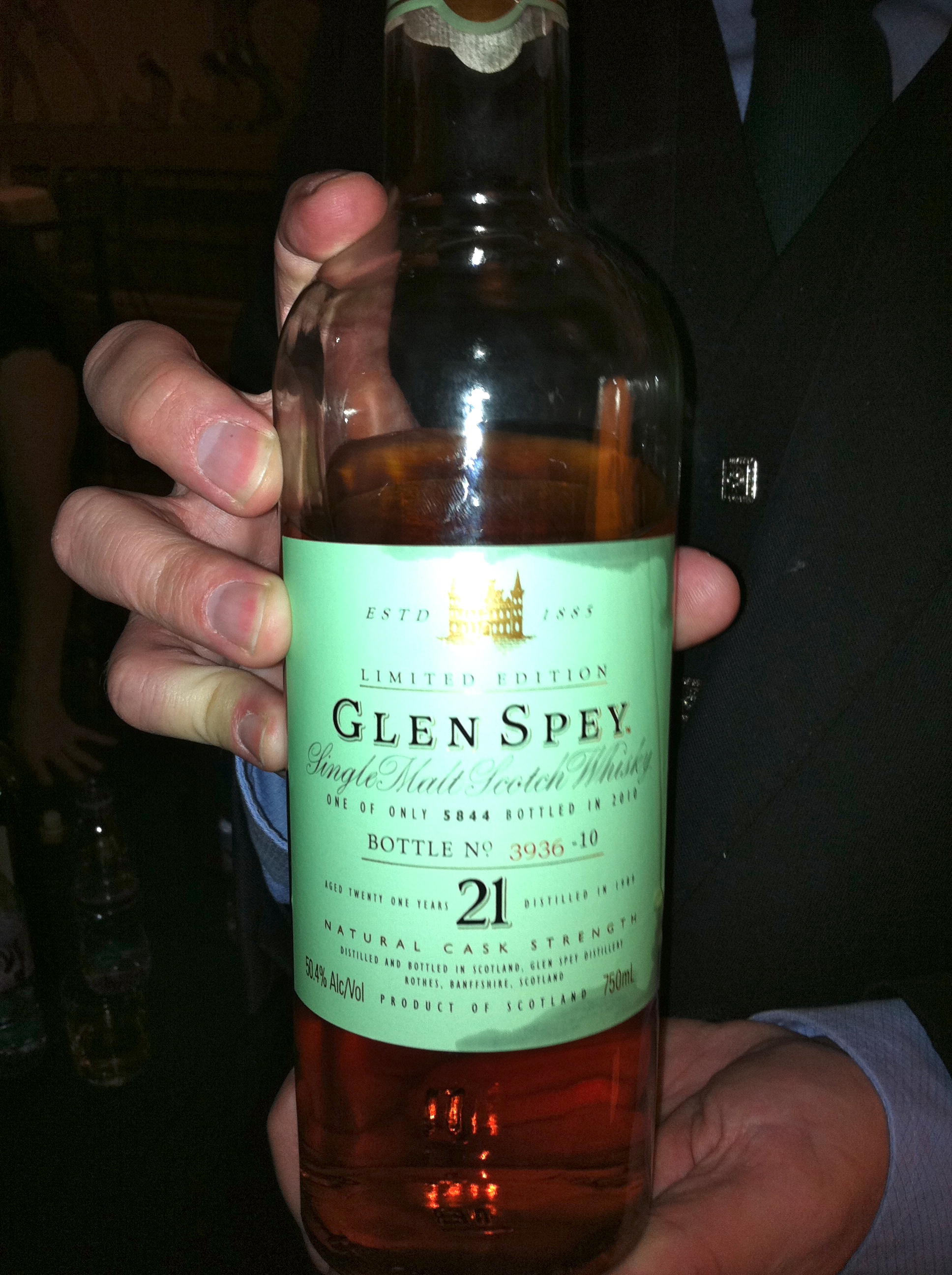
  • Glen Spey 21 Year – A limited release for 2010, this Super Pour demanded a stop at the Diageo Classic Malts booth. Great dried fruits and wood spices on the nose, and the mouth was fantastic at the bottled 50-ish percent. No water necessary. A real treat!
  • Isle of Jura 16 – Another perfectly enjoyable whisky, but sorry, I just couldn’t get much out of it late in the evening after so many other whiskies. Another one to try on its own.
  • Laphroaig 25 – This was the Laphroaig super pour. I was really excited to be able to taste this. Now I’m especially glad I did, as it confirmed my preference for the less expensive 30 year old. The 25 year was great, don’t get me wrong. And it’s certainly bigger on the palate (at 51% ABV) than the 30 year. I just don’t find the sherry flavors to be as developed here. Interestingly enough, Simon Brooking stated that the 30 year only contains 20% sherry casks vs. 40% sherry casks in this 25 year expression!? I find this really hard to believe, but he said those extra 5 years in the sherry casks really drew out the flavors in the 30 year.
  • Scappa 16 – A pleasant surprise, this is very sweet, but also super clean and quite enjoyable. What a great warm weather whisky this would be! There’s probably a bottle in my future.
  • SMWSA – “Deep and Dynamic” Cask No. 41.46 (Dailuaine 7 year) – A young Speyside whisky from a distillery I hadn’t even heard of. I don’t recall specific flavors, but it was big, fruity and sweet. Big, and a little “hot” on the palate, yet not rough or even particularly immature. Pretty impressive for a 7 year.
  • SMWSA – “Master and Commander” Cask No. 93.39 (Glen Scotia 10 year) – Mmm…a sherry cask Campbeltown whisky. I’m pretty sure I like this better than the 10 or 15 year Springbanks.
  • SMWSA – “What a Magnificent and Handsome Nose” Cask No. 29.88 (Laphroaig 9 year) – Laphroaig spirit matured 9 years in a refill sherry butt. What’s not to like?!
  • Suntory Hibiki 12 – Wow, is this sweet and fruity! You really do get a sense that this was partly matured in plum liqueur casks. It’s not sickly sweet or syrupy, though. Very nice balance, and an impressive blend. I asked why it was so slow to work its way across the U.S., and it sounds like it’s just the economic reality of trying to get the masses to purchase a $65 12 year blend. Ok…so sell it to us cheaper! 🙂
  • Suntory Yamazaki 18 – As impressed as I was with the Hibiki 12, I followed it up with a sample of Yamazaki 18 for a little perspective. Boy does this one leap out of the glass and dance on your taste buds. Big, deep sherry and wood spices. Very much worth a premium over the Hibiki 12.

Glen Spey 21

Whiskies I wish I had tried

  • Auchentoshan 18 Year
  • Douglass Laing Double Barrel 10
    • Highland Park and Bowmore (this sounds very interesting!)
  • Glen Grant 16
  • Glenfiddich 21 – I’ve been wanting to try this for ages, and keep missing the local Glenfiddich tastings. In this case, Ambassador Mitch was out mingling with the 21 year in hand when I went to the Glenfiddich booth. I tried the Snow Phoenix instead, and never made it back to try the 21. Doh!
  • Isle of Jura Prophecy – I really would have liked to compare this directly to the Superstition…just ran out of time.
  • Loch Chaim – Isle of Arran 1996 13 Year
  • SMWSA – “Innocence and Depth” Cask #25.55 (19 year Rosebank)
  • SMWSA – “Gradual Seduction” Cask #125.88 (16 year Glenmorangie)

Awesome whiskies I could have tried

These are all great and/or unique whiskies worth trying, but I either already own a bottle of them, or have tried them on multiple occasions, so I focused elsewhere.

  • Ardbeg Corryvreckan
  • Balvenie 14 Year Caribbean Cask
  • Balvenie 21 PortWood
  • Big Peat
  • The Glenlivet 21
  • The Glenlivet XV
  • Glenmorangie 18
  • Glenmorangie Signet
  • Laphroaig 18

Conclusion

After the raffle and “last call” from the whisky booths, I stopped back by the Spirit Imports booth and was given a pretty generous sample of the Classic Cask Rare Scotch Whisky 35 Year Old. I found my way to a comfy couch in the stylish Biltmore Hotel lobby and nursed it for 30 minutes while enjoying some conversation with Adam.

The Classic Cask 35 year has a huge nose of red fruits, and raisins, along with bourbon-like sweets and wood notes. It had ample body in the mouth (though not huge), and then a finish that lasted forever. Bottled at 43%, it didn’t feel weak at all (not that I’d complain if there were 3-5 additional ABV%). What really struck me about this whisky is that it had the same distinct, fantastic taste at the end of the night that it did at the beginning. Where other expressions seemed to start running together, this one held its own. It’s pretty expensive…$250 to $300 a bottle. Upon first tasting it, Adam and I both thought it was excellent, but kind of pricey for a “blend.” By the end of the night we agreed to go in on a bottle and split the cost. I can’t wait to try it again in my home to see if it’s all I thought it was.

Bottom line – I hope we (Phoenix) showed well enough to become a regular stop on the SMSW Extravaganza tour. Gabby Shayne said we had around 200 people, which is actually quite good for a first time venue. I will definitely sign up for the 19th Annual Extravaganza if it comes here. Kudos to the Shayne’s for putting on a great event! Now…what to do with these cigars. Don’t tell my wife, but I just might try one.

The Classic Cask 35 Year

Read Full Post »

Introduction

With Ardbeg 10 (86 points) serving as a benchmark whisky for my Islay scotch reviews, I decided I needed another benchmark that I would rate closer to 80 points. The Islay equivalent of a Glenfiddich 12, if you will. Laphroaig 10 seemed like it would fit the bill. While I’m a HUGE Laphroaig fan, and their 30 year is my favorite whisky to date, my experience with the 10 year old (until recently), had been limited to a few drams in bars, where it was nice, but seemed pretty one-dimensional.

Once I tried the Laphroaig Quarter Cask expression, I quickly made the decision that it was enough better than the 10 year old to warrant a few extra bucks and a place in my cupboard. With the QC on hand, why would I reach for the 10 year? So, the 10 year expression has remained an after-thought for me over the past couple of years. However, with new ideas of journalistic integrity in mind, I finally caved and bought a 2010 bottling of Laphroaig 10 for $37. Let’s see if my opinion of this one changes when consumed in the comfort of my own home (and Glencairn glass), and how it compares to the excellent Quarter Cask expression.

Laphroaig QC and 10

Tasting Notes

Laphroaig 10 year [2010; 43%; $37]

Nose: Certainly not one-dimensional here. Fruity (apples/pears) and sweet, with vanilla and, surprisingly, a pretty gentle but ashy smoke. On first nosing, there’s an iodine presence, but I quickly acclimate and stop noticing it. So far, a pretty well balanced dram.
Palate: Peaty, but juicy barley on the mouth, with a little bit of pepper. Not as big and oily as Ardbeg 10, but not weak either.
Finish: Ok, there’s the big smoke I was looking for. Where the Ardbeg smoke is like a camp fire, Laphroaig 10 is decidedly more industrial. A strong tar smoke shoots up the nostrils and coats the tongue from top to bottom, nearly drowning out all of the other flavors. I can see why this seemed like a one trick pony when I had this at the bar. The finish is long, with the tar slowly turning to ash on the tongue.

Comments: One-dimensional? Certainly not on the nose, but very close to it on the finish. Overall, the Laphroaig 10 was better than I remembered. I definitely consider this a worthwhile purchase at under $40. It’s not as big or complex as Ardbeg 10, but what’s there is still good, and that tar on the finish is very unique. If you’re like me, you’ll wonder on first tasting whether you really should be enjoying such a flavor. Don’t be surprised if it grows on you over time, though. Just into the full “B” range for me. 83 points.

Note: I also went through a 50ml sample of Laphroaig 10 bottled at 40% for the UK. It had basically the same profile, but was quite weak on the palate. That one I would probably rate at 81 points. I’m glad we get the 43% bottling in the US!

Laphroaig Quarter Cask (NAS) [2007?; 48%; $50]

Nose: Similar sweet fruit, ashy smoke, hint of iodine and vanilla as the 10 year, but with a stronger fresh-cut oak component. If you like oaky scotches and bourbons, this should appeal.
Palate: Oh, I really like this 48% ABV. Very close to my theoretically ideal bottling strength of 50%. It’s bigger and thicker than the 10 year…closer in thickness to Ardbeg 10, but with even more zing.
Finish: Here’s where the QC really separates itself from the 10 year. Yes, there is a tarry peat smoke that blasts right up the nostrils, but the fruit and barley are still there. And hello there, vanilla…thanks for sticking around. That big oak presence stays very much in the picture through the long finish.

Comments: The Quarter Cask expression brings everything to the table that the 10 year does, and then some. It improves the balance in the process. Now, if you’re not a fan of super oaky whiskies, and you like the 10 year, I’d recommend you try before you buy. For me, this is right up there in enjoyment level with the Ardbeg 10 year. Two different takes on peat, both worth checking out. 86 points.

Final comparison thoughts

Sure, I like the Laphroaig Quarter Cask more than the 10 year. However, the 10 put up much more of a fight than I expected. If you buy Laphroaig almost solely for that tarry peat finish, then by all means, save a few bucks and enjoy the 10. It’s a great dram. I guess my search continues for an Islay equivalent to Glenfiddich 12 (assuming they keep sending us the 43% version of Laphroaig 10 in the US).

As for Laphroaig vs Ardbeg, I think the QC gives up a touch of complexity and balance to the Ardbeg, but that extra 2% ABV is nice. It’s really more of a mood thing for me, depending on the type of peat smoke I’m looking for. The enjoyment I get from drinking either is pretty much the same. Forced to pick one, I’d go with the Ardbeg.

Cheers,
Jeff

Read Full Post »

Introduction

Wow, it’s been quite a few weeks since I posted any whisky reviews. I’ve been busy with a work project, and while I’ve had my fair share of drams, and taken notes here and there, I just didn’t find the time to write an actual blog post. My plan now is to quickly post a series of notes on core Islay expressions.

In January, I read Serge’s great post about reviewing whiskies and establishing “benchmarks” for yourself on WhiskyFun.com. For the most part, I think I’ve done basically what he talked about in that article when reviewing whiskies. When I take tasting notes, it’s in a controlled, consistent environment. I always compare with familiar expressions, and I have personal “benchmark” expressions for different types/regions of whisk(e)y.

Ardbeg 10 has been an Islay benchmark for me over the past two years. However, after reading Serge’s post, I realized that I never actually wrote up my notes and provided a score on this expression. So here we go…

Ardbeg 10

Tasting Notes

Ardbeg 10 (2010; 46%; $50)

Nose: A combination of sweets and wood smoke, like eating smores at a camp fire. Some fruit (leaning towards citrus) and vanilla are also present.
Palate: Big and oily, turning peppery as it works towards the back of the tongue. Bottling at 46% was a wise decision! Don’t confuse “big” with rough, though. This is actually a pretty smooth customer.
Finish: Continued pepper on the tongue, and the camp fire comes back up through the nostrils. In fact, it’s as if the wind shifted and the smoke blew right in your face and stuck to your nose hairs. As the finish very, very slowly dies down, I feel like there is a hint of licorice or anise present. This is a flavor that I’m generally not fond of, but this whisky is so good overall, I’m able to work around it.

Comments: Relatively light in color, but deep and brooding at heart, I think Ardbeg 10 is the perfect drink for sitting in a cabin in the woods during the winter, near a fire and reading a book. It’s well rounded, smoky, and big without being overwhelming. I’ve had two bottles of this…one from 2006, and this 2010 bottle. From my notes, I found the two to be very similar. This expression is deserving of the many accolades it receives, and truly is a benchmark Islay whisky. Obviously, not an expression for the anti-smoke crowd. This is on the high side of a B rating for me; 86 points.

Read Full Post »

Ahh…back in the WordPress blog editor after a little over a month. My day job has been more of a day and night job since the start of the year. Fortunately, we’re in the process of wrapping up the project that has kept me so busy. I needed something to jump-start me back into writing about whisky, and the Single Malt Whisky Society of America (SMWSA) has provided just the jolt I needed…

(Click banner for link to official site)

I posted a couple of times last year about the Single Malt & Scotch Whisky Extravaganza, and heard good things about it, but wasn’t able to get away to Los Angeles to check one out. I received a notice of the 2011 Spring schedule, however, and my very own Phoenix, AZ is now included as one of the tour stops! They’re coming to The Arizona Biltmore on Thursday March 24. Finally, a real live major whisky event in our sprawling desert metropolis! Dallas, TX is also a new venue this year.

Here’s the official blurb describing the event:

Ladies and Gentlemen are cordially invited to enjoy a connoisseur’s evening featuring over 120 rare & exceptional single malt and Scotch whiskies. The evening includes a delicious dinner buffet as well as a selection of premium imported cigars for our guests’ later enjoyment. The Single Malt & Scotch Whisky Extravaganza brings the discerning enthusiast the opportunity to sample the participating whiskies in a sophisticated and elegant environment with genuine camaraderie and knowledgeable representatives from each participating distillery.

All events from 7:00pm-9:30pm. Registration begins at 7:00pm. Business casual, Jackets preferred. Jackets are required at the Chicago & Philadelphia events. No denim or athletic attire may be worn to the events.

The standard ticket price is $135 for non-members and $120 for members, but you can use the promo code “SH2011” to get the member price. Tickets are available for purchase here: https://www.amerisurf.com/singlemaltextravaganza/form_tickets.html.

I hope we can get a decent crowd to attend here in AZ, so that we can continue to attract this, and possibly other significant whisk(e)y events. If we can just find enough people here in the desert who actually own business casual attire. 🙂

There are six other venues in the spring tour as well, so take a look below and see if an extravaganza is coming your way (Note: I blacked out one of the venues, as they’re not allowed to advertise for it. Apparently there are a bunch of psychic whisky drinkers there who will just know to show up):

Spring 2011 Extravaganza Schedule

Read Full Post »

Introduction

MoM Tomatin 19 Single Cask

I hadn’t really seen or heard much about the Tomatin distillery until mid-2010 when Joshua over at The Jewish Single Malt Whisky Society generously sent me 50ml of his Master of Malt Tomatin 19 year single cask (cask-strength) as part of a sample swap. He was really impressed with it and thought I’d like it. I took one whiff and was hooked. Although, the oak is borderline too much on the palate. Still, a very impressive whisky. Later, when Master of Malt offered to send some review samples, I noticed that the cask-strength bottling wasn’t available anymore, but they do have a 40% version available. I was able to get a sample of that, and will share my thoughts in this blog post.

Next, I saw some comments by Steffen of the Danish Whisky Blog about the Tomatin distillery releases being much improved. He especially seemed to like the 18 year distillery bottling. A few weeks ago, I ordered a bottle of the Tomatin 18 year, newly formulated in 2009, with an Oloroso Sherry Cask finish, and bottled at 46% non chill-filtered. I’m going to cover this expression here as well, and compare/contrast with the MoM bottling.

I discovered over at Malt Madness that the Tomatin distillery had as many as 23 active stills in the 1970s, with most of the produced whisky going into blends. It had the largest production capacity in Scotland! Apparently, it’s that historical focus on blends (particularly Antiquary and The Talisman) that has prevented Tomatin from becoming a household name. The current owners (out of Japan), however, seem to be bringing the single malt releases more to the fore, with 12, 15, 18 and 25 year expressions in the standard range.

Tasting Notes

Master of Malt Tomatin Aged 19 Years (40%); 90+S&H

Nose: I’m struck by very “fresh” malted barley sweetness, along with plenty of oak and vanilla. Then…more malted barley. It actually SMELLS big and juicy and sets up big expectations for the palate.
Palate: Just as promised by the nose, a big, juicy, malty sensation on the palate. Now with a little fruit (apples/pairs) added in.
Finish: A little pepper, and then, would you believe, more of that awesome malted barley? It has a medium length.
Comments: I’m blown away by the malted barley sweetness on this one. So fresh, clean and juicy. In my experience so far (just a couple of years), this has got to be my reference for that particular flavor trait. I actually think this is  nearly as good as the cask strength version, as the oak isn’t quite as over-the-top on this one. However, when watering the cask strength version down to about 46-48%, I think the palate is a bit nicer.
Rating: B+; 88 points (89 for the cask strength bottling)

Tomatin 18 Years (OB; 2010; 46%); $60

Nose: Oak and vanilla, but not as strong as on the 19 year. It seems to be toned down by a fairly strong dried fruit presence from the sherry finish. There’s some of that fresh malted barley here as well, but it’s a part of the balanced presentation, not in your face. All of this is very clean.
Palate: Juicy and fruity, then white pepper kicks in, stronger than on the 19 year.
Finish: On the late palate and early finish, there’s more malted barley. It’s not at all stale like I often find in “malty” whiskies. The white pepper lingers for a medium-long period.
Comments: Very well balanced and highly refreshing. So clean from start to finish, and the dried fruits from the sherry finish integrate wonderfully with the oak and barley that were so prominent on the MoM 19 year. I’m guessing most would rate this a little lower than the MoM bottling, but what can I say? I’m a big fan of that dried fruit sherry influence.
Rating: B+; 89 points

Tomatin MoM 19 and OB 18

Conclusion

My favorite whiskies to this point typically have had some peat and hail from other regions, or they have a fairly heavy sherry influence. I’m not quite ready to put either of these on my best of the best (90+ points) list, but they sure move up to the top of the Speyside whiskies I’ve tried that aren’t heavily influenced by sherry (Aberlour a’bunadh comes to mind in that category). I had to mail order my Tomatin 18 bottle. I really hope to see a wider distribution in the U.S. soon!

I can strongly recommend the MoM release as a reference point for understanding what a brilliantly malty experience Tomatin has to offer, not to mention a wonderfully clean oak/vanilla component from the bourbon cask maturation. However, if you’re in the United States, it’s going to set you back over $100 with the exchange rate and shipping (you can always try a 30ml sample, though). That’s why I give the nod to the standard 18 year release as an amazing value whisky, with plenty of that malty goodness to go with the dried fruits and oak. At close to the same price as The Glenlivet 18 year, and bottled at 46%, this Tomatin is a no-brainer in the $60 and under price range.

Thanks to Master of Malt for the 19 year sample! You can check out MoM on the web here (and my disclaimer here):

Other opinions

Whisky Fun: Serge gave the 18 year a solid 85 points, although that’s actually a point lower than his rating for the previous release at 40%.

What Does John Know (Malt Advocate): 88 points for the 18 year from John Hansell.

The Jewish Single Malt Whisky Society: Here is Joshua’s review of the 40% MoM release. He digs it.

Whisky for Everyone: A nice overview of the distillery, along with notes on the 15 and 18 year OB expressions.

The Whisky Bible: Jim Murry loves both of these (and the cask strength version of the 19 year), rating them in the mid 90s.

Whisky Notes: Also of note is Ruben’s 86 point review of the cask-strength version of the MoM 19 year.

Tomatin for Christmas

Read Full Post »

« Newer Posts